Application
SAVBT cables are designed for transferring and distributing electrical power in switching installations and outdoor installations, as well as indoor installations in rooms. Operating at a rated voltage of Uo/U 0.6/1 kV and a frequency of 50 Hz, these cables are suitable for indoor installations, open-air installations, ditches, tunnels, canals, and shafts. They provide a reliable solution for low-voltage electrical power distribution in industrial and infrastructure applications.
Cable Construction
The SAVBT cable is manufactured according to BDS 16291-85 standards.
-
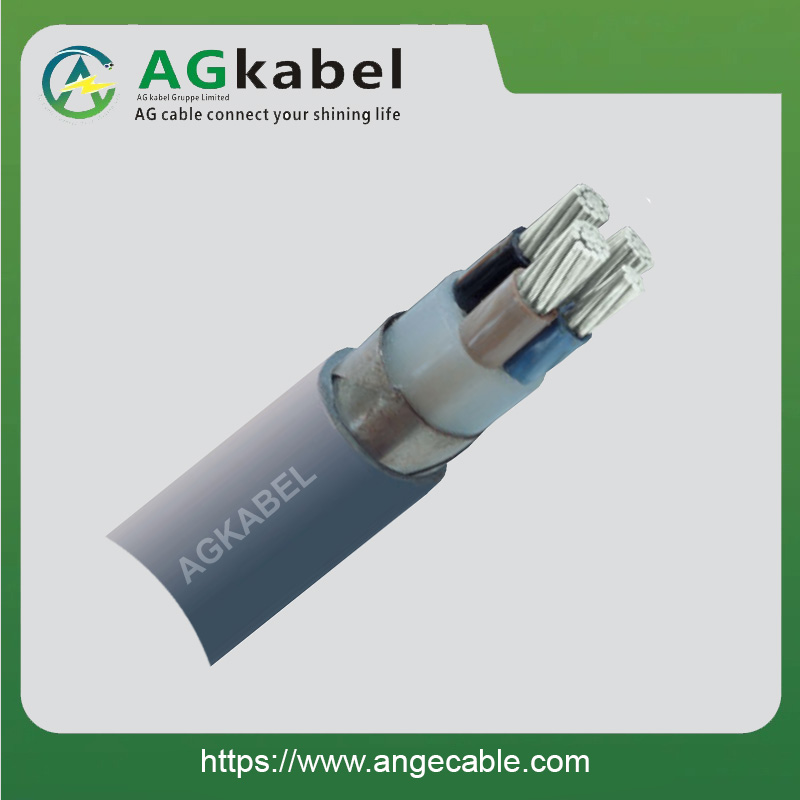
Conductor: Solid or twisted aluminium wires, Class 1 or Class 2, according to BDS 904-84 (IEC 60228).
-
Insulation: PVC compound.
-
Inner sheath: PVC compound.
-
Armour: Steel tapes (STA).
-
Outer sheath: PVC compound.
-
Outer sheath colour: Grey or black.
-
Conductor shape: Circular solid, circular stranded, or sector stranded.
-
Compliance: RoHS compliant.
Technical Data
| Parameter | Specification |
|---|---|
| Applicable standard | BDS 16291-85 |
| Conductor standard | BDS 904-84 (IEC 60228) |
| Conductor resistance at 20°C | According to BDS 904-84 |
| Maximum conductor temperature | +70°C |
| Maximum short-circuit temperature | +160°C, not more than 5 seconds |
| Rated voltage | 0.6/1 kV |
| Test voltage | AC 4 kV, 50 Hz / DC 12 kV |
| Minimum bending radius | 15 × D (cable diameter) |
| Temperature of laying | -5°C |
| Temperature range | -30°C to +50°C |
| Flame test | BDS IEC 332-1 |
| Frequency | 50 Hz |
| RoHS | Compliant, as indicated in the product specification |
Conductor Shape Identification
| Code | Conductor construction |
|---|---|
| re | Circular, solid conductor |
| rm | Circular, stranded conductor |
| sm | Sector, stranded conductor |
Color Coding
-
Single-core: Black, brown, blue, yellow/green, or other colours upon request.
-
Double-core: Blue and brown, or yellow/green and black.
-
3-core: Brown, black, grey; or yellow/green, blue, and brown.
-
4-core: Blue, brown, black, grey; or yellow/green, brown, black, and grey.
-
5-core: Blue, brown, black, grey, and yellow/green combinations according to the product table.
-
Multiple-core: Black cores with number markings, or black cores with number markings and a yellow/green core in the outer cover.
Other constructions are available according to the product specification.
3. Construction Data Tables
The following tables reproduce the supplied SAVBT 0.6/1 kV technical specification.
-
Aluminium weight: kg/km
-
Approximate cable weight: kg/km
-
Outer diameter: mm
Construction Data – SAVBT 0.6/1 kV (Table 1)
| Nominal cross-section (N × mm²) | Shape | Outer diameter (mm) | Al weight (kg/km) | Cable weight (kg/km) |
|---|---|---|---|---|
| 1 × 10 | re | 12.5 | 28 | 240 |
| 1 × 16 | re | 13.5 | 45 | 280 |
| 1 × 25 | re | 14.6 | 68 | 332 |
| 1 × 35 | rm | 16.4 | 95 | 407 |
| 1 × 50 | rm | 17.6 | 127 | 476 |
| 1 × 70 | rm | 19.9 | 190 | 595 |
| 1 × 95 | rm | 21.6 | 260 | 710 |
| 1 × 120 | rm | 23.3 | 325 | 824 |
| 1 × 150 | rm | 25.1 | 405 | 963 |
| 1 × 185 | rm | 27.7 | 510 | 1152 |
| 1 × 240 | rm | 30.6 | 665 | 1426 |
| 2 × 2.5 | re | 12.7 | 14 | 232 |
| 2 × 4 | re | 14.6 | 23 | 298 |
| 2 × 6 | re | 15.7 | 34 | 341 |
| 2 × 10 | re | 17.3 | 56 | 412 |
| 2 × 16 | re | 19.3 | 90 | 510 |
| 2 × 25 | re | 23.7 | 137 | 687 |
| 3 × 2.5 | re | 13.2 | 21 | 253 |
| 3 × 4 | re | 15.4 | 36 | 335 |
| 3 × 6 | re | 16.4 | 51 | 380 |
| 3 × 10 | re | 18.3 | 85 | 473 |
| 3 × 16 | re | 20.3 | 135 | 585 |
| 3 × 25 | re | 25.0 | 210 | 699 |
| 3 × 35 | rm | 27.5 | 290 | 1014 |
| 3 × 50 | rm | 31.3 | 385 | 1290 |
| 3 × 70 | sm | 32.2 | 585 | 1469 |
| 3 × 95 | sm | 36.7 | 810 | 1889 |
| 3 × 120 | sm | 39.5 | 1020 | 2205 |
| 3 × 150 | sm | 43.1 | 1255 | 2607 |
| 3 × 185 | sm | 47.6 | 1560 | 3160 |
| 3 × 240 | sm | 53.4 | 2035 | 3948 |
| 3 × 4 + 2.5 | re/re | 16.0 | 42 | 380 |
| 3 × 6 + 4 | re/re | 17.1 | 63 | 413 |
Construction Data – SAVBT 0.6/1 kV (Table 2)
| Nominal cross-section (N × mm²) | Shape | Outer diameter (mm) | Al weight (kg/km) | Cable weight (kg/km) |
|---|---|---|---|---|
| 3 × 10 + 6 | re/re | 19.1 | 101 | 514 |
| 3 × 16 + 10 | re/re | 21.2 | 165 | 638 |
| 3 × 25 + 16 | re/re | 26.3 | 255 | 874 |
| 3 × 35 + 16 | rm+re | 29.1 | 340 | 929 |
| 3 × 50 + 25 | rm+rm | 33.0 | 480 | 1349 |
| 3 × 70 + 35 | sm+rm | 35.4 | 670 | 1697 |
| 3 × 95 + 50 | sm+rm | 40.2 | 910 | 2183 |
| 3 × 120 + 70 | sm+rm | 43.7 | 1180 | 2562 |
| 3 × 150 + 70 | sm+rm | 48.1 | 1405 | 3006 |
| 3 × 185 + 95 | sm+rm | 53.3 | 1780 | 3683 |
| 3 × 240 + 120 | sm+rm | 59.6 | 2310 | 4565 |
| 4 × 2.5 | re | 14.1 | 28 | 286 |
| 4 × 4 | re | 16.5 | 46 | 381 |
| 4 × 6 | re | 17.6 | 68 | 434 |
| 4 × 10 | re | 19.8 | 112 | 549 |
| 4 × 16 | re | 22.0 | 180 | 683 |
| 4 × 25 | rm | 27.4 | 270 | 935 |
| 4 × 35 | rm | 30.4 | 390 | 1223 |
| 4 × 50 | sm | 34.4 | 520 | 1540 |
| 4 × 70 | sm | 36.6 | 760 | 1855 |
| 4 × 95 | sm | 42.0 | 1060 | 2415 |
| 4 × 120 | sm | 45.4 | 1340 | 2811 |
| 4 × 150 | sm | 50.0 | 1650 | 3391 |
| 4 × 185 | sm | 55.2 | 2100 | 4082 |
| 4 × 240 | sm | 62.2 | 2720 | 5149 |
| 5 × 2.5 | re | 15.2 | 35 | 334 |
| 5 × 4 | re | 17.7 | 58 | 445 |
| 5 × 6 | re | 19.2 | 85 | 520 |
| 5 × 10 | re | 21.4 | 140 | 652 |
| 5 × 16 | re | 24.0 | 225 | 829 |
| 5 × 25 | re | 30.7 | 345 | 1245 |
| 5 × 35 | rm | 33.4 | 480 | 1600 |
| 5 × 50 | rm | 38.7 | 650 | 2160 |
Note: During extrusion, simultaneous laying of the inner and outer sheath is permitted.
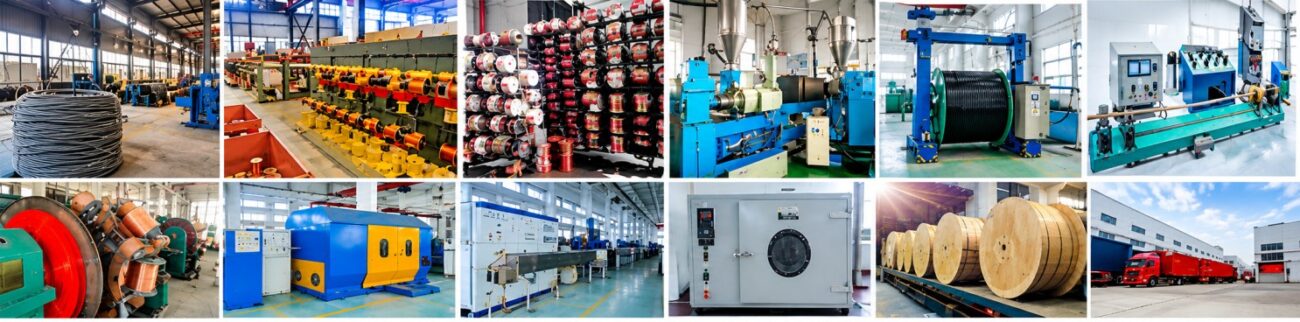
Factory Overview
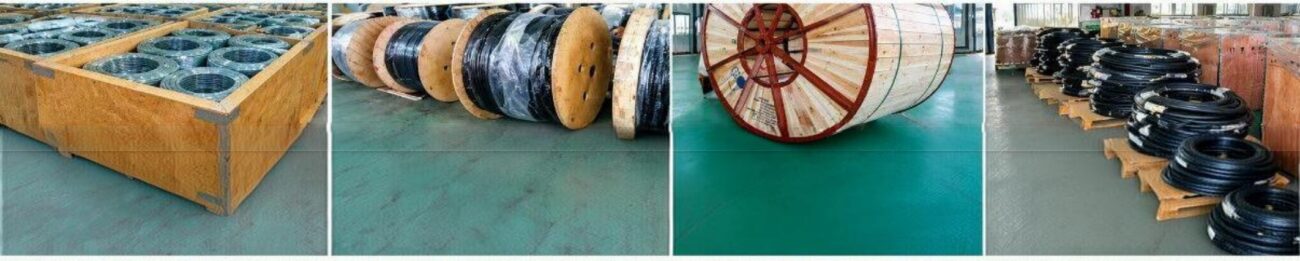
Packaging & Shipping

Frequently Asked Questions (FAQ)
Q:- What is the primary application of SAVBT cable?
A:- SAVBT cables are used for electrical power transmission and distribution in switching installations, outdoor installations, rooms, open-air environments, ditches, tunnels, canals, and shafts.
Q:- What standards does SAVBT cable follow?
A:- The cable construction follows BDS 16291-85, while the aluminium conductor complies with BDS 904-84 (IEC 60228).
Q:- What type of conductor is used in SAVBT cable?
A:- It uses solid or stranded aluminium conductors, available in circular solid, circular stranded, and sector stranded configurations.
Q:- What materials are used in SAVBT cable construction?
A:- The cable consists of aluminium conductors, PVC insulation, a PVC inner sheath, steel tape armour, and a PVC outer sheath.
Q:- What is the purpose of steel tape armour?
A:- Steel tape armour provides additional mechanical protection against external damage and helps protect the cable during installation and operation.
Q:- What is the rated voltage of SAVBT cable?
A:- The rated voltage is 0.6/1 kV.
Q:- What is the maximum operating temperature?
A:- The maximum conductor operating temperature is +70°C. During a short circuit, the conductor can withstand +160°C for no more than 5 seconds.
Q:- What is the operating temperature range?
A:- The specified temperature range is -30°C to +50°C, with a minimum laying temperature of -5°C.
Q:- What is the minimum bending radius?
A:- The minimum bending radius is 15 times the cable diameter (15 × D).
Q:- Is SAVBT cable flame tested and RoHS compliant?
A:- Yes. According to the supplied product specification, it passes the flame test according to BDS IEC 332-1 and is RoHS compliant.
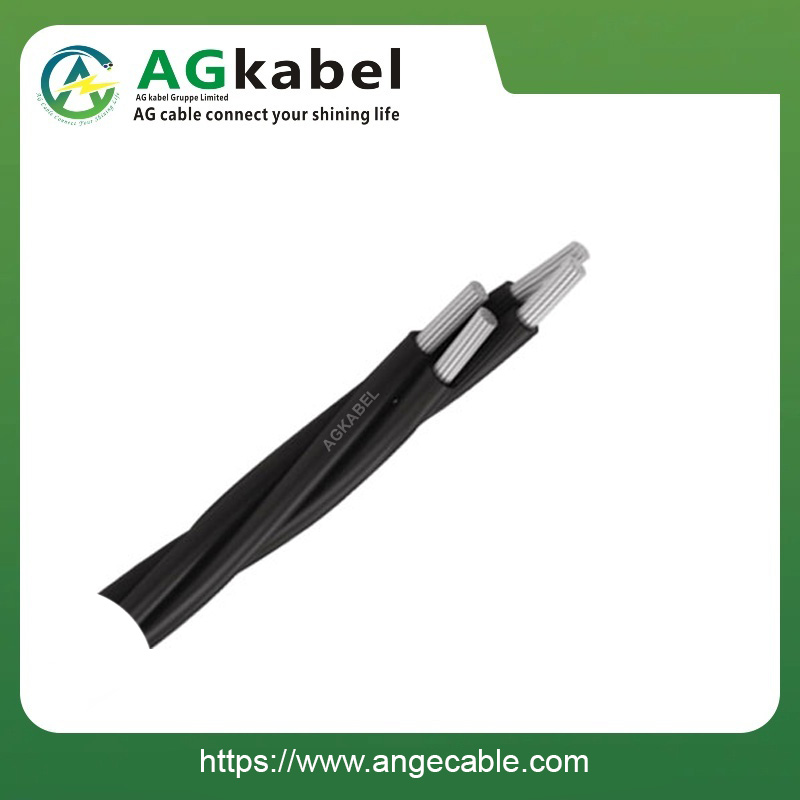
Al/R 0.6/1 kV Self-Supporting Overhead Cable – NFC 33-209
The Al/R 0.6/1 kV cable delivers dependable power transmission and distribution for low voltage overhead networks. Constructed with aluminum conductors, XLPE insulation, and a self-supporting bundle design, it offers excellent performance for permanent suspension on facades and trees. Because it meets NFC 33-209 standards, it provides a reliable solution for crossing forest areas without the need for clearance.
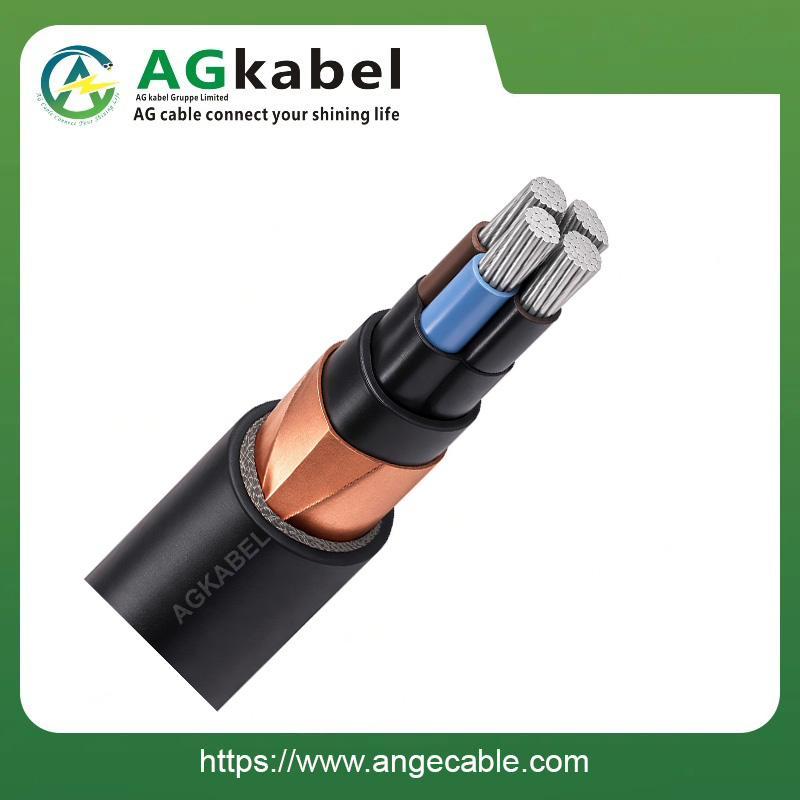
AYBY-O & AYBY-J 0.6/1 kV Armoured Aluminum Power Cable – IEC 60502-1
The AYBY-O and AYBY-J 0.6/1 kV cables deliver dependable power distribution for industrial, domestic, and control applications. Constructed with solid or stranded aluminum conductors, PVC insulation, and steel tape armour, they offer exceptional mechanical protection. Because they meet IEC 60502-1 standards and are CE/RoHS compliant, they provide a safe and reliable solution for underground and outdoor installations requiring extra protection.
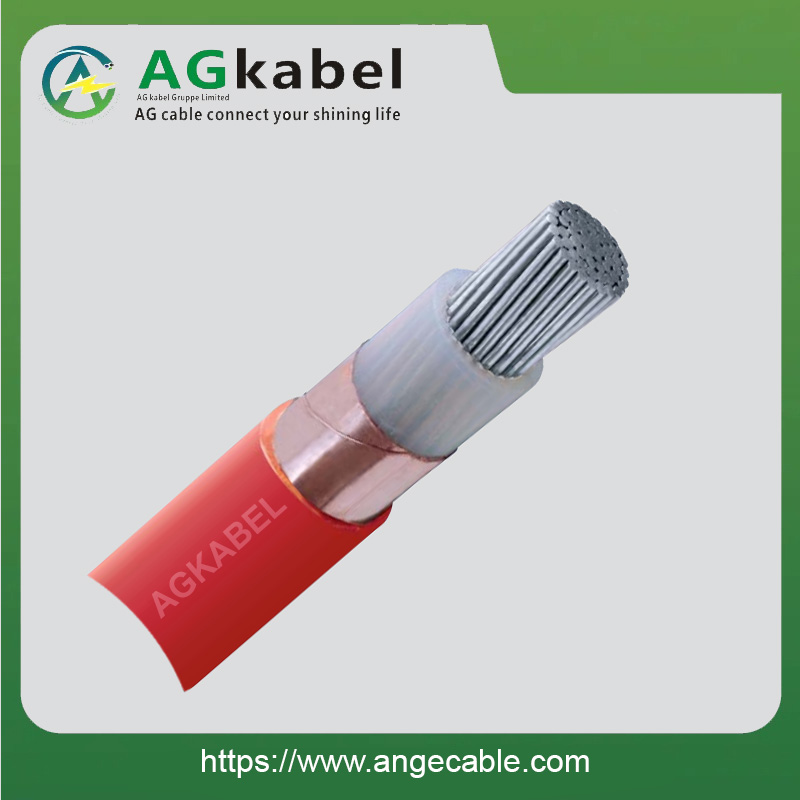
SAHEmT-et 0.6/1 kV Aluminium Conductor XLPE Insulated Copper Screened Power Cable – BDS 2581-86
The SAHEmT-et 0.6/1 kV aluminium conductor power cable is designed for electrical power transfer and distribution in public and metropolitan transportation networks. Manufactured according to BDS 2581-86, it features Class 2 stranded aluminium conductors, XLPE insulation, copper tape screening, and a protective red PVC Type P-5 outer sheath. Suitable for fixed installations in underground systems, cable ducts, tunnels, and conduits, it offers reliable electrical performance with a continuous operating temperature of +90°C and a maximum short-circuit temperature of +250°C.
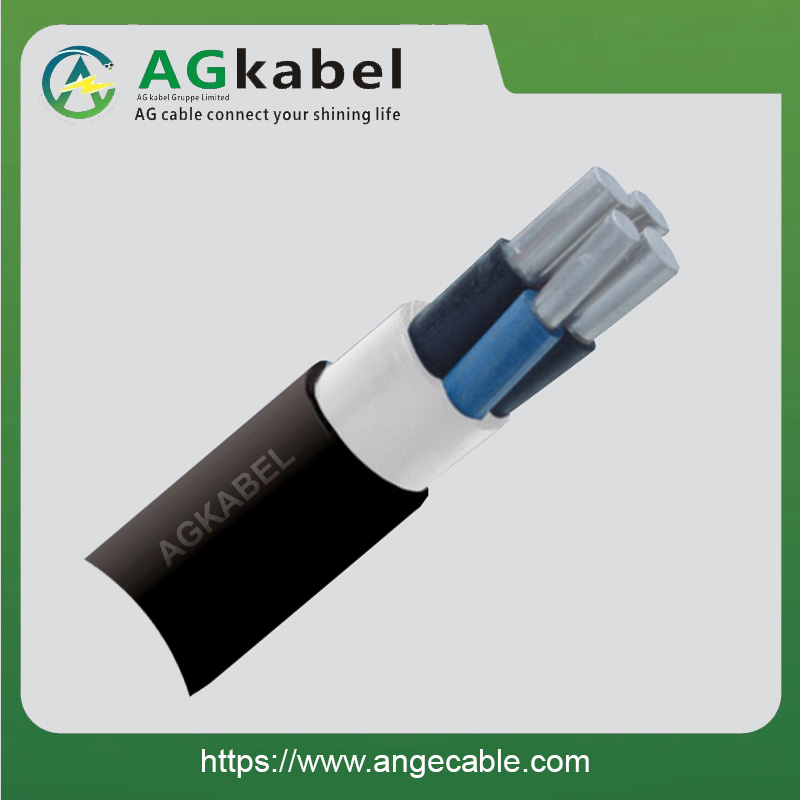
SAVTT 0.6/1 kV Aluminium Conductor PVC Insulated Power Cable – BDS 16291-85
The SAVTT 0.6/1 kV aluminium conductor power cable is designed for reliable electrical power transmission and distribution in industrial, commercial, and infrastructure applications. Manufactured according to BDS 16291-85, it features solid or stranded aluminium conductors, PVC insulation, a PVC inner sheath, and a protective PVC outer sheath. Suitable for indoor and outdoor installations, including rooms, canals, tunnels, shafts, and pits, this cable provides dependable performance with a maximum conductor operating temperature of +70°C.
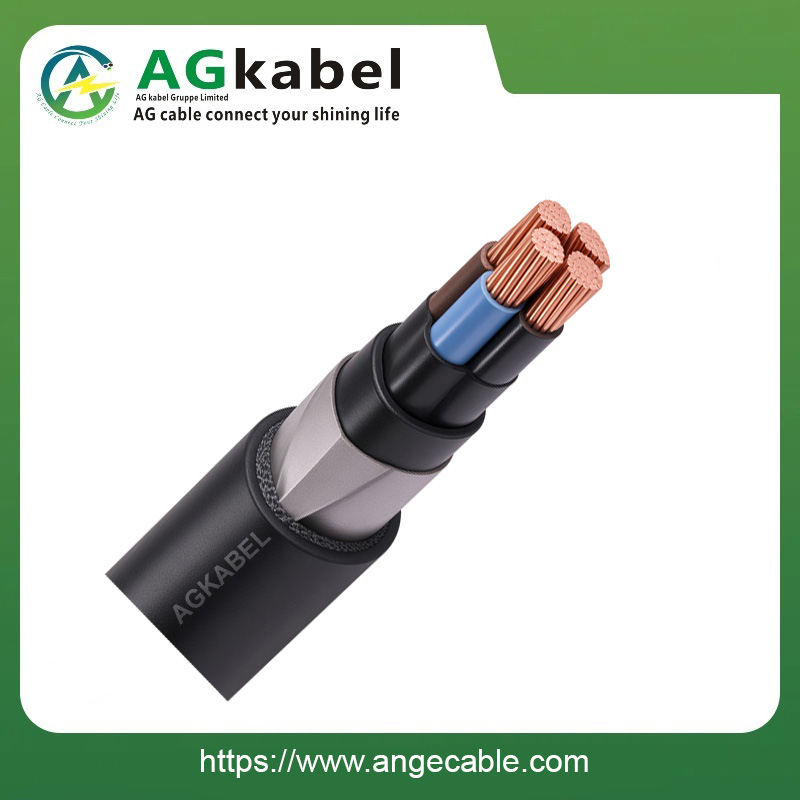
YBY-O & YBY-J 0.6/1 kV Armoured Copper Power Cable – IEC 60502-1
The YBY-O and YBY-J 0.6/1 kV cables deliver dependable power distribution for industrial, domestic, and control applications. Constructed with solid or stranded copper conductors, PVC insulation, and steel tape armour, they offer exceptional mechanical protection. Because they meet IEC 60502-1 standards and are CE/RoHS compliant, they provide a safe and reliable solution for underground and outdoor installations requiring extra protection.
Reviews
There are no reviews yet.