
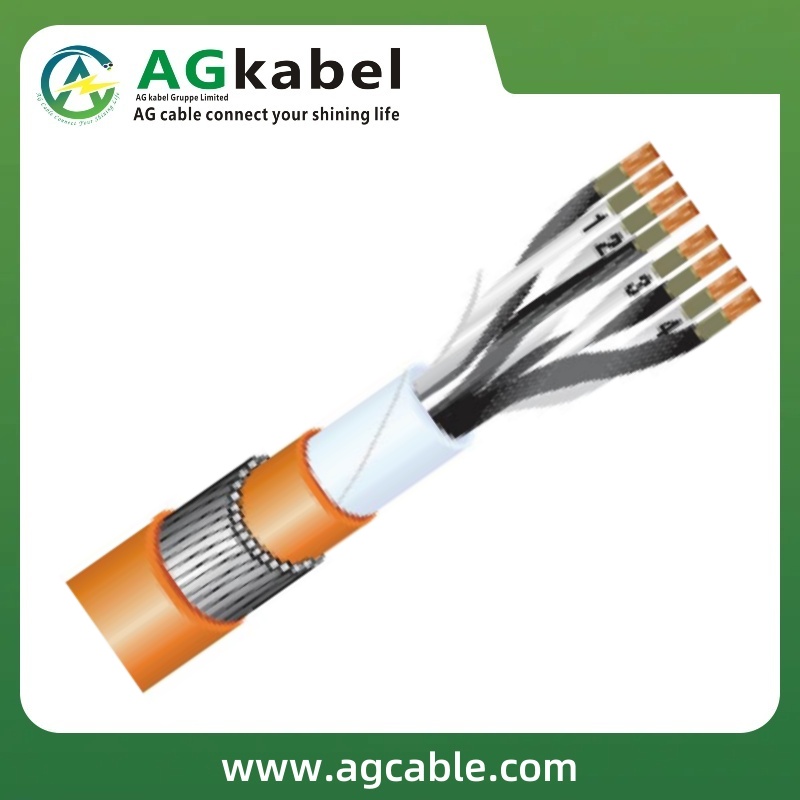
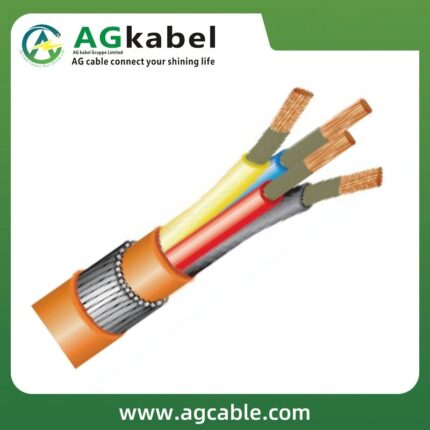
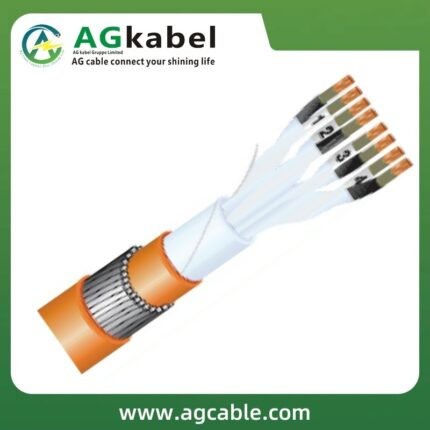
AGKABEL GRUPPE LIMITED presents the FR-XOL and FR-XoSL series of Fire Resistant Instrumentation Cables, engineered for critical applications that demand both continuous operation during a fire and high-integrity signal transmission. Designed to meet the rigorous requirements of modern industrial and commercial safety systems, these cables are ideal for fire alarm systems, emergency control circuits, and sensitive measurement applications.
The construction is meticulously designed for maximum protection. At its core is a Mica Tape fire barrier wrapped around Class 2 Plain Annealed Copper conductors. The insulation is available in either XLPE (90°C) or XLEVA (110°C) compounds. To ensure uninterrupted signal transmission free from electromagnetic interference (EMI), the cable includes an Overall Aluminium/Polyester Tape Screen with a 0.5 mm² Tinned Drain Wire.
Safety is paramount, which is why both the bedding and the outer sheath are made from LSZH (Low Smoke Zero Halogen) materials, reducing toxic smoke in an emergency. The FR-XOL variant is unarmoured for standard routing, while the FR-XoSL variant features a Galvanized Steel Wire Armour for environments requiring superior mechanical protection.
Technical Data
-
Conductor: Plain Annealed Copper (Class 2 Stranding)
-
Fire Barrier: Mica Tape
-
Insulation: (a) XLPE Compound or (b) XLEVA Compound
-
Screen: Overall Aluminium/Polyester Tape with 0.5 mm² (7/0.3mm) Tinned Drain Wire
-
Bedding: LSZH Compound
-
Armouring: Galvanized Steel Wire (FR-XoSL only)
-
Sheath: LSZH Compound
-
Colour: Insulation – White and Black with numberings; Sheath – Orange.
-
Reference Standard: IEC 60502 / BS 5308 / BS 7629
-
Test Standards: IEC 60331, BS 6387, SS299, IEC 60332-3, BS 4066, IEC 60754, BS 6425, IEC 61034, BS 7622-Part 2.
-
Voltage Uo/U: 300/500V
-
Operating Temperature: (a) Max 90°C for XLPE, (b) Max 110°C for XLEVA.
-
Minimum Bending Radius: 8D for unarmoured cable, 10D for armoured cable.
Technical Specifications Table (Sample Sizes)
| Nominal Conductor Area (mm²) | No. & Dia. of Wires (no./mm) | Radial Thick. of Insulation (mm) | FR-XOL Cable Overall Dia. (mm) | FR-XOL Approx. Weight (kg/km) | FR-XoSL Dia. Under Armour (mm) | FR-XoSL Armour Wire Dia. (mm) | FR-XoSL Cable Overall Dia. (mm) | FR-XoSL Approx. Weight (kg/km) |
|---|---|---|---|---|---|---|---|---|
| 1 Pair | ||||||||
| 1P x 1.0 | 7 / 0.43 | 0.6 | 8.0 | 76 | 8.0 | 0.90 | 12.4 | 281 |
| 1P x 1.5 | 7 / 0.53 | 0.7 | 8.5 | 94 | 8.5 | 0.90 | 13.1 | 332 |
| 1P x 2.5 | 7 / 0.67 | 0.8 | 10.5 | 130 | 10.5 | 0.90 | 15.1 | 401 |
| 2 Pairs | ||||||||
| 2P x 1.0 | 7 / 0.43 | 0.6 | 12.4 | 120 | 12.4 | 0.90 | 17.4 | 370 |
| 2P x 1.5 | 7 / 0.53 | 0.7 | 14.0 | 160 | 14.0 | 0.90 | 18.4 | 450 |
| 2P x 2.5 | 7 / 0.67 | 0.8 | 16.0 | 230 | 16.0 | 0.90 | 20.5 | 550 |
| 5 Pairs | ||||||||
| 5P x 1.0 | 7 / 0.43 | 0.6 | 16.5 | 276 | 16.5 | 1.25 | 22 | 854 |
| 5P x 1.5 | 7 / 0.53 | 0.7 | 20.5 | 368 | 20.5 | 1.25 | 26.2 | 1023 |
| 5P x 2.5 | 7 / 0.67 | 0.8 | 23.0 | 518 | 23.0 | 1.25 | 28.9 | 1276 |
| 10 Pairs | ||||||||
| 10P x 1.0 | 7 / 0.43 | 0.6 | 20.5 | 501 | 20.5 | 1.25 | 26.4 | 1271 |
| 10P x 1.5 | 7 / 0.53 | 0.7 | 26.0 | 673 | 26.0 | 1.60 | 32.8 | 1742 |
| 10P x 2.5 | 7 / 0.67 | 0.8 | 29.5 | 971 | 29.5 | 1.60 | 36.5 | 2205 |
| 20 Pairs | ||||||||
| 20P x 1.0 | 7 / 0.43 | 0.6 | 26.5 | 917 | 26.5 | 1.60 | 33.3 | 2197 |
| 20P x 1.5 | 7 / 0.53 | 0.7 | 34.0 | 1258 | 34.0 | 1.60 | 41.2 | 2705 |
| 20P x 2.5 | 7 / 0.67 | 0.8 | 38.5 | 1830 | 38.5 | 2.00 | 46.7 | 3636 |
(Note: Other conductor sizes & core configurations are available upon request.)
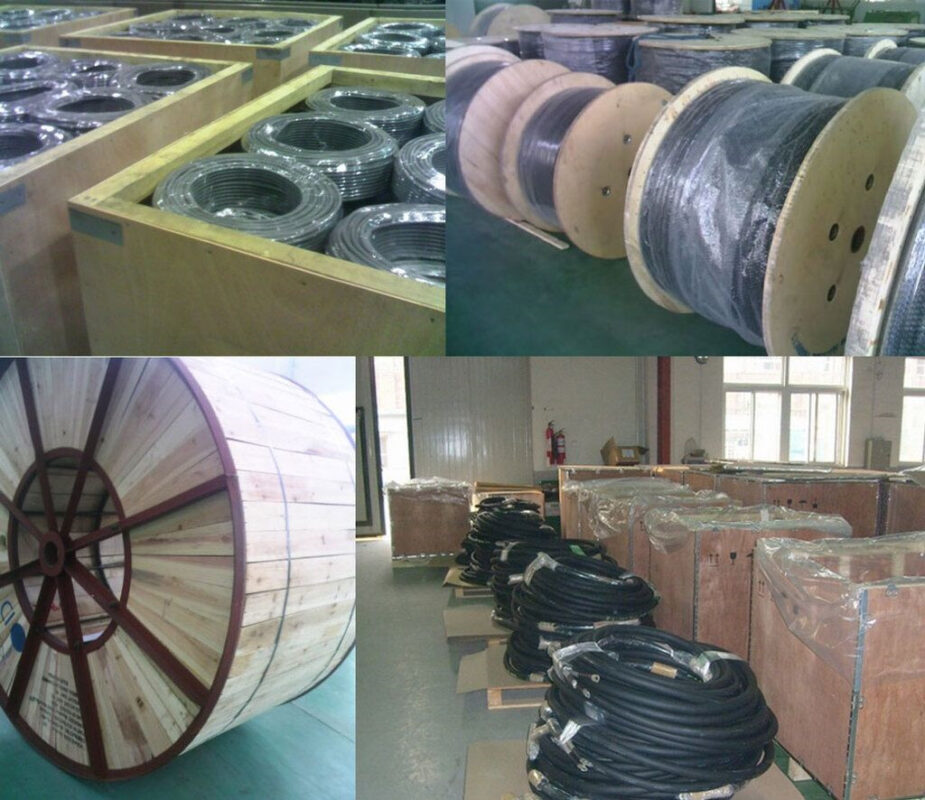
Factory Overview
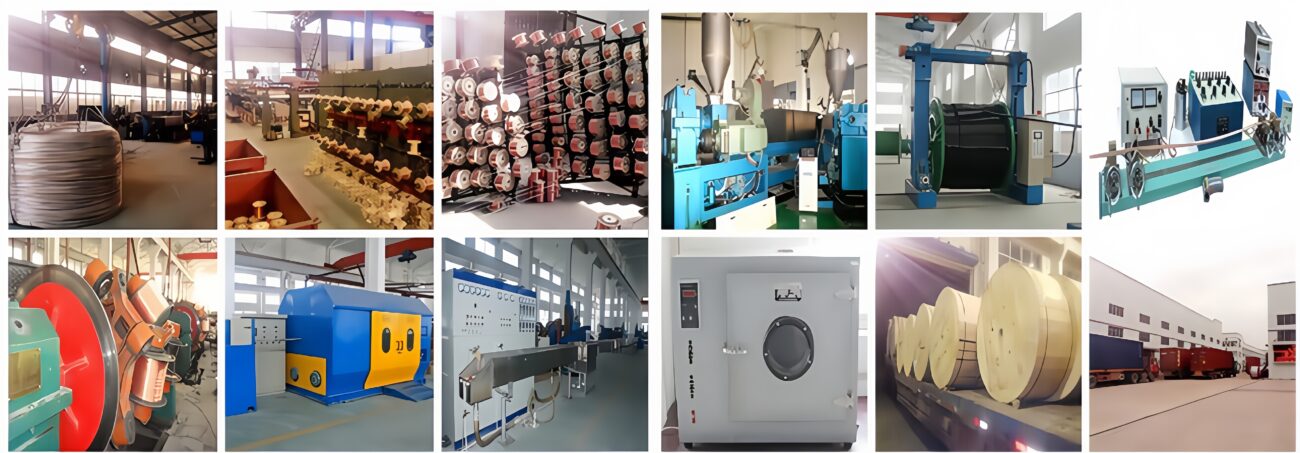
Packaging & Shipping

Frequently Asked Questions (FAQ)
Q1: What makes these cables different from standard fire-resistant power cables?
A: These are Instrumentation Cables. Unlike standard power cables, they include an Overall Aluminium/Polyester Tape Screen with a Tinned Drain Wire. This screening is critical for protecting low-voltage control and measurement signals from electromagnetic interference (EMI) in industrial environments, while the Mica tape ensures they survive a fire.
Q2: What is the difference between FR-XOL and FR-XoSL?
A:
-
FR-XOL: Unarmoured, lighter, and more flexible for standard cable tray or conduit routing.
-
FR-XoSL: Armoured with Galvanized Steel Wire. This provides superior mechanical protection against impact and rodent damage, making it suitable for harsh environments or direct burial.
Q3: How does the Mica Tape work?
A: The Mica Tape is wrapped directly over the copper conductors. Under the intense heat of a fire, the mica transforms into a hard, ceramic-like insulating crust. This prevents short circuits, allowing emergency systems (like fire alarms or smoke extractors) to keep functioning.
Q4: Why is LSZH used in the construction?
A: LSZH (Low Smoke Zero Halogen) materials are used for the bedding and the orange outer sheath. In a fire, they emit very little smoke (keeping escape routes visible) and do not release toxic, corrosive halogen gases, protecting both people and sensitive electronic equipment.
Q5: What do the reference standards BS 5308 and BS 7629 signify?
A:
-
BS 5308: The British Standard for instrumentation cables, ensuring they meet specific electrical and signal integrity requirements.
-
BS 7629: The British Standard for fire-resistant cables, ensuring they maintain circuit integrity under fire conditions.
Q6: How are the pairs identified?
A: The insulation features White and Black cores with numberings, making it easy to identify individual pairs for proper termination in instrumentation panels.
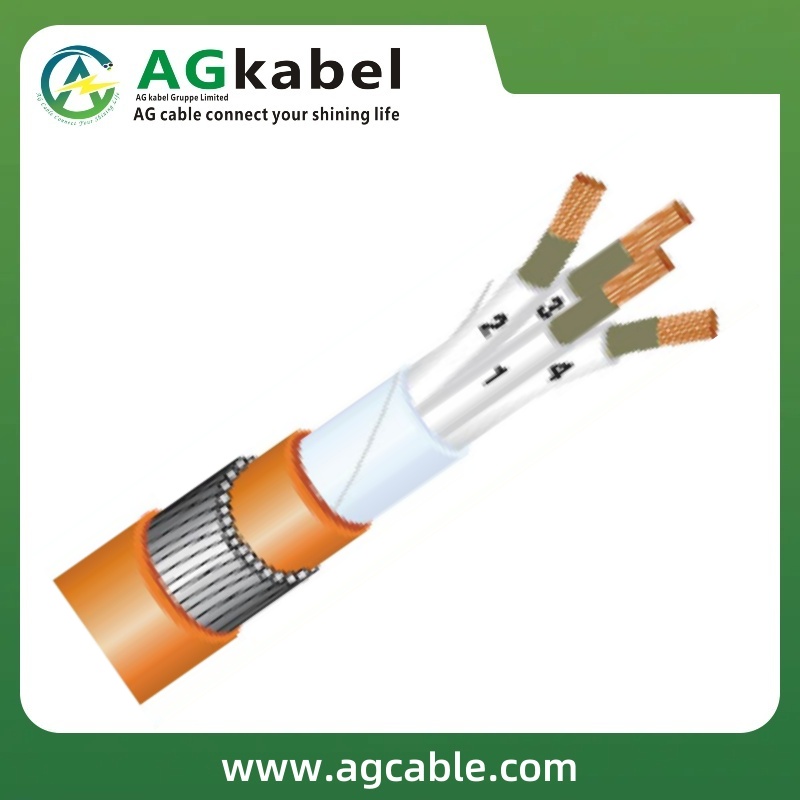
AGKABEL Fire Resistant Instrumentation Cables – FR-XOL (Unarmoured) & FR-XOSL (Armoured) Multi-Cores
AGKABEL Fire Resistant Instrumentation Cables (FR-XOL & FR-XOSL) are premium multi-core cables engineered to maintain circuit integrity and signal accuracy during severe fires. Featuring a Mica Tape fire barrier and an Overall Aluminium/Polyester Screen to protect against electromagnetic interference (EMI), they are built with XLPE or XLEVA insulation and LSZH bedding/sheath for low smoke and toxicity. The FR-XOL is unarmoured for flexible routing, while the FR-XOSL features a Galvanized Steel Wire Armour for superior mechanical protection. Fully compliant with IEC 60331, BS 5308, and BS 7629, they are rated 300/500V and available in configurations from 2 to 19 cores.
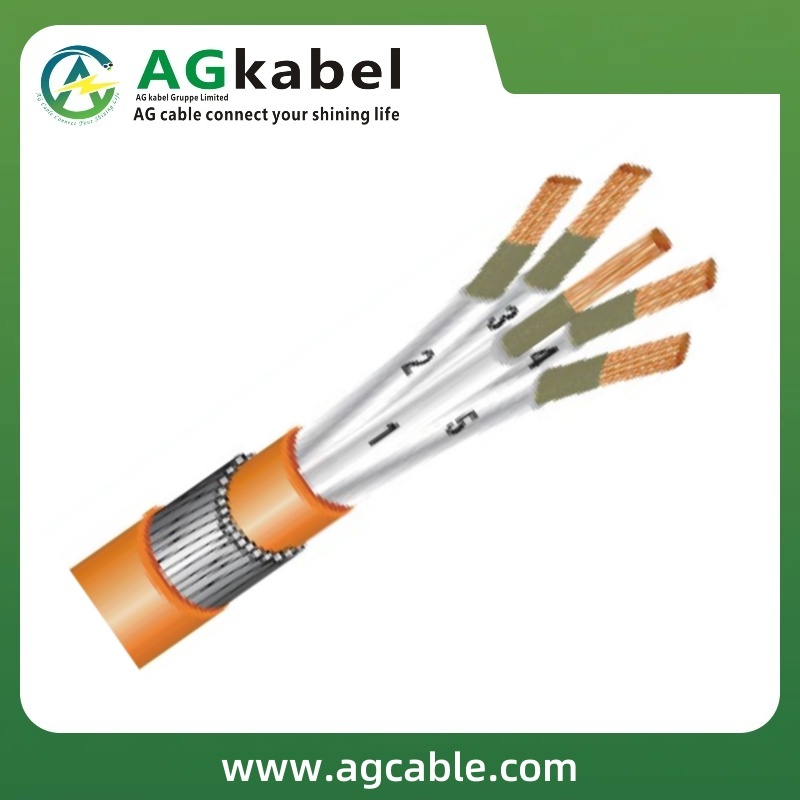
AGKABEL Fire Resistant Multi-Core Cables – FR-XH (Unarmoured) & FR-XSH (Armoured) – Mica Tape, LSZH
AGKABEL Fire Resistant Multi-Core Cables (FR-XH & FR-XSH) are premium safety cables engineered to maintain circuit integrity during severe fires, ensuring critical systems like fire alarms and emergency lighting remain powered. Featuring a Mica Tape fire barrier wrapped around plain annealed copper conductors, they are insulated with either XLPE (90°C) or XLEVA (110°C) and use LSZH (Low Smoke Zero Halogen) bedding and sheathing for maximum safety and low toxicity. The FR-XSH variant adds a Galvanized Steel Wire Armour for robust mechanical protection. With cores identified by white insulation with black numbers and a distinctive orange sheath, these cables comply with rigorous standards like IEC 60331 and BS 6387, making them ideal for complex, safety-critical infrastructure.
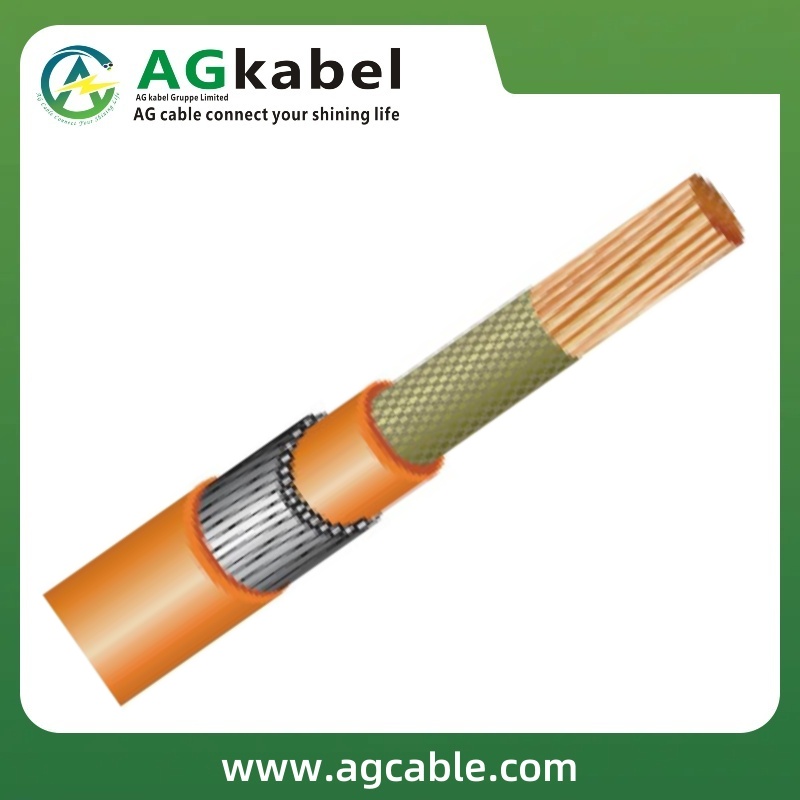
AGKABEL Fire Resistant Single Core Cables – FR-H, FR-XH, FR-XAH (Mica Tape, LSZH, 600/1000V)
AGKABEL Fire Resistant Single Core Cables (FR-H, FR-XH, FR-XAH) are high-performance safety cables designed to maintain circuit integrity during extreme fire conditions. Featuring a critical Mica Tape fire barrier wrapped around plain annealed copper conductors, these cables ensure critical power systems continue to function. Available in non-sheathed (FR-H), unarmoured LSZH (FR-XH), and Aluminium Wire Armoured LSZH (FR-XAH) options, they are rated for 600/1000V and offer XLPE (90°C) or XLEVA (110°C) insulation. Fully compliant with IEC 60331 and BS 6387, they are the ideal choice for emergency lighting, fire alarms, and safety-critical infrastructure.
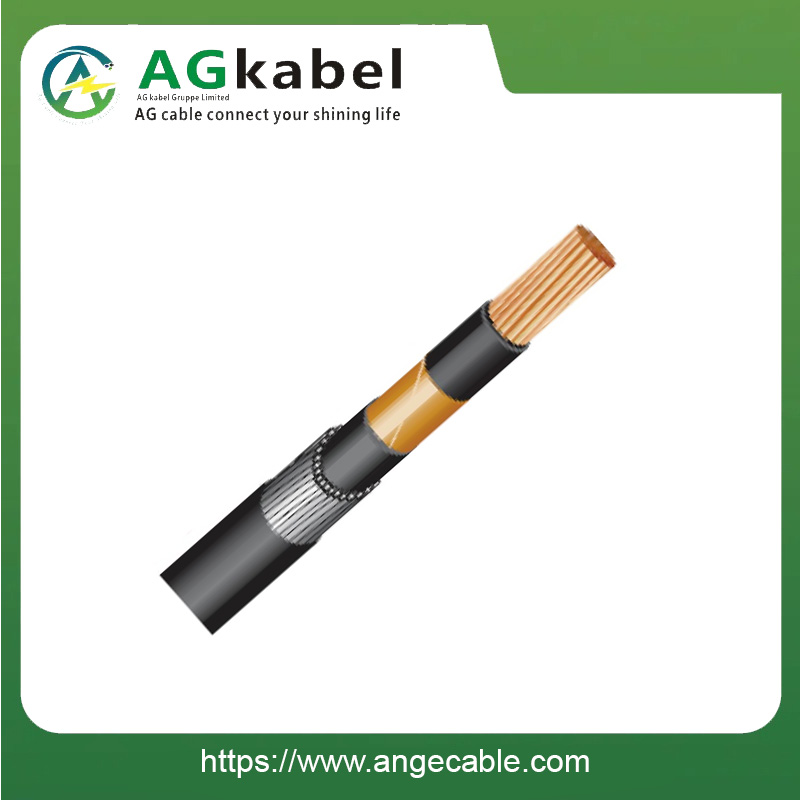
FRT-XCAH Flame Retardant Screened Single Core Cable
This flame retardant screened single core cable is engineered for VSD applications and electrical noise reduction in demanding industrial environments. It features a plain annealed copper conductor with XLPE insulation and a copper tape/tinned copper wire braid screen for excellent interference protection. The LSZH outer sheath and aluminium wire armour ensure safety with low smoke and zero halogen emissions. Available in sizes from 70mm² to 1000mm², it is compliant with IEC 60502 and IEC 60332-3 standards.
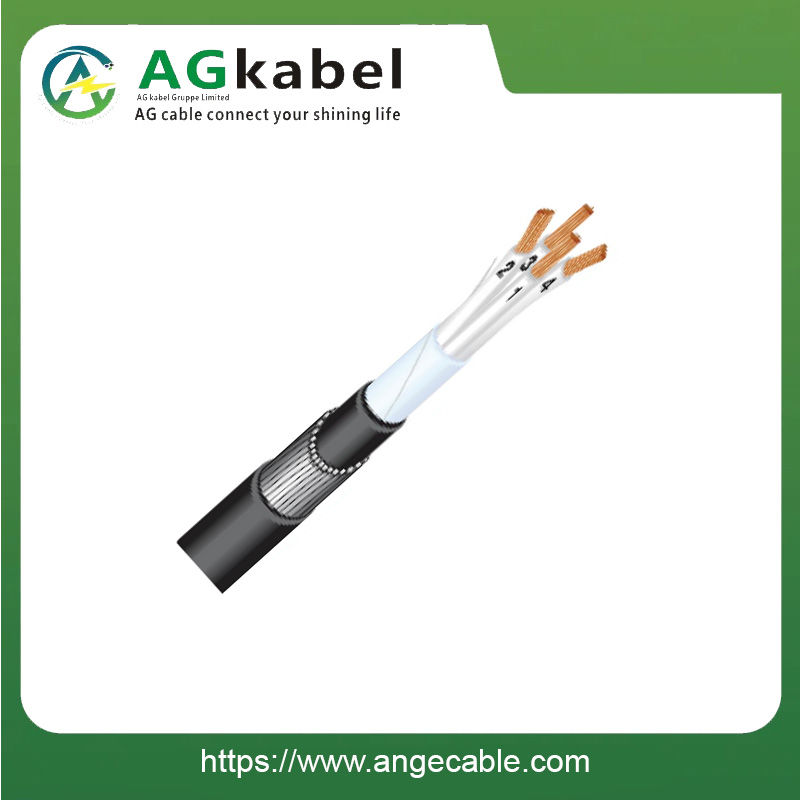
FRT-XOL & FRT-XOSL Flame Retardant Instrumentation Cables
These flame retardant instrumentation cables are engineered for multi-core signal transmission in critical industrial environments. They feature plain annealed copper conductors with XLPE or XLEVA insulation and an aluminium/polyester tape screen with a tinned drain wire for excellent interference protection. The LSZH outer sheath ensures safety with low smoke and zero halogen emissions, while the armoured version adds galvanized steel wire for mechanical protection. Available in various configurations, they are compliant with BS 5308 and BS 6724 standards.
Reviews
There are no reviews yet.