


❓ Frequently Asked Questions (FAQ)
1. What is the main difference between Type EVT and Type EVJT cables?
The primary difference is the voltage rating and available sizes:
-
Type EVT: Rated for 600 Volts. It is available in a wider range of sizes, from 14 AWG up to 2 AWG, making it suitable for higher-power charging applications.
-
Type EVJT: Rated for 300 Volts. It is available in smaller sizes (14 AWG and 12 AWG), typically used for lighter-duty or specific EV charging connections.
2. What are the primary applications for these cables?
They are designed for Electric Vehicle (EV) charging infrastructure. They are intended for both indoor and outdoor use in accordance with Article 400 of the National Electrical Code (NEC).
3. What is the operating temperature range?
Both the EVT and EVJT cables are engineered for extreme environments, operating efficiently in temperatures ranging from -50°C to 105°C.
4. What materials are used for the insulation and jacket?
Both cables use Thermoplastic Elastomer (TPE) for the insulation and the outer jacket. This material provides excellent flexibility, high abrasion resistance, and protection against heat, cold, oil, solvents, and chemicals.
5. What does the “3C+1C” configuration mean?
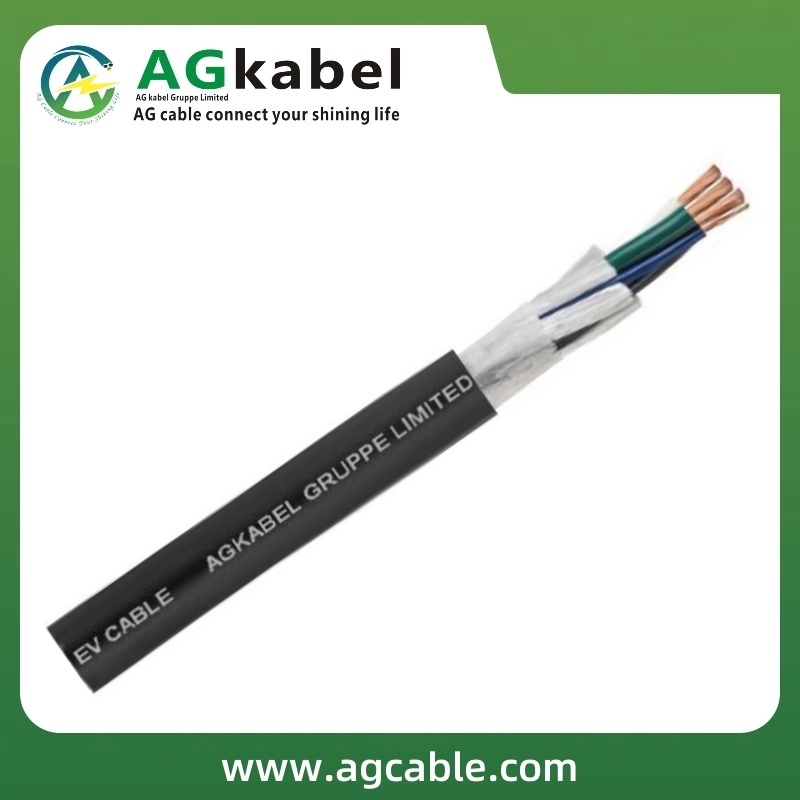
The “3C+1C” indicates the cable contains 3 main power conductors (sized 14 AWG to 2 AWG depending on the model) plus 1 ground/neutral conductor (which is 18 AWG in these specifications).
6. What standards do these EV charging cables comply with?
They are manufactured to comply with UL62 standards. The conductors are made of annealed stranded bare copper conforming to ASTM B-174.
7. Are these cables resistant to wear and tear?
Yes. The TPE jacket provides excellent abrasion resistance and heat aging resistance. Furthermore, the cables are highly resistant to chemicals, solvents, and oils, which is crucial for long-term exposure in outdoor charging environments.
Reviews
There are no reviews yet.