
Application
EVAVB and EVAVB-F2 medium voltage three-core cables provide reliable transfer and distribution of electrical power in networks with a nominal voltage of 6000 V. They operate efficiently at a nominal voltage of Uo/U 3.6/6 kV, in industrial plants. Furthermore, installers use them for the electrical supply of substations, small and medium industrial plants, and power stations. Because of their robust design, they are suitable for fixed assembly in lines with unlimited difference levels, underground laying, and cable ducts. Additionally, they perform reliably in conduits, trenches, pipes, shafts, on shelves and grilles, directly underground in ditch, and outdoor under shelters.
Cable construction
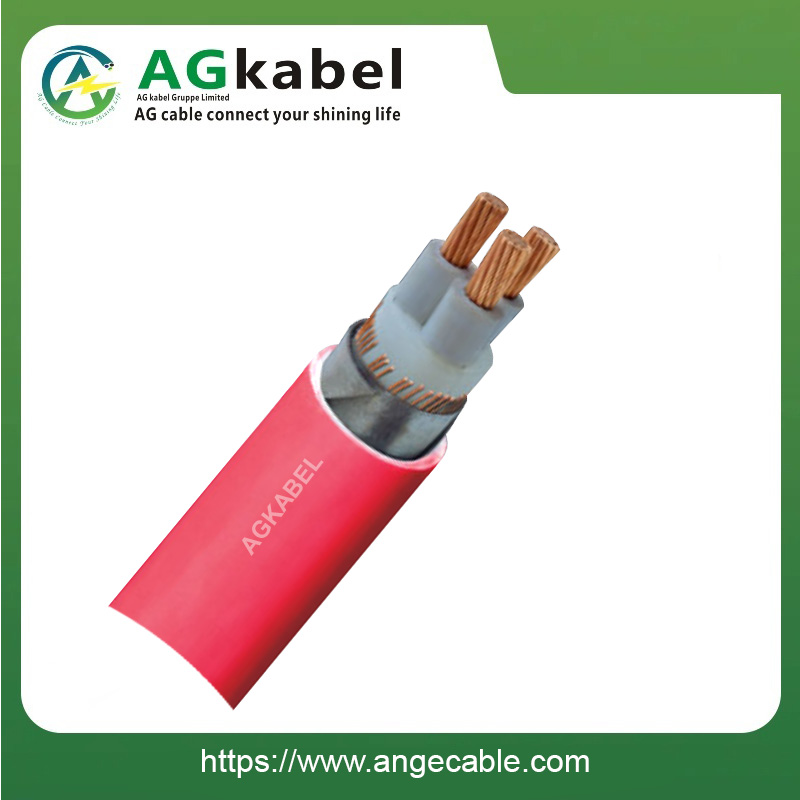
This cable strictly adheres to NBN C 33-121 standards. It features copper stranded compacted circular and sector conductors according to NBN C 33-121 (IEC60228 class 2). The insulation uses a PVC compound. The cable assembly features three insulated phases twisted with fillings and tape support. A polymer material forms the inner sheath. The armour consists of two steel tapes underneath the armour wires that are laid radially (the tapes form the screen). For improved mechanical protection, two steel tapes are laid concentrically. The outer sheath uses a PVC compound for EVAVB, while a PVC compound flame retardant is used for EVAVB-F2. The color is black. Furthermore, this product is RoHS compliant.
Technical Data
The cable delivers consistent performance under specific conditions. It maintains a conductor resistance at 20 °C according to NBN C 33-121 (IEC60228 class 2). The operating temperature reaches 70 °C continuous. In a short circuit, it withstands 160 °C for a maximum of 5 seconds. It operates at a nominal voltage of Uo/U 3.6/6 kV. The maximum voltage no load is 6000V at 20°C min-5.9*1013 Ωcm and at 60°C min-1*1011 Ωcm. Test voltage is AC (+) – 20 min between cores and between cores and screen (former) 3kV. The minimum bending radius is 20 times the cable diameter. The temperature of laying is no less than 0 °C. The temperature of explosion is -15 to 70 °C. The flame retardant rating follows NBN C 33-004 category F2.
Constructive Data Table
Please refer to the following comprehensive specifications for precise sizing, weight, and diameter information.
Construction data EVAVB, EVAVB-F2 3.6/6 kV
| Number of conductors and nominal cross section | Thickness of insulation | Thickness of steel tapes | Max. resistance of the armour | Thickness of sheath | Cable diameter approx. | EVAVB, EVAVB-F2 Mass of Cu approx. | EVAVB, EVAVB-F2 Mass of cable approx. |
|---|---|---|---|---|---|---|---|
| N x mm² | mm | mm | Ω/km | mm | mm | kg/km | kg/km |
| 3x25m | 3,2 | 0,5 | 1,6 | 2,2 | 37,3 | 670 | 2670 |
| 3x35m | 3,2 | 0,5 | 1,35 | 2,2 | 40,4 | 1170 | 3075 |
| 3x50m | 3,2 | 0,5 | 1,15 | 2,2 | 38,4 | 1640 | 2980 |
| 3x70m | 3,2 | 0,7 | 0,80 | 2,2 | 41,8 | 2300 | 3700 |
| 3x95m | 3,4 | 0,7 | 0,90 | 2,4 | 46,4 | 3030 | 5020 |
| 3x120m | 3,4 | 0,7 | 0,80 | 2,6 | 49,5 | 3800 | 5920 |
| 3x150m | 3,4 | 0,7 | 0,75 | 2,6 | 52,4 | 4700 | 6800 |
| 3x185m | 3,4 | 0,7 | 0,70 | 2,8 | 56,1 | 5940 | 8000 |
| 3x240m | 3,6 | 0,7 | 0,65 | 3,0 | 61,6 | 7440 | 10150 |
Note: Other core configuration and special constructions manufactured upon request.
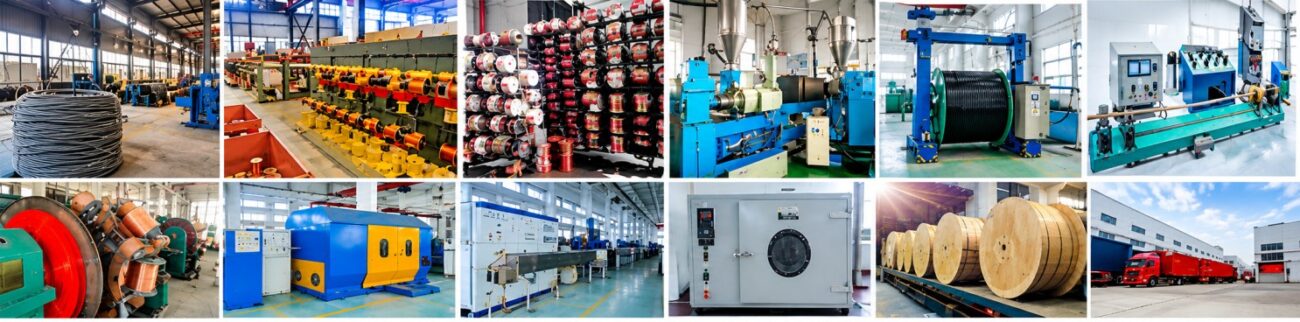
Factory Overview
Packaging & Shipping

Frequently asked questions and answer ( Q:- A:- )
Q:- What is the primary application of the EVAVB and EVAVB-F2 cables?
A:- They are designed for the transfer and distribution of electrical power in networks with a nominal voltage of 6000 V, such as substations and small to medium industrial plants.
Q:- What is the nominal voltage level available for this cable?
A:- The cables operate at a nominal voltage of Uo/U 3.6/6 kV.
Q:- What standards does the cable construction follow?
A:- The construction adheres to NBN C 33-121 standards, and the conductor complies with NBN C 33-121 (IEC60228 class 2).
Q:- What type of conductor and insulation does it use?
A:- It uses copper stranded compacted circular and sector conductors with PVC insulation.
Q:- What kind of armour and screen are used?
A:- The armour consists of two steel tapes laid concentrically for mechanical protection, and two steel tapes underneath the armour wires form the screen.
Q:- What are the differences between the EVAVB and EVAVB-F2 variants?
A:- The EVAVB uses a standard PVC outer sheath, while the EVAVB-F2 uses a flame retardant PVC compound outer sheath.
Q:- What is the maximum operating and short-circuit temperature?
A:- The maximum operating temperature is 70°C continuous, and it can withstand a short circuit temperature of 160°C for a maximum of 5 seconds.
Q:- What is the test voltage for this cable?
A:- Test voltage is AC (+) – 20 min between cores and between cores and screen at 3 kV.
Q:- What is the minimum bending radius for installation?
A:- The minimum bending radius is 20 times the cable diameter (20x D cable).
Q:- What are the temperature limits for laying and explosion?
A:- The temperature of laying is no less than 0°C, and the temperature of explosion is -15 to 70°C.
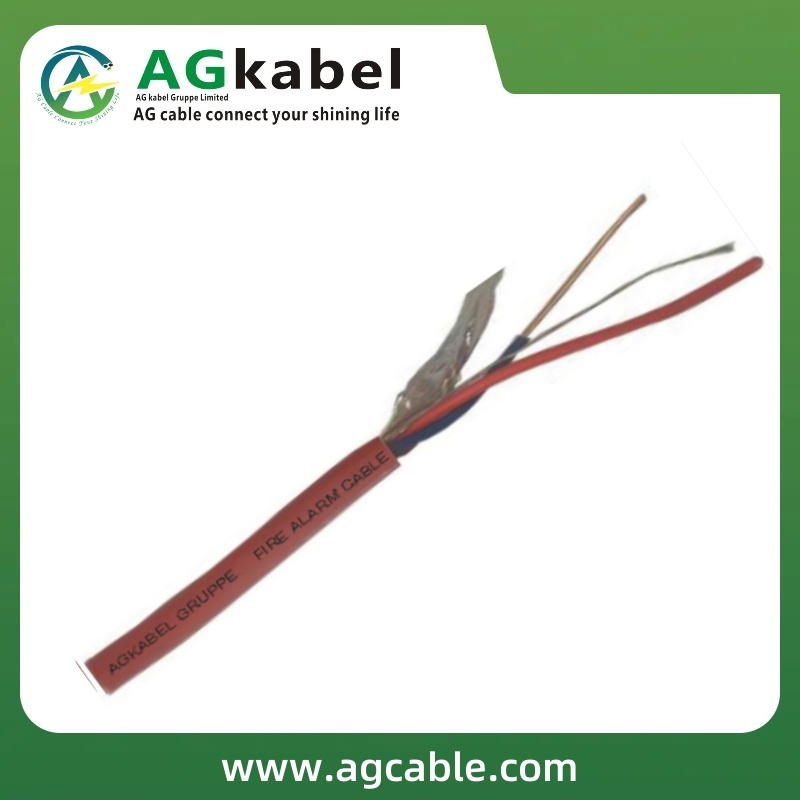
AGKABEL Screened (Aluminium Foil) Fire Alarm Cables – 12/80V
Specialized fire alarm cable designed for commercial and industrial installations. Features Plain Annealed Copper Class 2 conductors, V-90HT PVC insulation, Aluminium Foil shielding with a Drain Wire (7/0.20TC), and an easy-peel V-90HT PVC sheath. Compliant with AS/NZS 5000, AS/NZS 1125, IEC 60228, IEC 60332-1, and AS/NZS 3808. Max operating temperature: 105°C. Available in 1.0mm² and 1.5mm².
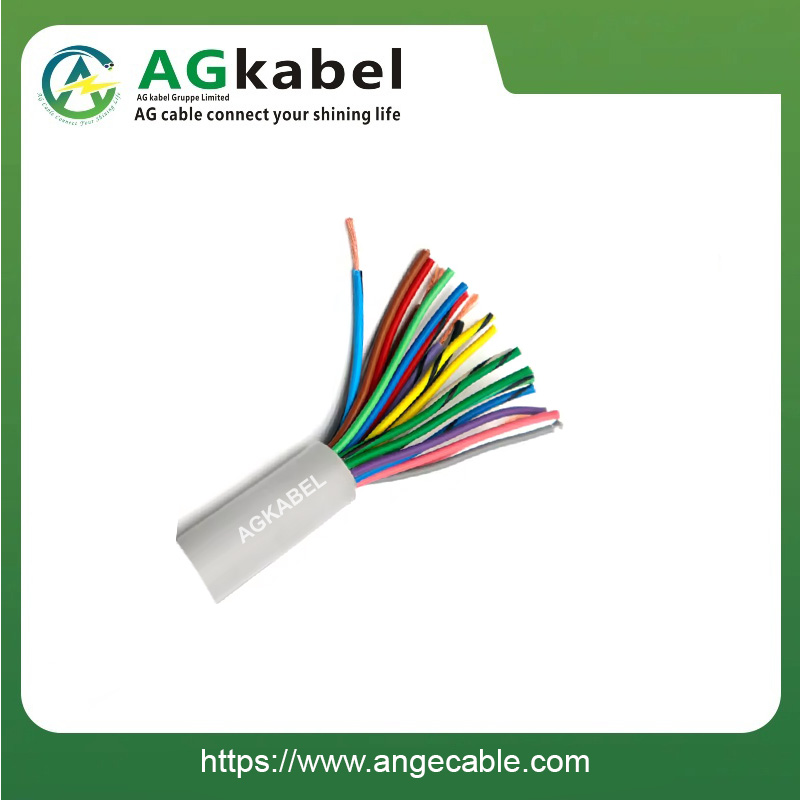
LiYY Flexible PVC Control and Interconnection Cable – VDE 0812
The LiYY cable delivers dependable data transmission for instrumentation, control engineering, and telecommunication systems. Constructed with flexible plain copper conductors, PVC insulation, and a grey PVC outer sheath, it offers exceptional flexibility and protection. Because it meets VDE 0812 standards and is CE/RoHS compliant, it provides a safe and reliable solution for flexible installations in dry rooms.
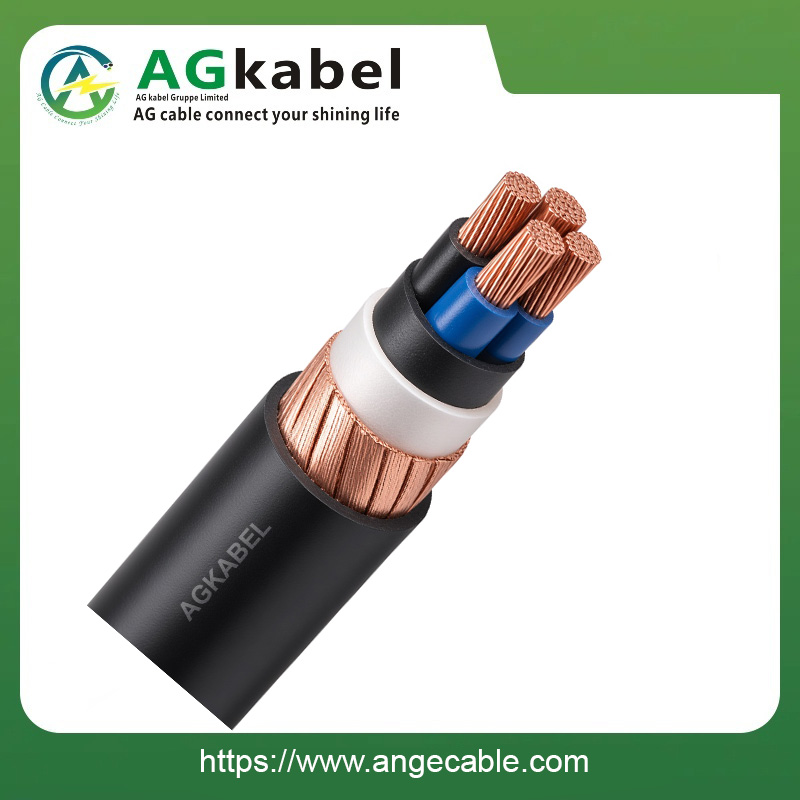
NAYCY 0.6/1 kV Aluminum Power Cable – Concentric Copper Conductor & VDE 0276
The NAYCY 0.6/1 kV cable delivers dependable power distribution for industrial and domestic applications. Constructed with solid or stranded aluminum conductors, PVC insulation, a unique concentric copper conductor, and a black PVC outer sheath, it offers exceptional mechanical protection. Because it meets strict VDE standards and is CE/RoHS compliant, it provides a safe and reliable solution for underground and outdoor installations.
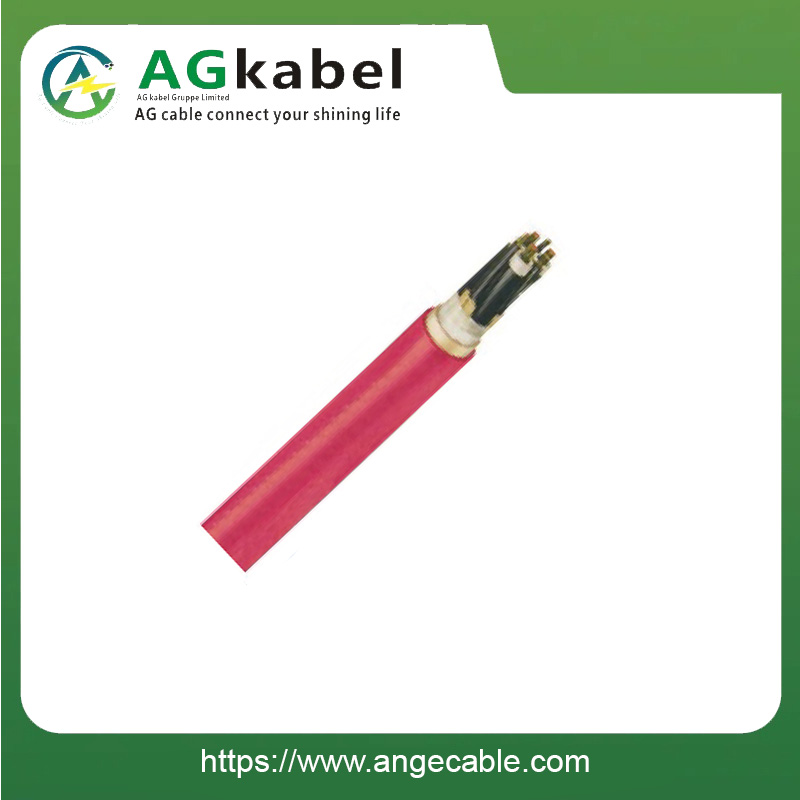
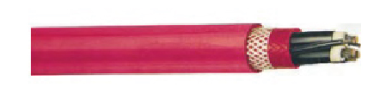
NTSWöu & NTSCGEWöu Mining Cables – DIN VDE 0250
The NTSWöu and NTSCGEWöu cables deliver dependable power supply for heavy machinery in the most demanding environments. Constructed with fine copper strands, robust rubber insulation, and advanced screening or steel wire armour, they offer exceptional mechanical strength and resistance to harsh conditions. Because they meet DIN VDE 0250 standards, they provide a safe and reliable solution for mines, quarries, and conveyor systems.
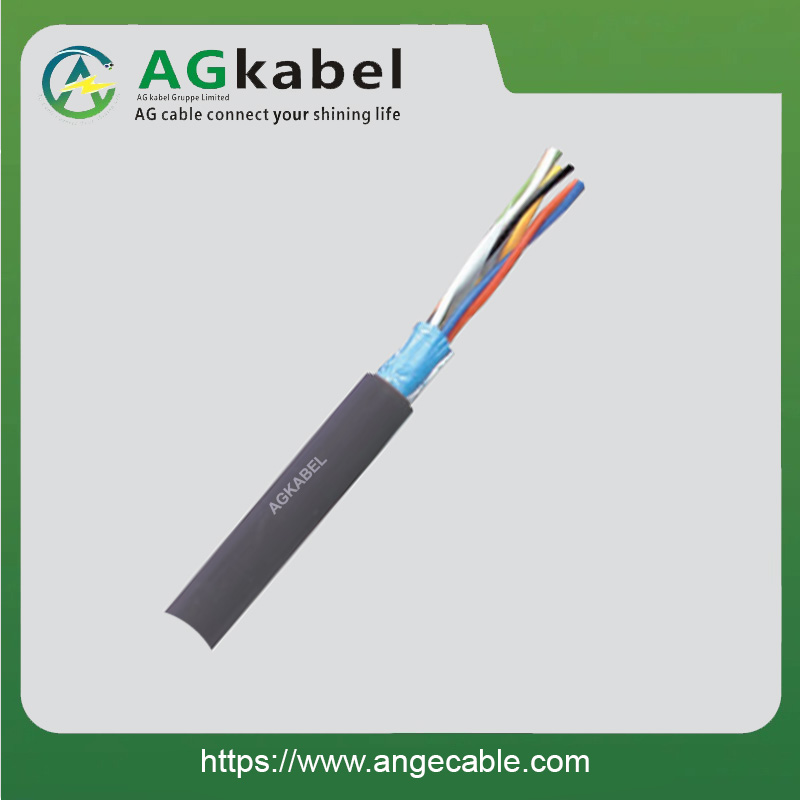
RD-Y(St)Y Instrumentation and Control Cable – BS 5308 Part 2
The RD-Y(St)Y cable delivers dependable data transmission for measuring and control appliances. Constructed with bare copper conductors, PVC insulation, a static aluminum tape screen with a tinned copper wire, and a black PVC outer sheath, it offers exceptional signal integrity and interference protection. Because it meets BS 5308 Part 2 standards and is RoHS compliant, it provides a safe and reliable solution for fixed installations in dry, wet, and outdoor wall environments.
Reviews
There are no reviews yet.