
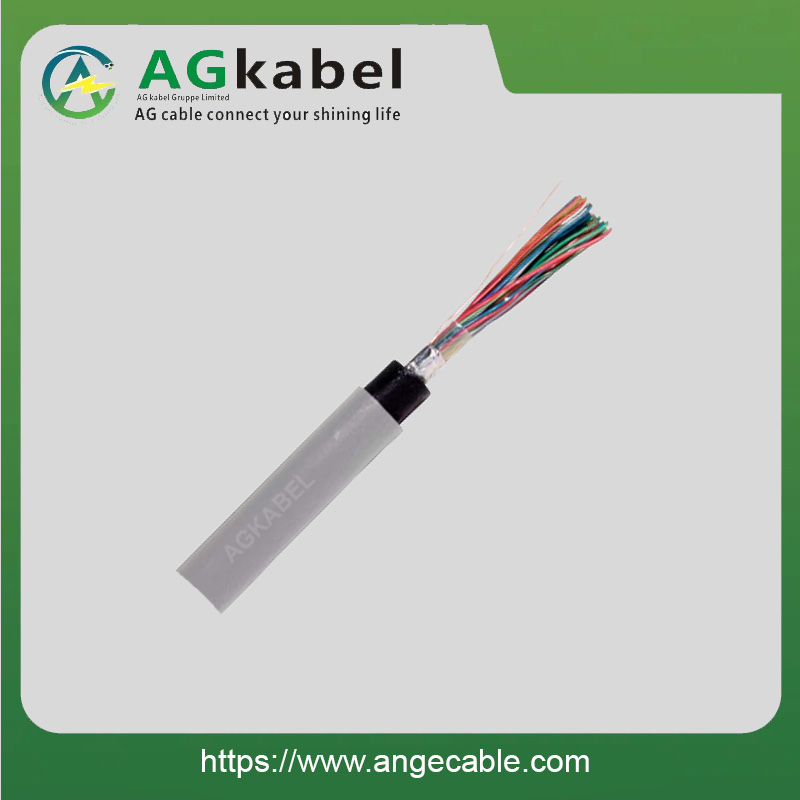
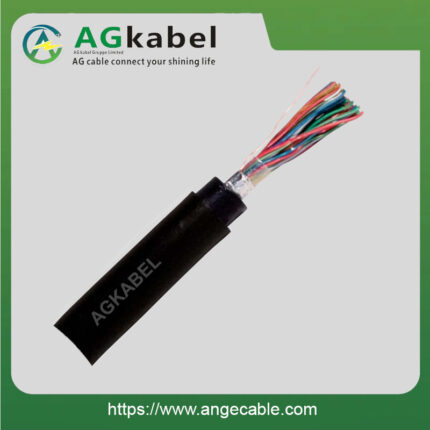
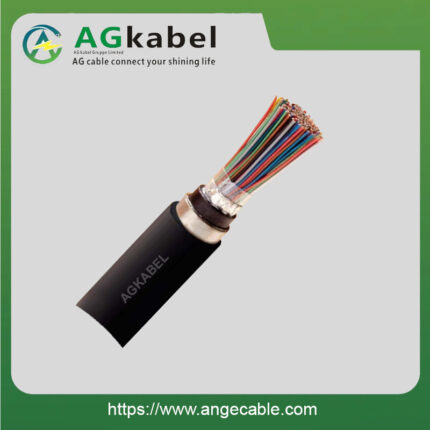
These communication cables are specifically used as connecting cables in local networks and PABX systems for telephone purposes and for the transmission of signals. Because they are suitable for laying in collectors where higher mechanical load is present, they are highly reliable for demanding infrastructure projects. However, the use of these cables for power installations is explicitly not permitted, ensuring they remain dedicated to signal transmission applications.
The cable structure features a bare copper conductor with diameters of 0.4 mm, 0.5 mm, 0.6 mm, or 0.7 mm, which is insulated with PE low density. Four wires are twisted into a quad, and 5 quads are twisted to a basic unit. The units are stranded into a cable with several layers of plastic tapes, an aluminium tape screen, and a laminated copper wire with a diameter of 0.5mm. Finally, the assembly is protected by a PE low density with 2.5% carbon black, or alternatively, a PVC plastic protective sheath in a color grey, providing excellent mechanical protection.
Technical Data & Construction Overview:
-
Conductor diameter: 0.4 mm / 0.5 mm / 0.6 mm / 0.7 mm
-
Conductor resistance at 20°C-max: 150 Ω/km / 95 Ω/km / 65 Ω/km / 48 Ω/km
-
Insulation resistance – min: 10 GΩ x km
-
Mutual capacitance at 800Hz-nom: 48 nF/km
-
Capacitance unbalances at 800Hz-max: K1: 980 pF/500m; Ke: 1,500 pF/500m; K9-K12: 50% of all values; K9-K12: 300 pF/500m; 20% of all values; 200 pF/500m
-
Test voltage 50Hz, 2 min: Wire-wire 500V / Wire-screen 2000V
-
Operating voltage peak value: Cables with cores 0.4 and 0.5mm: 150V; Cables with cores 0.6 and 0.7mm: 220V
-
Temperature range: Laying and installing -10°C up to +60°C; Exploitation and storage -40°C up to +60°C
-
Bending radius, min. approx.: 10 x cable diameter
Cable core construction
| Number of pairs | Number of quads | Number of units in the layers | |||||
|---|---|---|---|---|---|---|---|
| 1-st layer | 5×4 | 2-nd layer | 25×4 | 1-st layer | 50×4 | ||
| 6 | 3 | 3-quads | |||||
| 10 | 5 | 5 | |||||
| 20 | 10 | 5 | 5 | ||||
| 30 | 15 | 5 | 10 | ||||
| 50 | 25 | 5 | 7 | 5 | |||
| 100 | 50 | 3 | 6 | ||||
| 150 | 75 | 3 | |||||
| 200 | 100 | 4 | |||||
| 250 | 125 | 5 | 5 | ||||
| 300 | 150 | 6 | |||||
| 400 | 200 | 8 | |||||
| 500 | 250 | 5 | 5 | ||||
| 600 | 300 | 6 | 6 | ||||
| 700 | 350 | 7 | 7 | ||||
| 800 | 400 | 8 | 8 | ||||
| 1000 | 500 | 10 |
Construction data TPPV…x2x0.4
| Number of pairs | Outer diameter approx. mm | Copper weight approx. kg/km | Cable weight approx. kg/km |
|---|---|---|---|
| 10 | 12.6 | 17 | 192 |
| 20 | 16.3 | 51 | 292 |
| 30 | 18.3 | 76 | 325 |
| 50 | 20.2 | 127 | 375 |
| 100 | 26.2 | 254 | 601 |
| 150 | 29.7 | 376 | 809 |
| 200 | 33.2 | 501 | 979 |
| 250 | 33.4 | 634 | 1176 |
| 300 | 35.9 | 813 | 1385 |
| 400 | 40.3 | 983 | 1757 |
| 500 | 47.5 | 1276 | 2088 |
| 600 | 48.1 | 1476 | 2296 |
| 700 | 51.6 | 1722 | 2655 |
| 800 | 55.4 | 1966 | 2898 |
| 1000 | 61.1 | 2454 | 4146 |
| 1200 | 66.6 | 3056 | 5019 |
Construction data TPPV…x2x0.5
| Number of pairs | Outer diameter approx. mm | Copper weight approx. kg/km | Cable weight approx. kg/km |
|---|---|---|---|
| 4 | 11.2 | 21 | 129 |
| 6 | 12.5 | 35 | 173 |
| 10 | 15.8 | 58 | 218 |
| 20 | 18.4 | 76 | 419 |
| 30 | 19.9 | 111 | 414 |
| 50 | 22.4 | 203 | 481 |
| 100 | 27.8 | 387 | 735 |
| 150 | 32.0 | 634 | 1158 |
| 200 | 36.3 | 786 | 1597 |
| 250 | 40.3 | 983 | 1897 |
| 300 | 43.1 | 1276 | 2414 |
| 400 | 46.5 | 1503 | 2400 |
| 500 | 52.7 | 2000 | 3391 |
| 600 | 58.2 | 2500 | 3763 |
| 700 | 59.1 | 3064 | 4060 |
| 800 | 59.6 | 3518 | 5260 |
| 1000 | 68.6 | 4510 | 6300 |
Construction data TPPV…x2x0.6
| Number of pairs | Outer diameter approx. mm | Copper weight approx. kg/km | Cable weight approx. kg/km |
|---|---|---|---|
| 10 | 16.6 | 17 | 229 |
| 20 | 19.0 | 51 | 446 |
| 30 | 22.5 | 76 | 646 |
| 50 | 26.2 | 128 | 900 |
| 100 | 30.6 | 254 | 1420 |
| 200 | 35.7 | 531 | 2089 |
| 250 | 40.3 | 827 | 2430 |
| 300 | 45.0 | 1113 | 3333 |
| 400 | 50.0 | 1500 | 3854 |
| 500 | 55.7 | 2012 | 5212 |
| 600 | 60.4 | 2230 | 6059 |
| 700 | 66.2 | 2903 | 7343 |
| 800 | 69.1 | 3381 | 7868 |
| 1000 | 78.8 | 4210 | 9888 |
| 1200 | 80.1 | 5210 | 12061 |
Construction data TPPV…x2x0.7
| Number of pairs | Outer diameter approx. mm | Copper weight approx. kg/km | Cable weight approx. kg/km |
|---|---|---|---|
| 10 | 16.6 | 17 | 229 |
| 20 | 19.0 | 51 | 446 |
| 30 | 22.5 | 76 | 646 |
| 50 | 26.2 | 128 | 900 |
| 100 | 30.6 | 254 | 1420 |
| 200 | 35.7 | 531 | 2089 |
| 250 | 40.3 | 827 | 2430 |
| 300 | 45.0 | 1113 | 3333 |
| 400 | 50.0 | 1500 | 3854 |
| 500 | 55.7 | 2012 | 5212 |
| 600 | 60.4 | 2230 | 6059 |
| 700 | 66.2 | 2903 | 7343 |
| 800 | 69.1 | 3381 | 7868 |
| 1000 | 78.8 | 4210 | 9888 |
| 1200 | 80.1 | 5210 | 12061 |
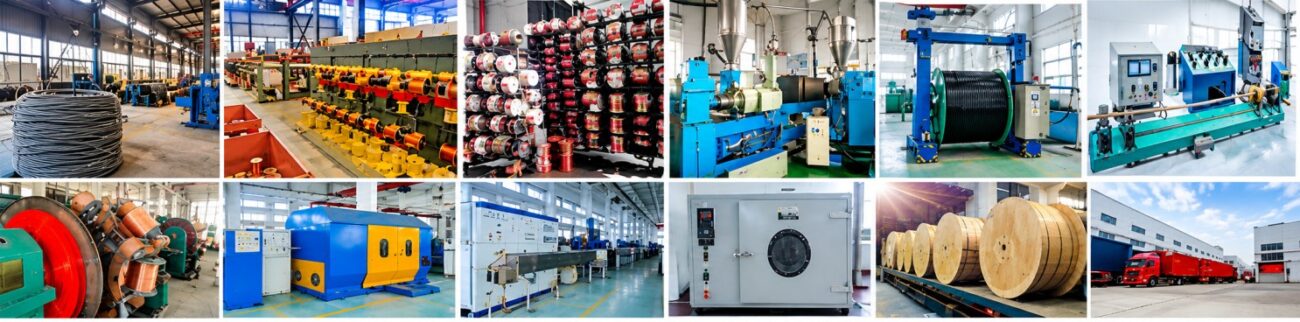
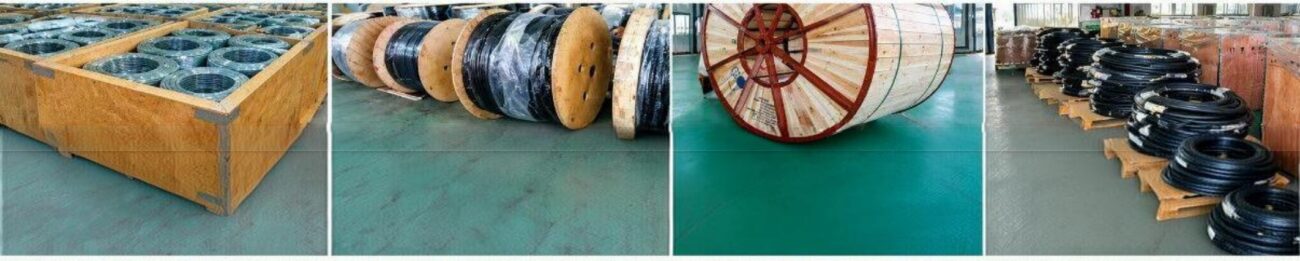
Factory Overview
Packaging & Shipping

Frequently asked questions and answer (Q:- A:-)
Q:- What is the primary application of the TPPV cable?
A:- It is used as connecting cables in local networks and PABX systems for telephone and signal transmission.
Q:- Where is this cable suitable for installation?
A:- It is suitable for laying in collectors where higher mechanical load is present.
Q:- Can this cable be used for power installations?
A:- No, the use of these cables for power installations is explicitly not permitted.
Q:- What conductor diameters are available for this cable?
A:- The cable is available with conductor diameters of 0.4 mm, 0.5 mm, 0.6 mm, and 0.7 mm.
Q:- What is the maximum conductor resistance for the 0.4 mm version?
A:- The maximum conductor resistance is 150 Ω/km.
Q:- How is the cable protected against electromagnetic interference?
A:- It features several layers of plastic tapes, an aluminium tape screen, and a laminated copper wire.
Q:- What is the minimum bending radius for installation?
A:- The minimum bending radius is approximately 10 times the cable diameter.
Q:- What material is used for the outer sheath?
A:- The outer sheath is available in PE low density with 2.5% carbon black or a PVC plastic protective sheath in grey.
Q:- What is the temperature range for laying and installing?
A:- The laying and installing temperature range is -10°C up to +60°C.
Q:- What is the nominal mutual capacitance at 800 Hz?
A:- The nominal mutual capacitance is 48 nF/km.
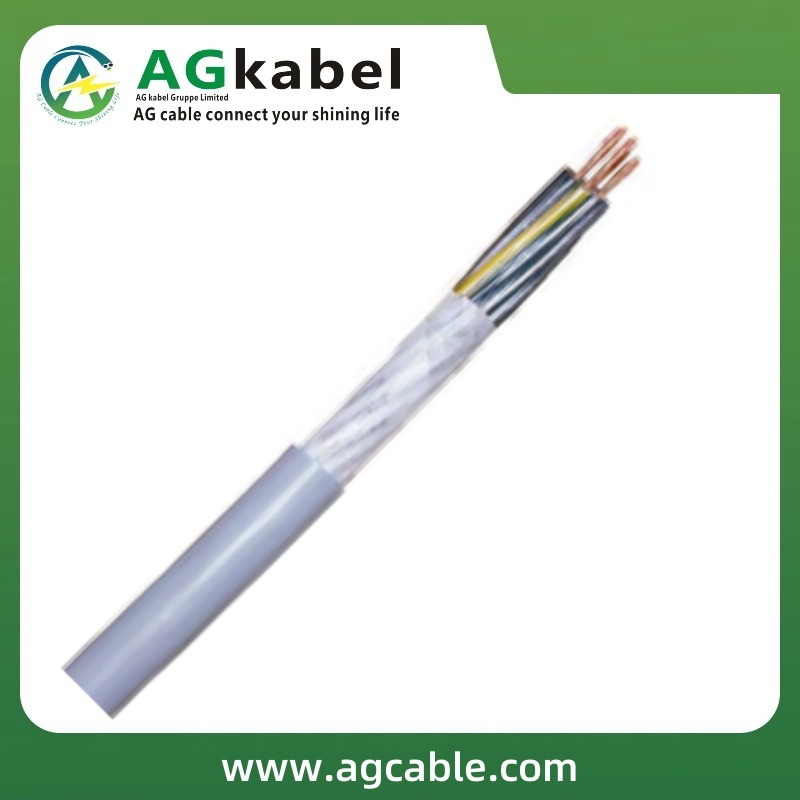
AGKABEL Drag Chain Cables SL-FYY-PVC – Number Coded, Ultraflexible
High-performance ultraflexible control cables designed for continuous flexing in cable trays, machine industries, robotics, and highly mobile machine parts. Compliant with DIN VDE 0245, 0281. Temperature range: -5°C to +70°C (Flexing) | -40°C to +80°C (Fixed). Nominal voltage: 300/500 V. Features a minimum bending radius of 7.5 x cable diameter for long service life. Available from 2 to 25 cores, 0.5mm² to 2.5mm².
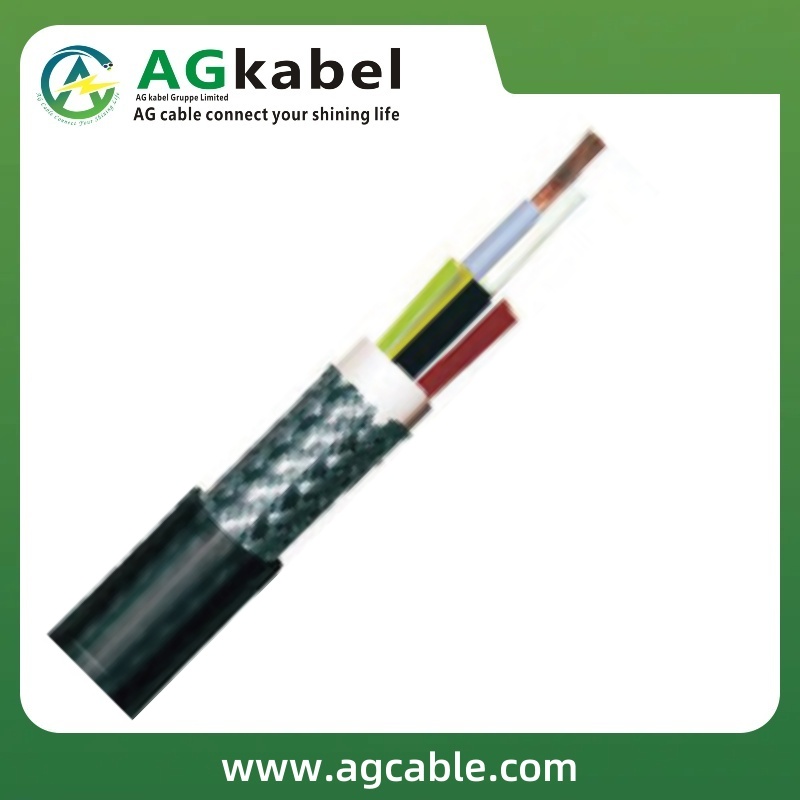
AGKABEL Flexible Control Cables 2YSLCYK-J – 0.6/1 kV, EMC, Double Screened
High-performance motor power supply cable designed for frequency converters to ensure electromagnetic compatibility (EMC). Features double screening (including a concentric copper conductor for enhanced protection) and a transparent outer sheath. Supply and connecting cable for medium mechanical stress in fixed installations, forced movements, and outdoor applications (open air). Suitable for industrial pumps, ventilators, conveyor belts, and air-conditioning installations. Nominal voltage: 0.6/1 kV. Available from 4X2,5 to 4X185, plus hybrid 3X70+3X10.
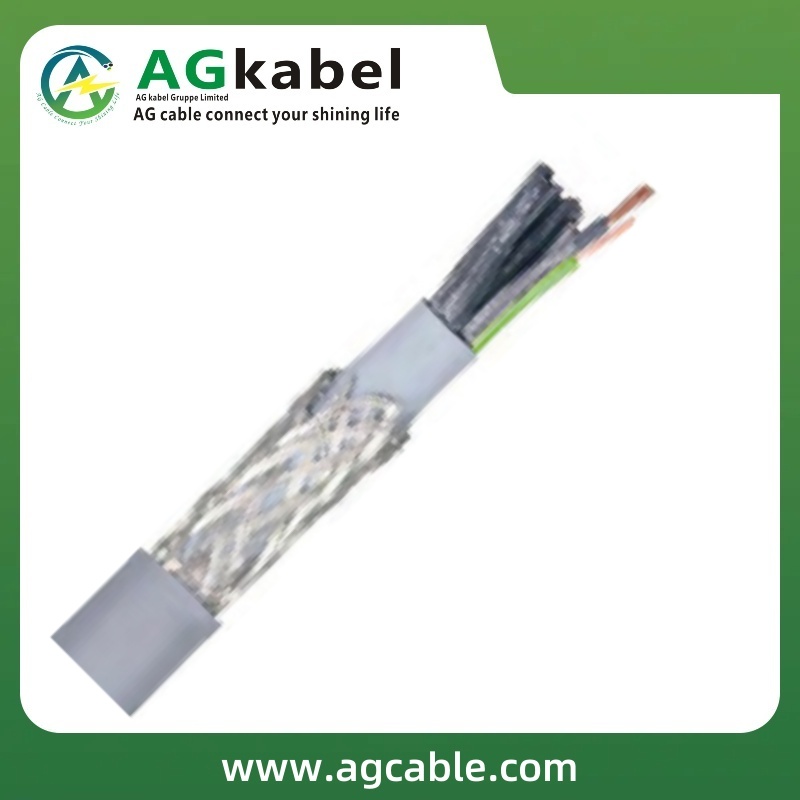
AGKABEL Flexible Control Cables Multi-approvals – Cu-screened
High-flexibility, multi-approved control cables designed for machines, tool machineries, conveyor belts, and production lines. Features a copper screen for EMC protection and is oil-resistant, making it ideal for moist and wet rooms (breweries, bottling plants, car washing stations). Compliant with UL, CSA, VDE/HAR, and SEV standards. Temperature range: -5°C to +70°C (+90°C UL, CSA). Nominal voltage: 300/500 V (600 V UL, CSA). Available from 2 to 12 cores, 0.75mm² to 2.5mm².
Reviews
There are no reviews yet.