Application
TZBs cables provide reliable signal transmission for inter-city cable communication networks and connection lines between automatic telephone exchanges. Because they feature steel tape armour and a lead sheath, installers use them where the transfer of low-frequency signals is required. Furthermore, these cables are suitable for laying in ditches where there is less force of strain and inclined terrain less than 45°. However, using them for high voltage power installations is not permitted.
Cable construction
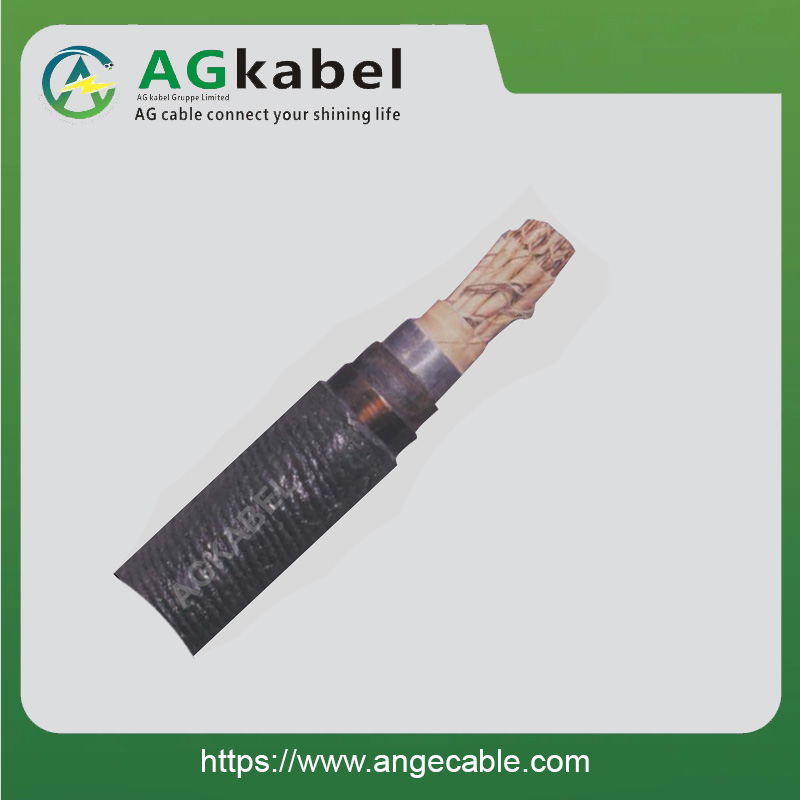
This cable strictly adheres to BDS 5052-90 standards. It features a bare copper conductor with a diameter of 0.9 mm or 1.2 mm. The insulation uses paper string insulation, over which a paper tape is applied. Four wires are twisted into a quad, and the quads are twisted concentrically into layers, wrapped with several layers of paper tapes. A lead-containing sheath (with an antimony of 0.4 to 0.6%) forms the pad. The armour consists of two steel tapes, and a protective sheath of bitumen, synthetic yarn, and chalk completes the assembly.
Technical Data
The cable delivers consistent performance under specific conditions. It maintains a conductor resistance at 20 °C of max. 28.3 Ω/km (0.9 mm) and 15.854 Ω/km (1.2 mm). The insulation resistance is min. 12,000 MΩ.km. The mutual capacitance at 800 Hz is 34 nF/km (0.9 mm) and 35 nF/km (1.2 mm). Capacitance unbalances at 800 Hz for 0.9 mm are: K1 – max. 280 pF/425m, K2-3 – max. 700 pF/425m, K9-12 – max. 400 pF/425m, E1-2 – max. 700 pF/425m. Test voltage is 50 Hz, 2 min for 700 V (wire-wire) and 1000 V (wire-sheath) for 0.9 mm, and 1000 V (wire-wire) and 2000 V (wire-sheath) for 1.2 mm. The operating voltage peak value is 225 V. The temperature range is 0 °C to +45 °C (laying and installing) and -30 °C to +50 °C (exploitation and storage). The minimum bending radius is 20 times the cable diameter.
Color coding
The color coding features side circuit 1 (a-wire: white, b-wire: red) and side circuit 2 (a-wire: green, b-wire: blue). In each layer, there is a quad with a supporting spiral and an inscription of the counting direction “yellow” in the supporting spiral.
Constructive Data Tables
Please refer to the following comprehensive specifications for precise sizing, weight, and diameter information.
Construction data TZBs …x4x0.9
| Number of quads | Outer diameter approx. | Copper weight | Cable weight approx. |
|---|---|---|---|
| mm | kg/km | kg/km | |
| 3 | 19,1 | 76 | 812 |
| 4 | 20,2 | 100 | 908 |
| 7 | 23,2 | 176 | 1188 |
| 12 | 27,7 | 299 | 1709 |
| 14 | 29,2 | 350 | 1890 |
| 19 | 31,1 | 474 | 2232 |
| 24 | 35,5 | 607 | 2611 |
| 27 | 36,7 | 665 | 3006 |
| 30 | 38,8 | 749 | 3275 |
| 37 | 42,4 | 921 | 4020 |
| 44 | 42,4 | 1121 | 4522 |
| 52 | 45,0 | 1325 | 5074 |
| 61 | 47,5 | 1558 | 5603 |
| 75 | 51,8 | 1911 | 5908 |
| 80 | 53,0 | 2039 | 6286 |
| 92 | 57,6 | 2350 | 7278 |
| 114 | 63,0 | 2905 | 9121 |
Construction data TZBs …x4x1.2
| Number of quads | Outer diameter approx. | Copper weight | Cable weight approx. |
|---|---|---|---|
| mm | kg/km | kg/km | |
| 3 | 21,4 | 136 | 1019 |
| 4 | 22,4 | 173 | 1109 |
| 7 | 25,9 | 317 | 1486 |
| 12 | 30,4 | 517 | 2024 |
| 14 | 32,2 | 634 | 2416 |
| 19 | 35,0 | 861 | 3010 |
| 24 | 36,9 | 1067 | 3350 |
| 27 | 41,1 | 1223 | 3883 |
| 30 | 42,9 | 1359 | 4165 |
| 37 | 46,1 | 1808 | 4878 |
| 44 | 50,4 | 1993 | 5783 |
| 52 | 55,0 | 2344 | 6206 |
| 61 | 56,7 | 2911 | 7226 |
| 75 | 60,2 | 3599 | 8098 |
| 80 | 65,3 | 3624 | 10161 |
| 92 | 68,3 | 4166 | 11291 |
| 114 | 73,7 | 5165 | 13746 |
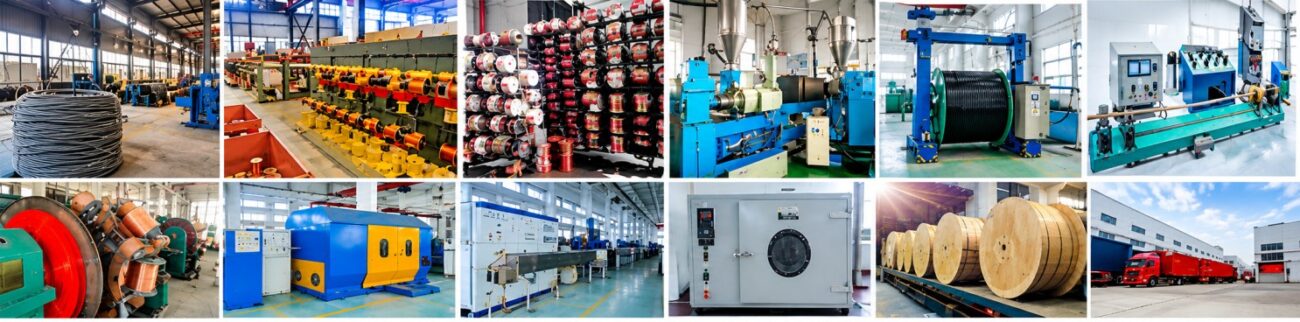
Factory Overview
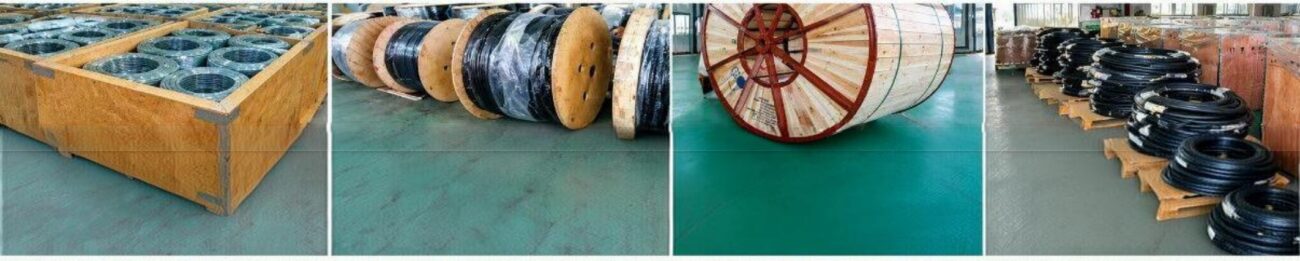
Packaging & Shipping

Frequently asked questions and answer ( Q:- A:- )
Q:- What is the primary application of the TZBs cable?
A:- It is used for inter-city cable communication networks and connection lines between automatic telephone exchanges, specifically for low-frequency signal transmission.
Q:- What are the key mechanical protection features of this cable?
A:- It features an armour made of two steel tapes and a protective sheath of bitumen, synthetic yarn, and chalk, providing robust protection for installation in ditches.
Q:- What standards does the cable construction follow?
A:- The construction adheres to BDS 5052-90 standards.
Q:- What type of conductor and insulation does it use?
A:- It uses a bare copper conductor (0.9 mm or 1.2 mm diameter) with paper string insulation and an outer paper tape.
Q:- What is the temperature range for this cable?
A:- The temperature range is 0°C to +45°C for laying and installing, and -30°C to +50°C for exploitation and storage.
Q:- What is the mutual capacitance of this cable?
A:- The mutual capacitance at 800 Hz is 34 nF/km for the 0.9 mm variant and 35 nF/km for the 1.2 mm variant.
Q:- What is the test voltage for this cable?
A:- For 0.9 mm: 700 V (wire-wire) and 1000 V (wire-sheath). For 1.2 mm: 1000 V (wire-wire) and 2000 V (wire-sheath).
Q:- What is the minimum bending radius for installation?
A:- The minimum bending radius is 20 times the cable diameter (20 x D cable).
Q:- What is the operating voltage peak value?
A:- The operating voltage peak value is 225 V.
Q:- Is this cable permitted for high voltage power installations?
A:- No, the use of these cables for high voltage power installations is not permitted.
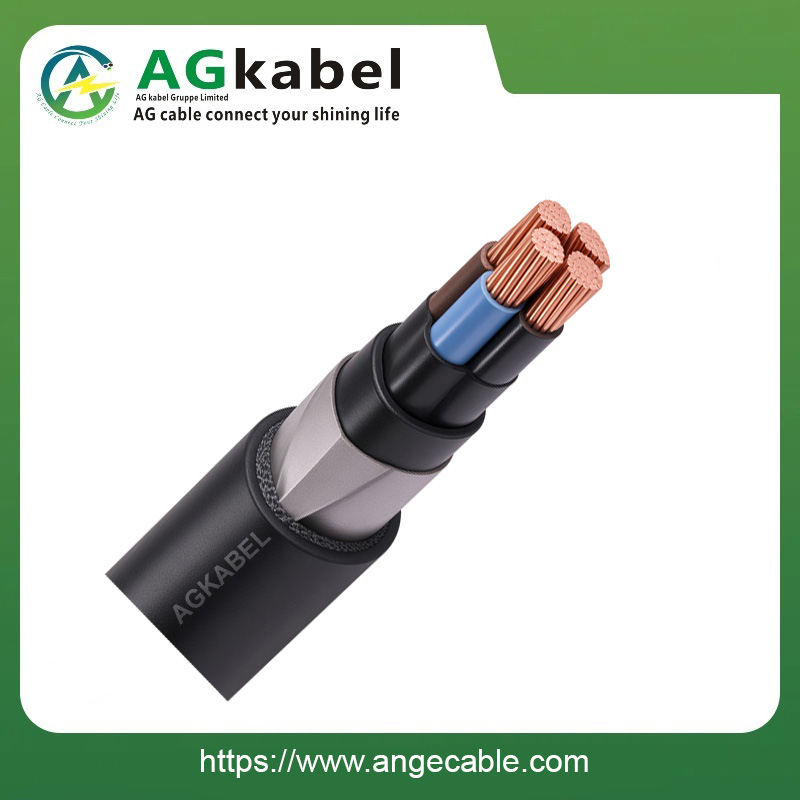
2XBH & A2XBH 0.6/1 kV Halogen-Free Flame Retardant Armoured Cable – IEC 60502-1
The 2XBH and A2XBH 0.6/1 kV cables deliver dependable power distribution for safety-critical environments like power stations, airports, and public buildings. Constructed with copper or aluminum conductors, XLPE insulation, steel tape armour, and a black halogen-free flame retardant outer sheath, they offer exceptional fire safety and mechanical protection. Because they meet IEC 60502-1 and VDE 0276-604 standards and are CE/RoHS compliant, they provide a safe and reliable solution for installations indoors, in air, or in concrete.
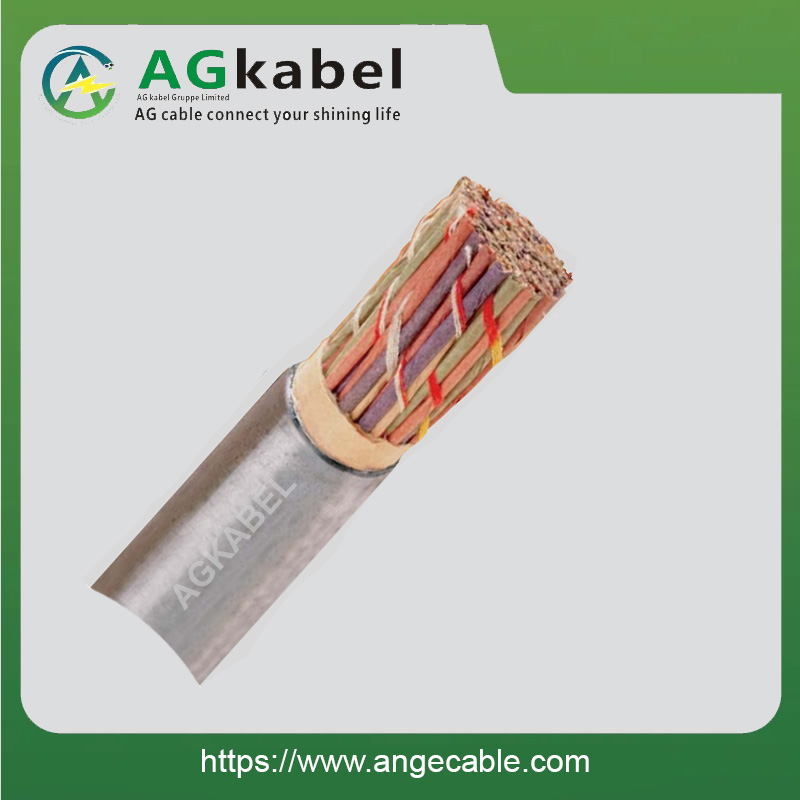
MKG … x4x1.2 High-Frequency Trunk Cable – BDS 5052-90
The MKG ... x4x1.2 cable delivers dependable signal transmission for building trunk cable networks. Constructed with bare copper conductors, paper string insulation, and a lead-containing sheath, it offers high protection against electrical interference for signals up to 552 kHz. Because it meets BDS 5052-90 standards, it provides a reliable solution for fixed installations in collections, canals, and pipes.
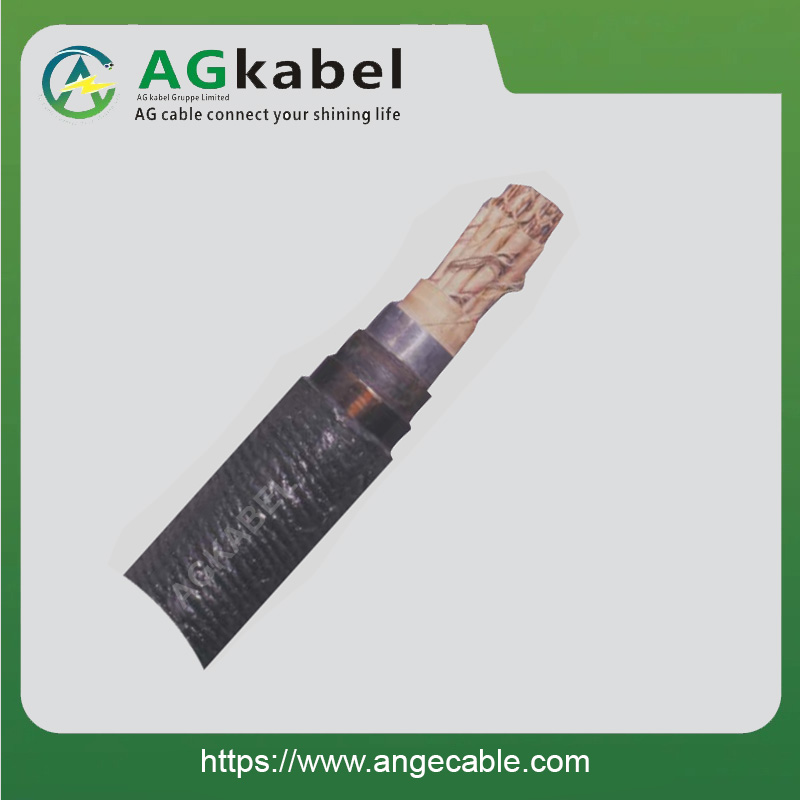
MKKBs 4x4x1.2 + 15x4x1.2 Armoured Combined HF/LF Trunk Cable – BDS 5052-90
The MKKBs 4x4x1.2 + 15x4x1.2 cable delivers dependable signal transmission for trunk cable communication networks and telephone exchanges. Constructed with bare copper conductors, paper string insulation, a lead-containing sheath, and steel tape armour, it combines 4 HF quads and 15 LF quads for simultaneous high and low-frequency transmission. Because it meets BDS 5052-90 standards, it provides a reliable and robust solution for direct laying in ditches.
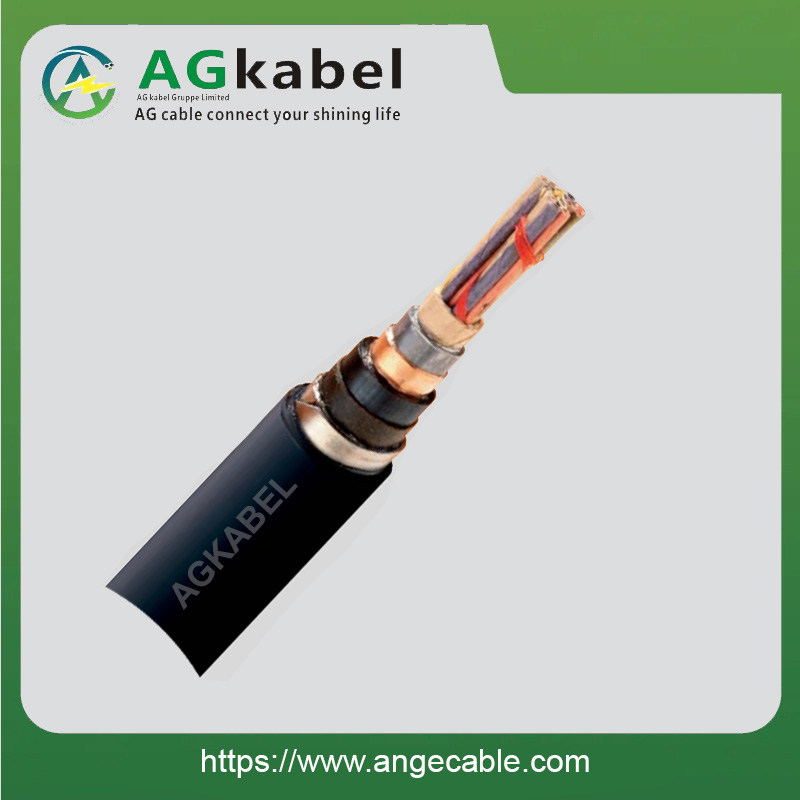
MKKEmPBPJ 4x4x1.2 + 15x4x1.2 Shielded Armoured Railway Trunk Cable – BDS 5052-90
The MKKEmPBPJ 4x4x1.2 + 15x4x1.2 cable delivers dependable signal transmission for trunk cable communication networks connected to electrical railway lines. Constructed with bare copper conductors, paper string insulation, a lead-containing sheath, a double-layer copper tape screen, steel tape armour, and a protective PE sheath, it combines 4 HF quads and 15 LF quads for simultaneous high and low-frequency transmission. Because it meets BDS 5052-90 standards and features a very low reduction factor, it provides a reliable solution for areas with high electromagnetic interference.
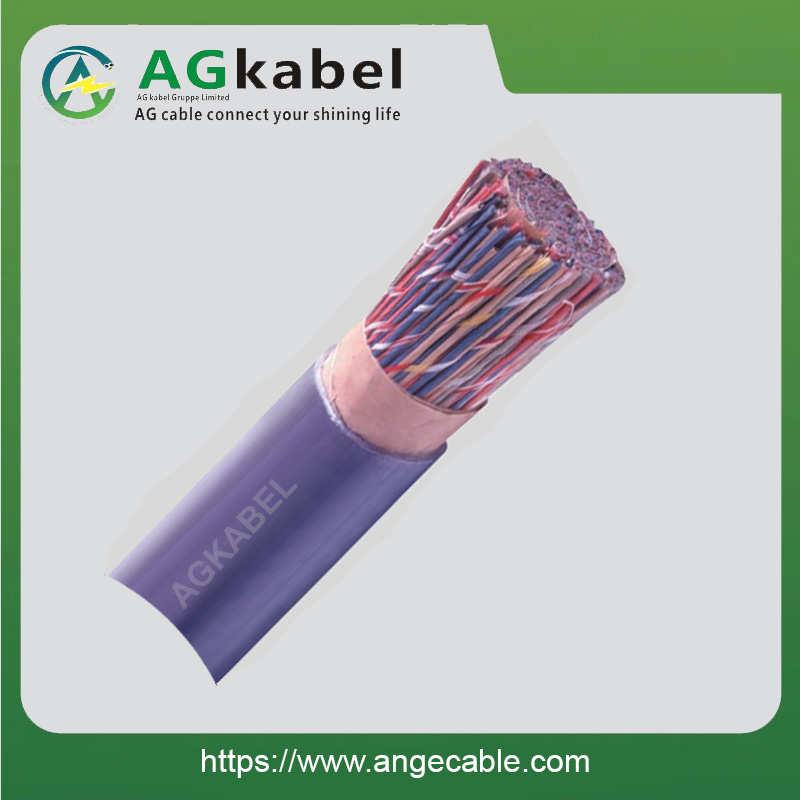
TZG … x4x0.9 & x4x1.2 Trunk Communication Cable – BDS 5052-90
The TZG ... x4x0.9 and x4x1.2 cables deliver dependable low-frequency signal transmission for inter-city communication networks and telephone exchanges. Constructed with bare copper conductors, paper string insulation, and a lead-containing sheath, they offer reliable performance for fixed installations. Because they meet BDS 5052-90 standards, they provide a safe and effective solution for collections, cable ducts, and pipes.
Reviews
There are no reviews yet.