Application
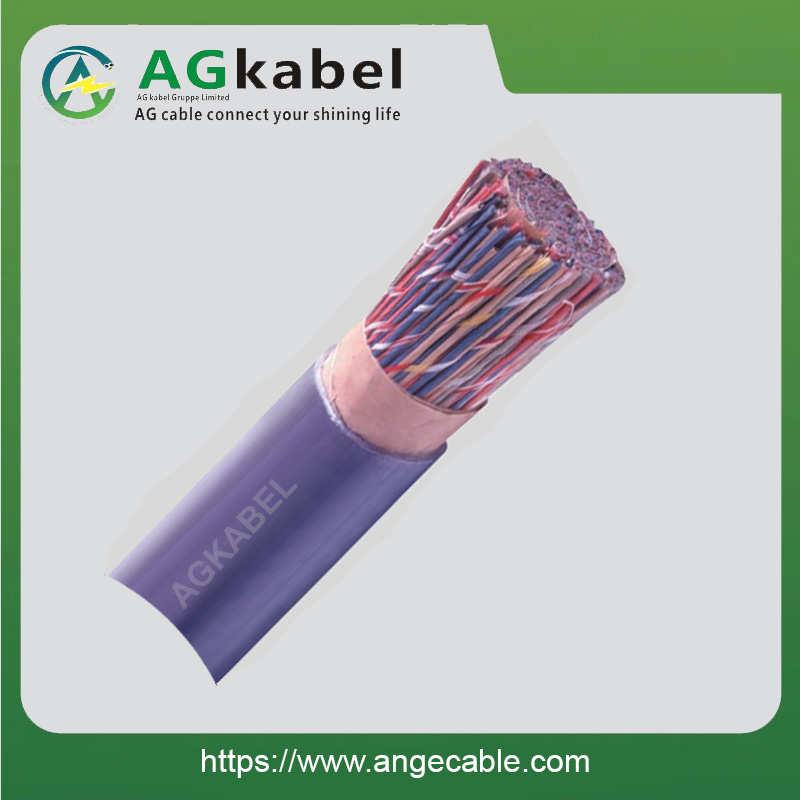
TZG cables provide reliable signal transmission for inter-city cable communication networks and connection lines between automatic telephone exchanges. Because they feature paper band insulation and a lead sheath, installers use them where the transfer of low-frequency signals is required. Furthermore, these cables are suitable for fixed installations in collections, cable ducts, and pipes. However, using them for high voltage installations and for direct laying underground is not permitted.
Cable construction
This cable strictly adheres to BDS 5052-90 standards. It features a bare copper conductor with a diameter of 0.9 mm or 1.2 mm. The insulation uses paper string insulation, over which a paper tape is applied. Four wires are twisted into a quad, and the quads are twisted concentrically into layers. Finally, a lead-containing sheath (with an antimony of 0.4 to 0.6%) protects the entire assembly.
Technical Data
The cable delivers consistent performance under specific conditions. It maintains a conductor resistance at 20 °C of max. 28.3 Ω/km (0.9 mm) and 15.854 Ω/km (1.2 mm). The insulation resistance is min. 12,000 MΩ.km. The mutual capacitance at 800 Hz is 34 nF/km (0.9 mm) and 35 nF/km (1.2 mm). Capacitance unbalances at 800 Hz for 0.9 mm are: K1 – max. 380 pF/425m, K2-3 – max. 700 pF/425m, K9-12 – max. 210 pF/425m, E1-2 – max. 700 pF/425m. Test voltage is 50 Hz, 2 min for 700 V (wire-wire) and 1000 V (wire-sheath) for 0.9 mm, and 1000 V (wire-wire) and 2000 V (wire-sheath) for 1.2 mm. The operating voltage peak value is 225 V. The temperature range is -20 °C to +50 °C (laying and installing) and -30 °C to +70 °C (exploitation and storage). The minimum bending radius is 20 times the cable diameter.
Color coding
The color coding features side circuit 1 (a-wire: white, b-wire: red) and side circuit 2 (a-wire: green, b-wire: blue). In each layer, there is a quad with a supporting spiral and an inscription of the counting direction “yellow” in the supporting spiral.
Constructive Data Tables
Please refer to the following comprehensive specifications for precise sizing, weight, and diameter information.
Construction data TZG …x4x0.9
| Number of quads | Outer diameter approx. | Copper weight | Cable weight approx. |
|---|---|---|---|
| mm | kg/km | kg/km | |
| 3 | 10,5 | 76 | 507 |
| 4 | 12,0 | 100 | 596 |
| 7 | 15,0 | 175 | 829 |
| 12 | 18,6 | 300 | 1209 |
| 14 | 19,8 | 350 | 1311 |
| 19 | 22,4 | 474 | 1616 |
| 24 | 25,0 | 596 | 1900 |
| 27 | 26,8 | 674 | 2182 |
| 30 | 28,0 | 749 | 2330 |
| 37 | 32,0 | 921 | 2848 |
| 44 | 33,8 | 1118 | 3387 |
| 52 | 36,5 | 1301 | 3726 |
| 61 | 40,4 | 1550 | 4395 |
| 75 | 49,4 | 1905 | 5163 |
| 82 | 51,3 | 2079 | 5869 |
| 92 | 55,0 | 2391 | 6719 |
| 114 | 53,3 | 2896 | 7299 |
Construction data TZG …x4x1.2
| Number of quads | Outer diameter approx. | Copper weight | Cable weight approx. |
|---|---|---|---|
| mm | kg/km | kg/km | |
| 3 | 12,2 | 125 | 596 |
| 4 | 14,2 | 173 | 787 |
| 7 | 18,0 | 310 | 1165 |
| 12 | 22,0 | 517 | 1608 |
| 14 | 24,3 | 620 | 1886 |
| 19 | 27,4 | 841 | 2381 |
| 24 | 30,8 | 1058 | 2971 |
| 27 | 32,5 | 1139 | 3172 |
| 30 | 33,8 | 1329 | 3473 |
| 37 | 39,1 | 1566 | 4409 |
| 44 | 42,0 | 1983 | 5058 |
| 52 | 45,8 | 2344 | 5885 |
| 61 | 48,8 | 2978 | 6949 |
| 75 | 52,3 | 3749 | 7948 |
| 82 | 61,0 | 3987 | 9032 |
| 92 | 62,5 | 4895 | 10311 |
| 114 | 66,1 | 5137 | 11160 |
Factory Overview
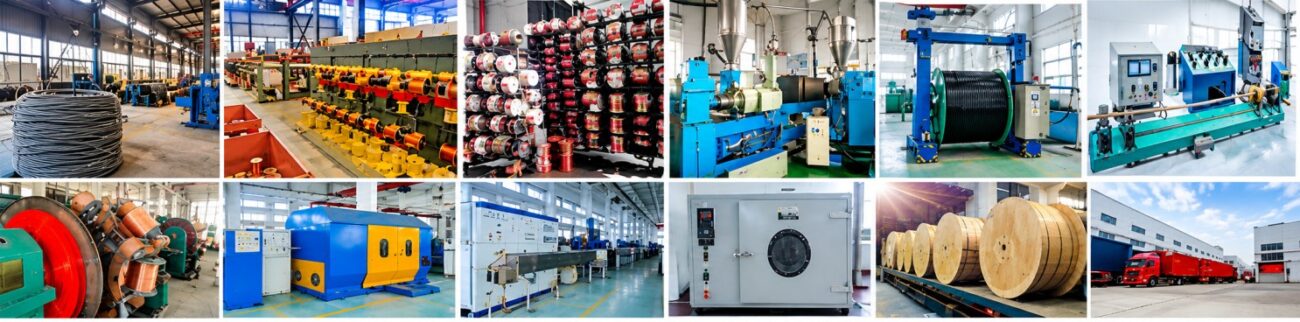
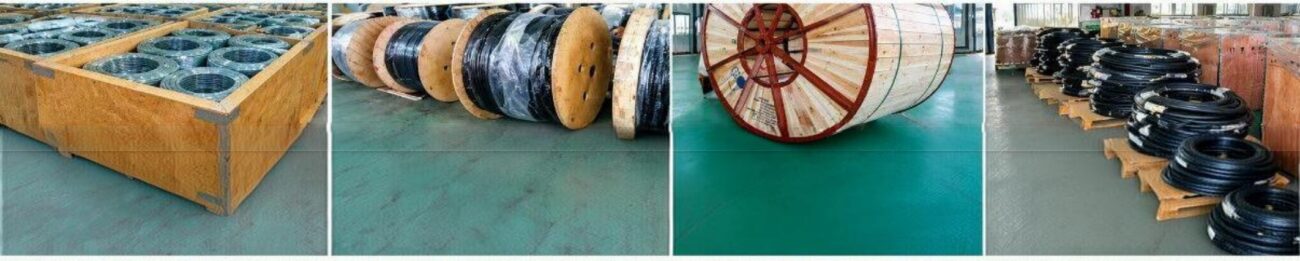
Packaging & Shipping

Frequently asked questions and answer ( Q:- A:- )
Q:- What is the primary application of the TZG cable?
A:- It is used for inter-city cable communication networks and connection lines between automatic telephone exchanges, specifically where the transfer of low-frequency signals is required.
Q:- Where can this cable be installed?
A:- It is suitable for fixed installations in collections, cable ducts, and pipes, but it is not permitted for high voltage installations or direct laying underground.
Q:- What standards does the cable construction follow?
A:- The construction adheres to BDS 5052-90 standards.
Q:- What type of conductor and insulation does it use?
A:- It uses a bare copper conductor (0.9 mm or 1.2 mm diameter) with paper string insulation and an outer paper tape.
Q:- What is the temperature range for this cable?
A:- The temperature range is -20°C to +50°C for laying and installing, and -30°C to +70°C for exploitation and storage.
Q:- What is the mutual capacitance of this cable?
A:- The mutual capacitance at 800 Hz is 34 nF/km for the 0.9 mm variant and 35 nF/km for the 1.2 mm variant.
Q:- What is the test voltage for this cable?
A:- For 0.9 mm: 700 V (wire-wire) and 1000 V (wire-sheath). For 1.2 mm: 1000 V (wire-wire) and 2000 V (wire-sheath).
Q:- What is the minimum bending radius for installation?
A:- The minimum bending radius is 20 times the cable diameter (20 x D cable).
Q:- What is the operating voltage peak value?
A:- The operating voltage peak value is 225 V.
Q:- How are the quads identified?
A:- The color coding features side circuit 1 (white/red) and side circuit 2 (green/blue), with a supporting spiral and an inscription of the counting direction “yellow” in each layer.
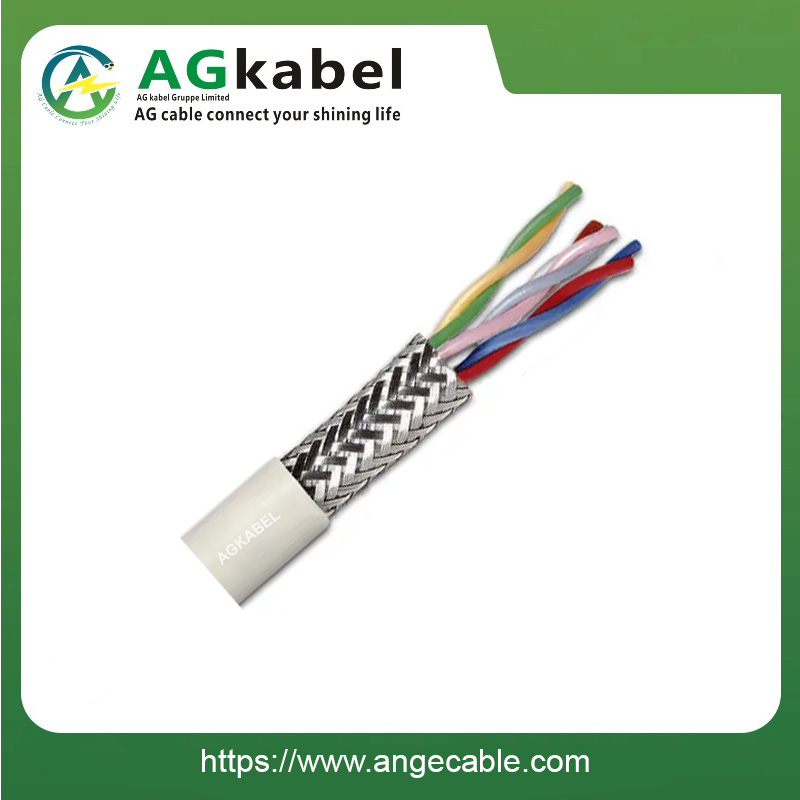
LiYCY Flexible Screened PVC Control and Interconnection Cable – VDE 0812
The LiYCY cable delivers dependable data transmission for instrumentation, control engineering, and telecommunication systems. Constructed with stranded copper conductors, PVC insulation, and a tinned copper wire braid screen, it offers exceptional flexibility and protection against external pulses. Because it meets VDE 0812 standards and is CE/RoHS compliant, it provides a safe and reliable solution for flexible and permanent installations in dry rooms.
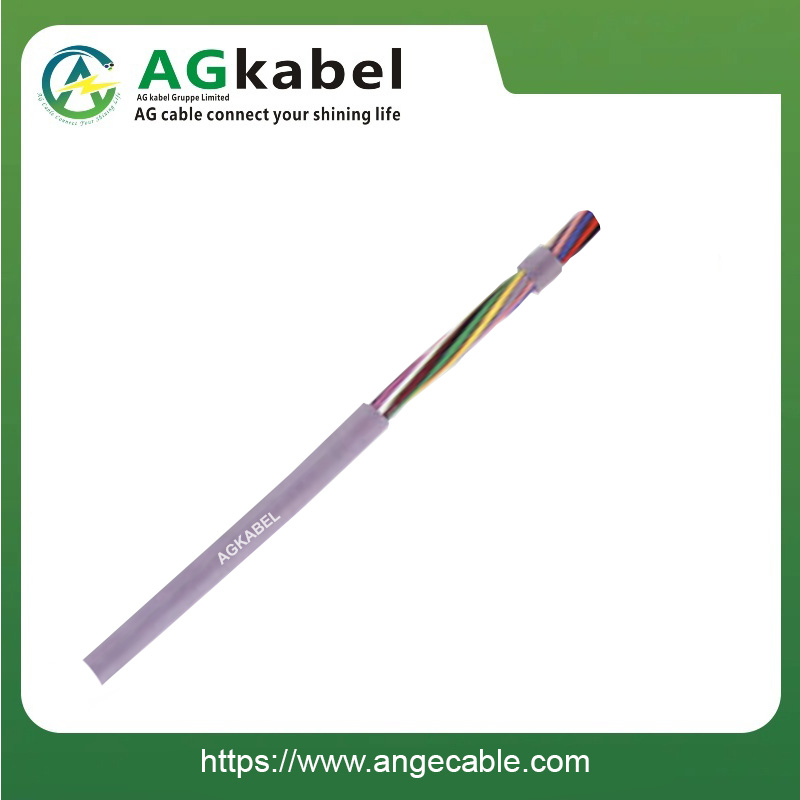
LiYV-fr Flexible Flame Retardant PVC Control Cable – VDE 0812
The LiYV-fr cable delivers dependable data transmission for instrumentation, control engineering, and telecommunication systems. Constructed with flexible plain copper conductors, PVC insulation, and a grey flame retardant PVC outer sheath, it offers exceptional flexibility and fire safety. Because it meets VDE 0812 standards, passes the BDS IEC 332-3 Category C test, and is CE/RoHS compliant, it provides a safe and reliable solution for flexible installations in dry rooms.
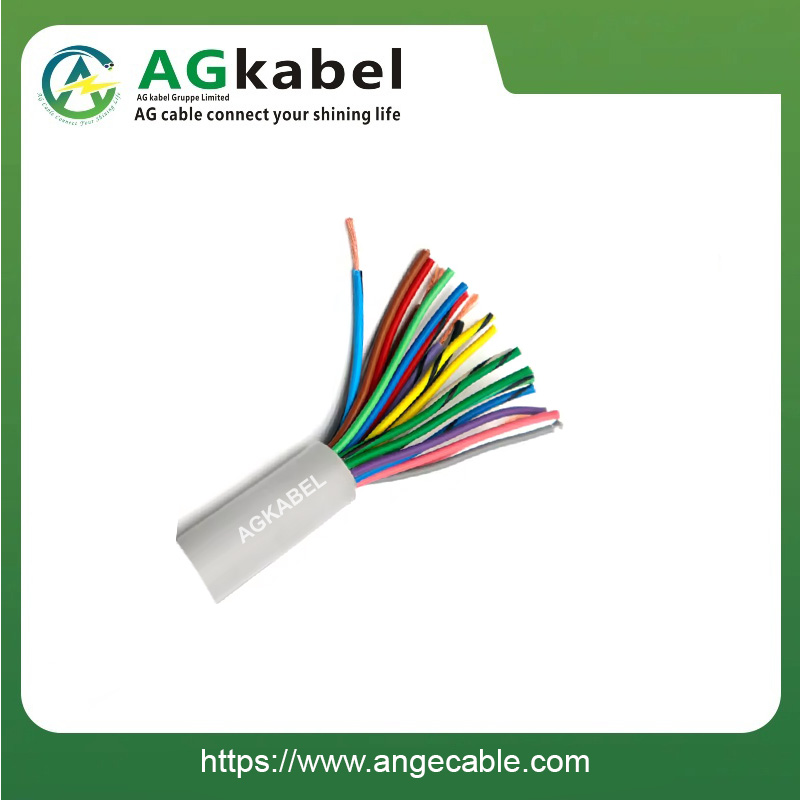
LiYY Flexible PVC Control and Interconnection Cable – VDE 0812
The LiYY cable delivers dependable data transmission for instrumentation, control engineering, and telecommunication systems. Constructed with flexible plain copper conductors, PVC insulation, and a grey PVC outer sheath, it offers exceptional flexibility and protection. Because it meets VDE 0812 standards and is CE/RoHS compliant, it provides a safe and reliable solution for flexible installations in dry rooms.
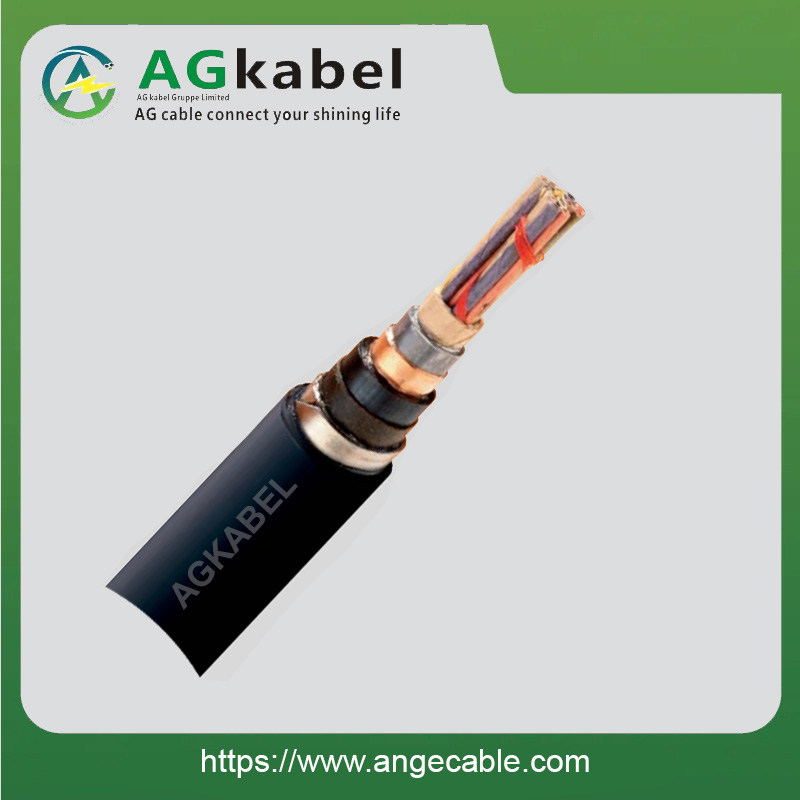
MKEmPBP … x4x1.2 Shielded Armoured Trunk Cable – BDS 5052-90
The MKEmPBP ... x4x1.2 cable delivers dependable signal transmission for trunk cable communication networks and telephone exchanges. Constructed with bare copper conductors, paper string insulation, a copper tape screen, steel tape armour, and a protective PE sheath, it offers high protection against interference and mechanical damage for signals up to 252 kHz. Because it meets BDS 5052-90 standards and features a low reduction factor, it provides a reliable solution for areas with high electromagnetic fields.
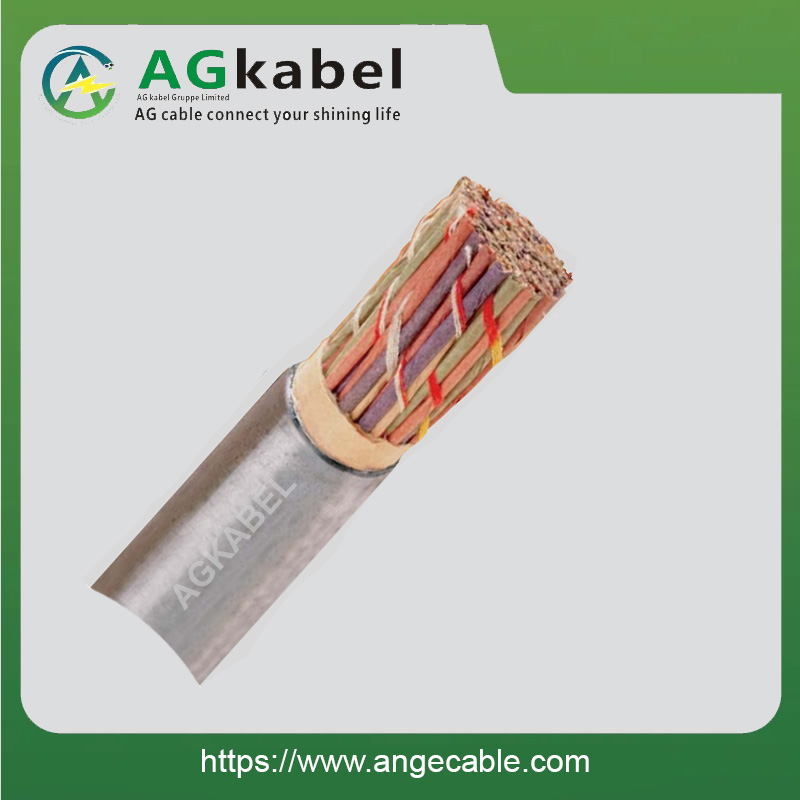
MKKG 4x4x1.2 + 15x4x1.2 Combined HF/LF Trunk Cable – BDS 5052-90
The MKKG 4x4x1.2 + 15x4x1.2 cable delivers dependable signal transmission for trunk cable communication networks and telephone exchanges. Constructed with bare copper conductors, paper string insulation, and a lead-containing sheath, it combines 4 HF quads and 15 LF quads to offer simultaneous high and low-frequency transmission. Because it meets BDS 5052-90 standards, it provides a reliable solution for fixed installations in collections, cable ducts, and pipes.
Reviews
There are no reviews yet.