Application
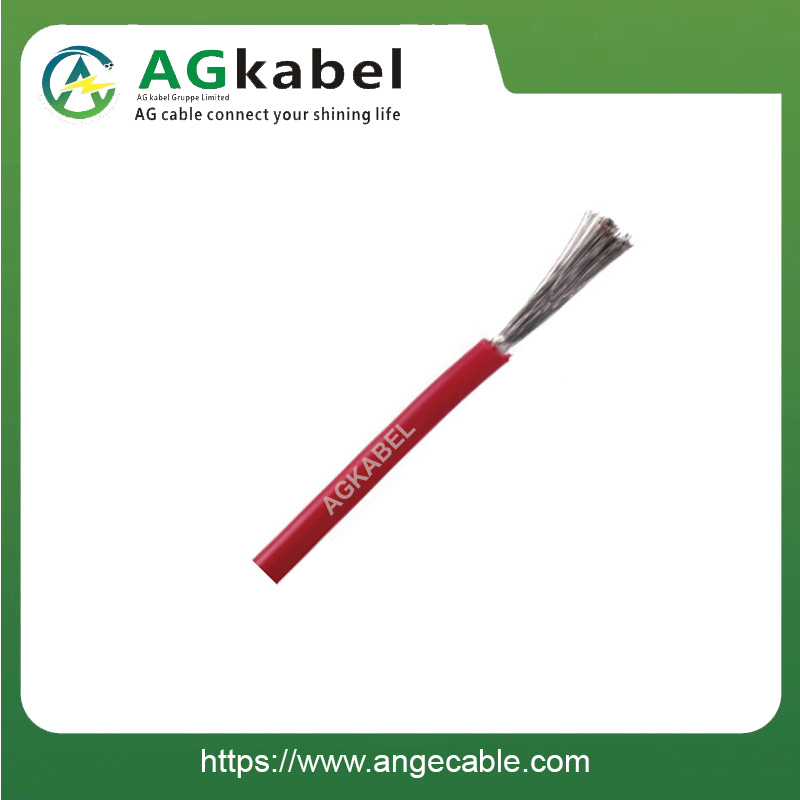
FLY cables provide reliable electrical connections for automotive applications. Because they feature a soft-annealed electrolytic copper conductor and durable plasticized PVC insulation, installers use them extensively in vehicle wiring harnesses and electrical systems. Furthermore, conductors with cross-sections greater than 6 mm² are also suitable for use as battery cables, ensuring high-current transmission for demanding starting and charging circuits. Consequently, they deliver consistent and safe performance in the harsh conditions typical of automotive environments.
Cable construction
This cable strictly adheres to LV 112, BMW 95007-2, and VW 60306 standards. It features a soft-annealed electrolytic copper conductor for maximum conductivity and flexibility. The insulation uses a plasticized PVC compound, providing excellent resistance to heat, cold, and automotive fluids.
Technical Data
The cable delivers consistent performance under specific conditions. The rated temperature is -40 °C to +105 °C. The maximum conductor resistance at 20 °C ranges from 37.100 Ω/m for the 0.5 mm² cable to 0.153 Ω/m for the 120 mm² cable.
Constructive Data Table
Please refer to the following comprehensive specifications for precise sizing, weight, and diameter information.
| Cross-section | Conductor | Insulation | Max. Cond. Resistance at 20°C | Weight | ||
|---|---|---|---|---|---|---|
| mm² | No./mm | OD.(mm) | Thick. (mm) | OD. (mm) | Ω/m | Kg/km |
| 0.5 | 16/0.20 | 1.0 | 0.6 | 2.3 | 37.100 | 9.0 |
| 0.75 | 24/0.20 | 1.2 | 0.6 | 2.5 | 24.700 | 12.0 |
| 1 | 32/0.20 | 1.4 | 0.6 | 2.7 | 18.500 | 15.0 |
| 1.5 | 30/0.25 | 1.7 | 0.6 | 3.0 | 12.700 | 20.0 |
| 2 | 40/0.25 | 2.0 | 0.6 | 3.3 | 9.420 | 26.0 |
| 2.5 | 50/0.25 | 2.2 | 0.7 | 3.6 | 7.600 | 32.0 |
| 3 | 60/0.25 | 2.4 | 0.7 | 3.9 | 6.150 | 38.0 |
| 4 | 56/0.30 | 2.8 | 0.8 | 4.4 | 4.710 | 49.0 |
| 6 | 84/0.30 | 3.3 | 0.8 | 5.0 | 3.140 | 69.0 |
| 10 | 80/0.40 | 4.5 | 1.0 | 6.5 | 1.820 | 113.0 |
| 16 | 126/0.40 | 6.3 | 1.0 | 8.3 | 1.160 | 181.0 |
| 25 | 196/0.40 | 7.8 | 1.3 | 10.2 | 0.743 | 288.0 |
| 35 | 276/0.40 | 9.0 | 1.3 | 10.7 | 0.527 | 361.0 |
| 50 | 400/0.40 | 10.5 | 1.5 | 13.0 | 0.368 | 521.0 |
| 70 | 560/0.40 | 12.5 | 1.5 | 15.0 | 0.259 | 716.0 |
| 95 | 740/0.40 | 14.8 | 1.6 | 16.2 | 0.196 | 918.0 |
| 120 | 960/0.40 | 16.5 | 1.6 | 19.7 | 0.153 | 1220.0 |
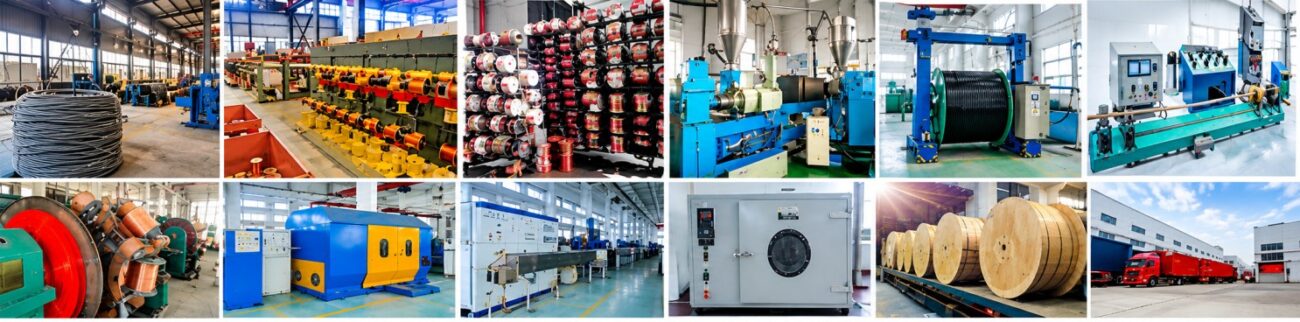
Factory Overview
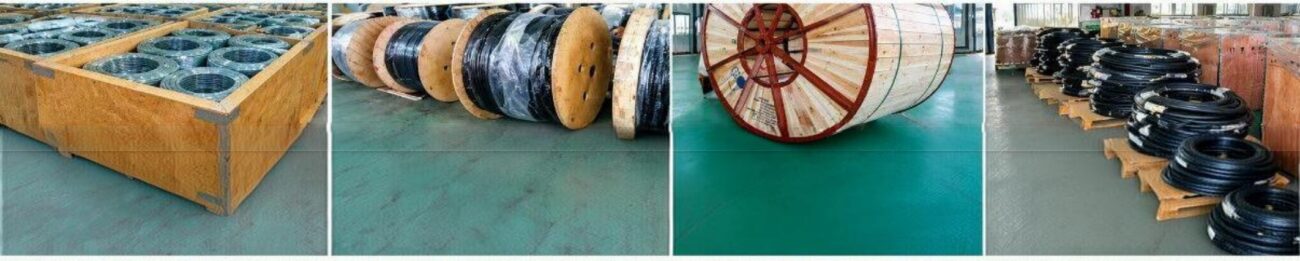
Packaging & Shipping

Frequently asked questions and answer ( Q:- A:- )
Q:- What is the primary application of the FLY automotive cable?
A:- It is used for electrical connections in automotive applications, particularly in vehicle wiring harnesses and battery cables.
Q:- What standards does this cable comply with?
A:- It complies with LV 112, BMW 95007-2, and VW 60306 standards.
Q:- What type of conductor and insulation does it use?
A:- It uses soft-annealed electrolytic copper conductors with plasticized PVC insulation.
Q:- What is the rated temperature range?
A:- The rated temperature range is -40°C to +105°C.
Q:- Are larger cross-sections suitable for battery cables?
A:- Yes, conductors with cross-sections greater than 6 mm² are also suitable for use as battery cables.
Q:- What is the maximum conductor resistance for the 0.5 mm² cable?
A:- The maximum conductor resistance for the 0.5 mm² cable is 37.100 Ω/m at 20°C.
Q:- What is the maximum conductor resistance for the 120 mm² cable?
A:- The maximum conductor resistance for the 120 mm² cable is 0.153 Ω/m at 20°C.
Q:- What information is included in the sheath marking?
A:- The sheath marking includes the manufacturer’s name/trademark, product type, production year/week or batch number, and metre markings.
Q:- What is the largest cross-section available in the provided table?
A:- The largest cross-section shown is 120 mm².
Q:- Are other dimensions available besides those listed?
A:- Yes, further dimensions are available upon request.
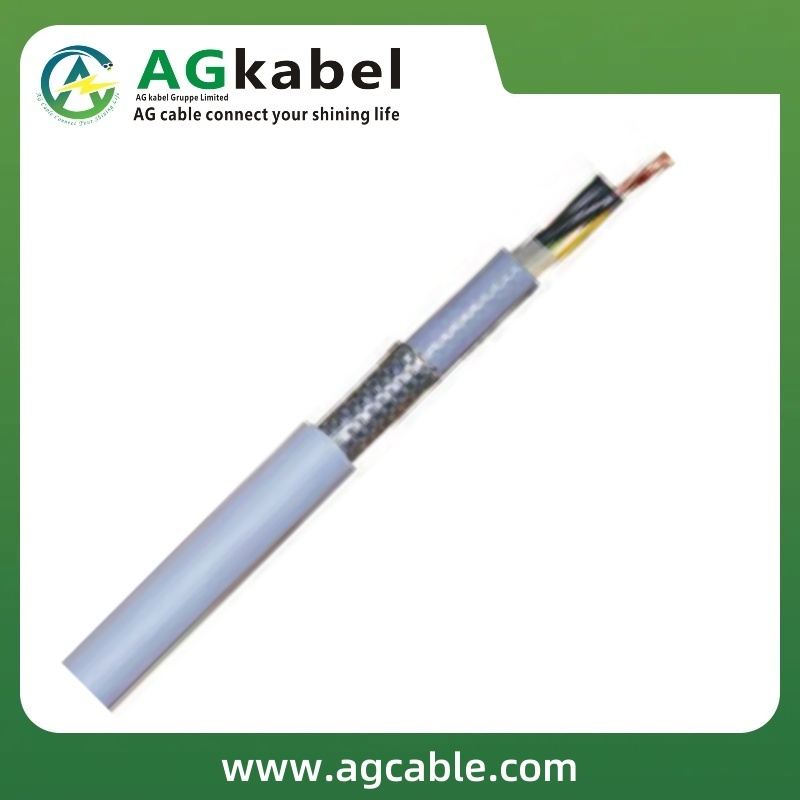
AGKABEL Drag Chain Cables SL-FYY-C11Y-PUR – EMC-type, Cu-screened, Ultraflexible
High-performance ultraflexible control cables designed for continuous flexing in cable trays, machine industries, robotics, and highly mobile machine parts. Features a robust PUR sheath and a braided copper screen for effective protection against internal and external electromagnetic interference (EMC). Compliant with DIN VDE 0245, 0281. Temperature range: -5°C to +70°C (Flexing) | -40°C to +80°C (Fixed). Nominal voltage: 300/500 V. Minimum bending radius: 7.5 x cable diameter. Available from 2 to 50 cores, 0.5mm² to 16mm².
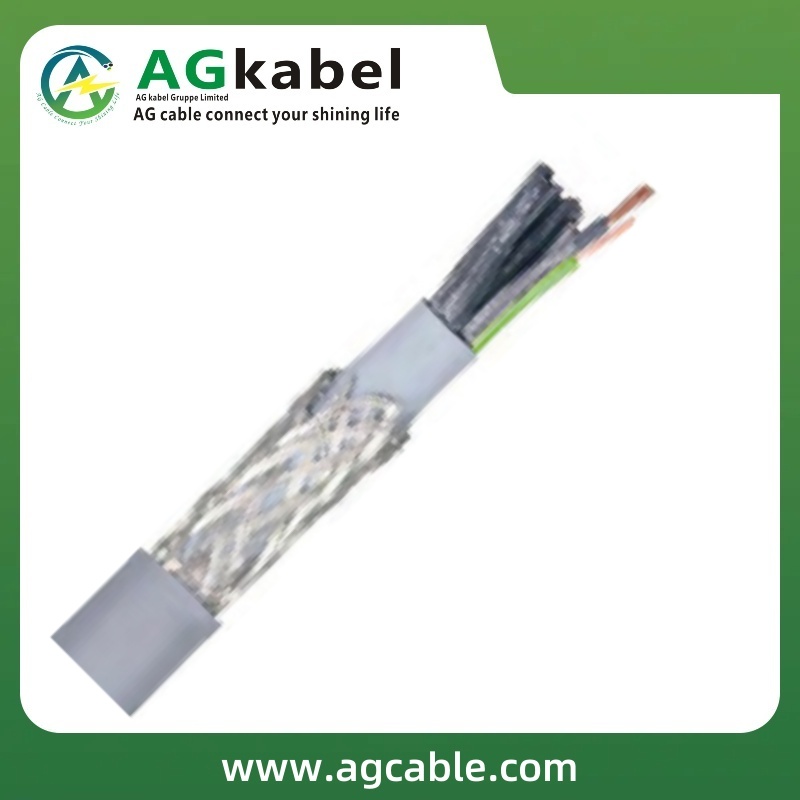
AGKABEL Flexible Control Cables Multi-approvals – Cu-screened
High-flexibility, multi-approved control cables designed for machines, tool machineries, conveyor belts, and production lines. Features a copper screen for EMC protection and is oil-resistant, making it ideal for moist and wet rooms (breweries, bottling plants, car washing stations). Compliant with UL, CSA, VDE/HAR, and SEV standards. Temperature range: -5°C to +70°C (+90°C UL, CSA). Nominal voltage: 300/500 V (600 V UL, CSA). Available from 2 to 12 cores, 0.75mm² to 2.5mm².
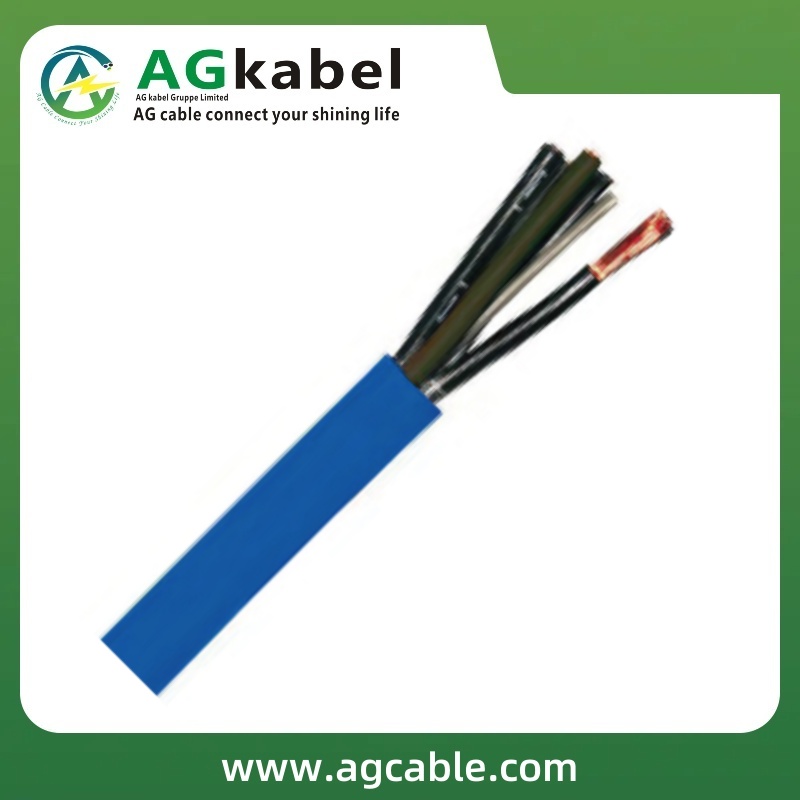
AGKABEL Flexible Control Cables YSLY/EB-OZ – Blue Outer Jacket (Intrinsic Safety)
Number-coded flexible control cables designed for hazardous areas, featuring a special blue outer jacket for intrinsic safety identification. Extensively oil-resistant and not suitable for laying underground. Temperature range: -5°C to +80°C (Flexing) | -40°C to +80°C (Fixed). Nominal voltage: 300/500V. Available from 2 to 100 cores, 0.75mm² to 1.5mm².
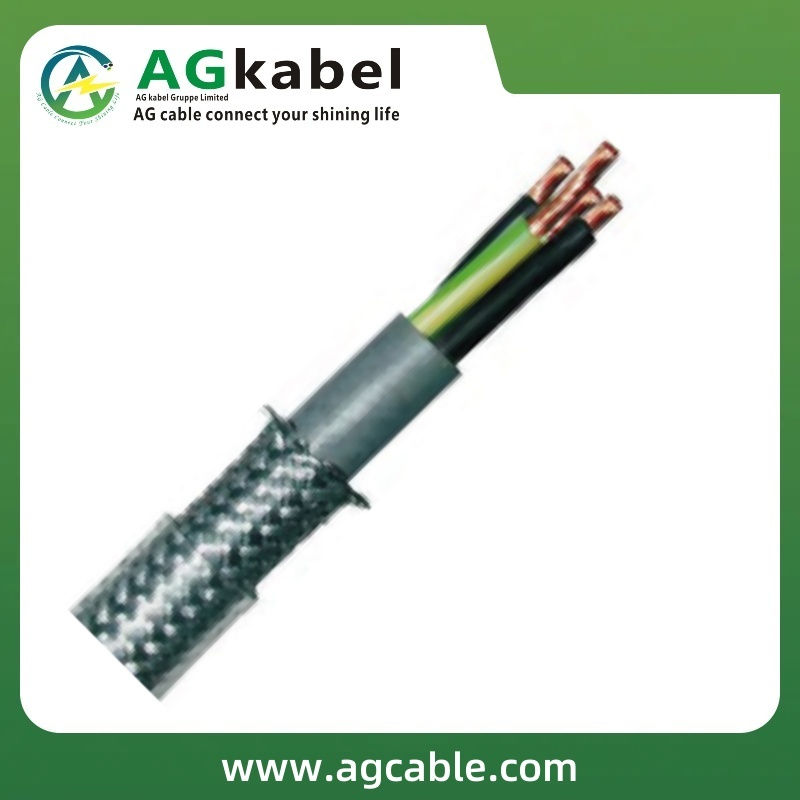
AGKABEL Flexible Control Cables YSLYSY-JZ – Number Coded, Steel Wire Braid
Flexible control and measuring cables designed for tool machinery, plant installations, power stations, and data equipment. Features a galvanized steel wire braid for optimal mechanical protection and corrosion resistance, finished with a transparent outer sheath. Compliant with DIN VDE 0245, 0281, 0293, 0295. Temperature range: -5°C to +80°C (Flexing) | -40°C to +80°C (Fixed). Nominal voltage: 300/500V. Available from 2 to 61 cores, 0.75mm² to 6.0mm².
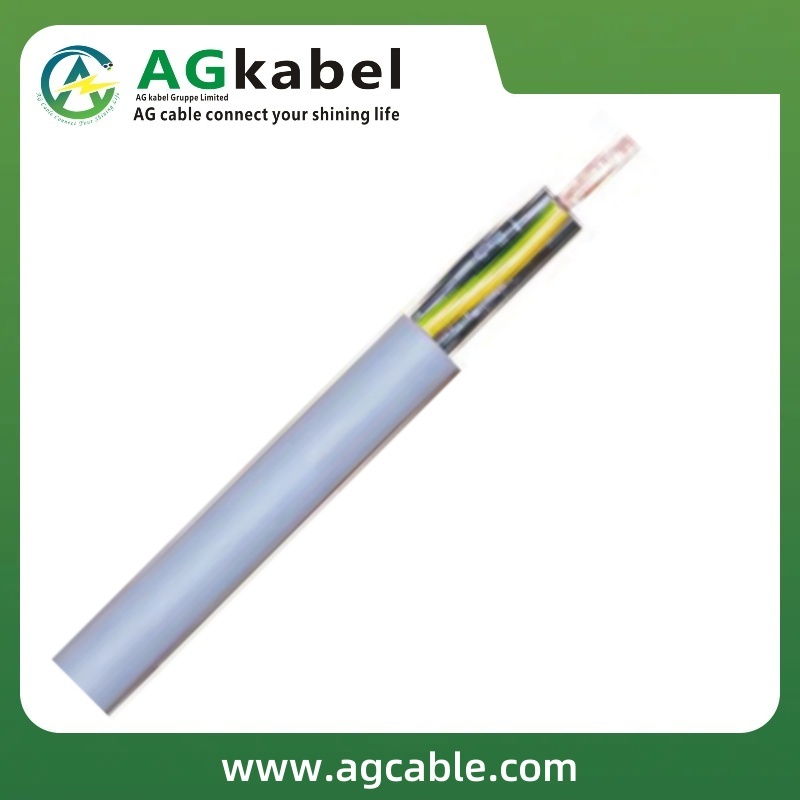
AGKABEL Flexible Control Cables YSLYSY-JZ – Number Coded, Steel Wire Braid
Flexible control and measuring cables designed for tool machinery, plant installations, power stations, and data equipment. Features a galvanized steel wire braid for optimal mechanical protection and corrosion resistance, finished with a transparent outer sheath. Compliant with DIN VDE 0245, 0281, 0293, and 0295. Temperature range: -5°C to +80°C (Flexing) | -40°C to +80°C (Fixed). Nominal voltage: 300/500V. Available from 2 to 61 cores, 0.5mm² to 6.0mm² (larger sizes available on request).
Reviews
There are no reviews yet.