
Application
Parallel twin flexible battery cables 0.6/1kV provide reliable electrical connections for battery-powered equipment, telecommunications systems, motorised vehicles and industrial electrical applications. Their specialized parallel twin-core construction makes them particularly suitable for battery connections and high-quality booster cables.
Furthermore, the IEC 60228 Class 6 stranded plain annealed copper conductors provide excellent flexibility and efficient electrical conductivity. The NBR elastomer insulation and cold-resistant transparent PVC outer sheath support installation in demanding environmental conditions.
In addition, these cables are suitable for indoor and outdoor applications in dry and wet locations. Typical applications include telecommunications equipment, forklifts, field conveyors, motorised vehicles and other battery-powered machinery.
Cable Construction
-
Standards: AS/NZS 5000, AS/NZS 1125, IEC 60332-1, AS/NZS 3808.
-
Rated Voltage: 0.6/1kV.
-
Conductor: Plain annealed copper stranded according to IEC 60228 Class 6.
-
Insulation: NBR (Nitrile Butadiene Rubber) elastomer.
-
Insulation Colour: Red/Black or Red/Blue.
-
Sheath: Transparent cold-resistant PVC compound.
-
Operating Temperature (Static): -30°C to +75°C.
-
Operating Temperature (Flexible): -20°C to +75°C.
-
Sheath Marking: Manufacturer’s name (trademark) and type, production year/week or batch number, and metre markings.
-
Special Properties: Extremely flexible conductor construction, cold-resistant outer sheath and parallel twin-core design.
-
Cable Type: Parallel twin flexible battery cable.
-
Available Cross-Sections: 1.5 mm² to 70 mm² per core.
-
Material Compliance: RoHS compliant, according to the manufacturer.
Technical Data
The parallel twin flexible battery cable features a rated voltage of 0.6/1kV and a maximum operating temperature of 75°C. Its specialized NBR elastomer insulation and transparent cold-resistant PVC outer sheath provide protection for battery connections and industrial electrical applications.
Moreover, the IEC 60228 Class 6 stranded copper conductors support enhanced flexibility and convenient cable routing. The operating temperature ranges from -30°C to +75°C for static installations and -20°C to +75°C for flexible applications.
The listed conductor cross-sections range from 1.5 mm² to 70 mm² per core, while the insulation thickness ranges from 0.8 mm to 1.4 mm.
Furthermore, the overall cable dimensions range from 4.8 × 7.4 mm to 16.0 × 33 mm, and the approximate cable weight ranges from 84 kg/km to 1580 kg/km.
The maximum DC conductor resistance at 20°C ranges from 0.272 Ω/km to 13.300 Ω/km, while the listed single-phase voltage drop ranges from 0.67 mV/A/m to 33.00 mV/A/m.
Constructive Data Table
| Structure (Cores/mm²) | Conductor No. of Strands | Conductor Dia. (mm) | Insulation Thickness (mm) | Overall Dimensions (mm) | Single-Phase Voltage Drop (mV/A/m) | Max. DC Resistance at 20°C (Ω/km) | Approx. Weight (kg/km) |
|---|---|---|---|---|---|---|---|
| 2×1.5 | 48/0.2 | 1.60 | 0.8 | 4.8×7.4 | 33.00 | 13.300 | 84 |
| 2×2.5 | 80/0.2 | 2.05 | 1.0 | 5.5×12 | 19.40 | 7.980 | 95 |
| 2×4.0 | 127/0.2 | 2.60 | 1.0 | 6.0×13 | 12.00 | 4.950 | 120 |
| 2×6.0 | 172/0.2 | 3.05 | 1.0 | 6.5×14 | 8.00 | 3.300 | 160 |
| 2×10 | 304/0.2 | 4.05 | 1.0 | 8.0×17 | 4.80 | 1.910 | 270 |
| 2×16 | 462/0.2 | 5.00 | 1.0 | 9.8×19.6 | 2.90 | 1.210 | 400 |
| 2×25 | 742/0.2 | 6.30 | 1.2 | 11.30×23 | 1.80 | 0.780 | 605 |
| 2×35 | 1050/0.2 | 7.50 | 1.2 | 12.5×26 | 1.30 | 0.554 | 780 |
| 2×50 | 1482/0.2 | 8.90 | 1.4 | 14.5×30 | 0.99 | 0.386 | 1150 |
| 2×70 | 2092/0.2 | 10.60 | 1.4 | 16.0×33 | 0.67 | 0.272 | 1580 |
Note: The materials used in the manufacture of these cables are RoHS compliant, according to the manufacturer’s datasheet.
Technical note: All numerical table values have been retained from the original datasheet. The voltage drop unit has been interpreted as mV/A/m. The original column labelled “Strands Dia.” appears to represent the overall conductor diameter rather than individual strand diameter. AS/NZS 5000 is listed without a specific part or edition. The stated IEC 60228 Class 6 conductor classification and voltage drop values should be verified before publishing.
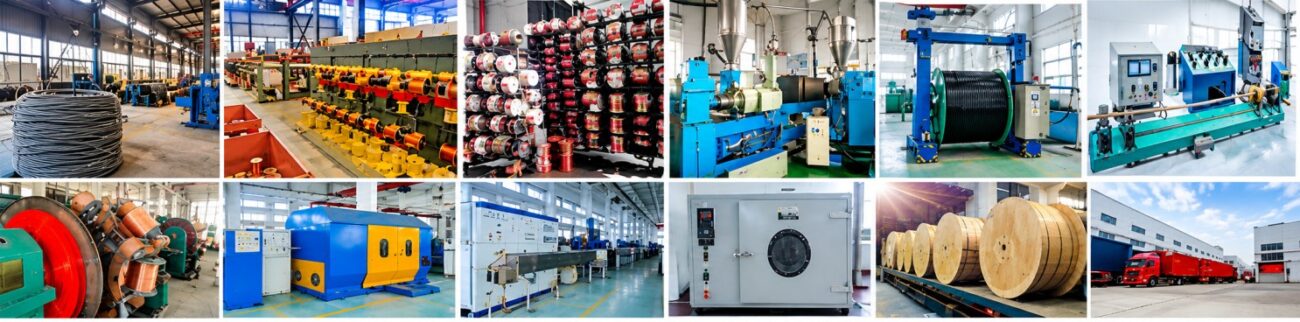
Factory Overview
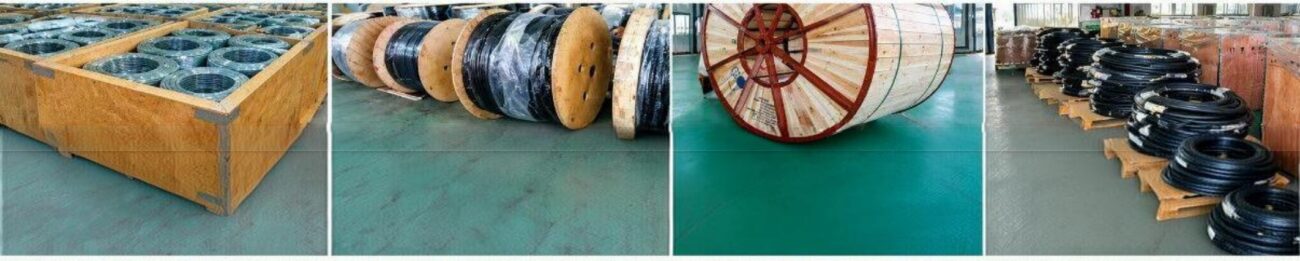
Packaging & Shipping

Frequently Asked Questions and Answers
Q:- What is the primary application of the 0.6/1kV parallel twin flexible battery cable?
A:- It is designed for battery connections, telecommunications equipment, motorised vehicles, forklifts, field conveyors and high-quality booster cables.
Q:- What standards does the parallel twin flexible battery cable follow?
A:- The manufacturer lists AS/NZS 5000, AS/NZS 1125, IEC 60332-1 and AS/NZS 3808 in the product datasheet, with IEC 60228 Class 6 specified for the conductor construction.
Q:- What is the rated voltage of the parallel twin flexible battery cable?
A:- The rated voltage is 0.6/1kV (600/1000V).
Q:- What is the operating temperature range of the parallel twin battery cable?
A:- The operating temperature ranges from -30°C to +75°C for static installations and -20°C to +75°C for flexible applications.
Q:- What type of conductor does the parallel twin flexible cable use?
A:- It uses plain annealed stranded copper conductors specified according to IEC 60228 Class 6, providing enhanced flexibility and efficient electrical conductivity.
Q:- What type of insulation and outer sheath does the battery cable feature?
A:- It features NBR (Nitrile Butadiene Rubber) elastomer insulation and a transparent cold-resistant PVC outer sheath.
Q:- What insulation colour combinations are available?
A:- The manufacturer specifies red/black and red/blue insulation colour combinations, facilitating conductor identification and polarity identification during battery connections.
Q:- What conductor cross-section sizes are available?
A:- The listed conductor cross-section sizes are 1.5 mm², 2.5 mm², 4 mm², 6 mm², 10 mm², 16 mm², 25 mm², 35 mm², 50 mm² and 70 mm² per core.
Q:- Is the parallel twin flexible battery cable suitable for outdoor and wet locations?
A:- Yes, the manufacturer specifies suitability for indoor and outdoor applications in dry and wet locations. However, permanent submersion suitability is not specified in the datasheet.
Q:- Is the parallel twin flexible battery cable RoHS compliant?
A:- Yes, the manufacturer states that the materials used in the manufacture of these cables are RoHS compliant.
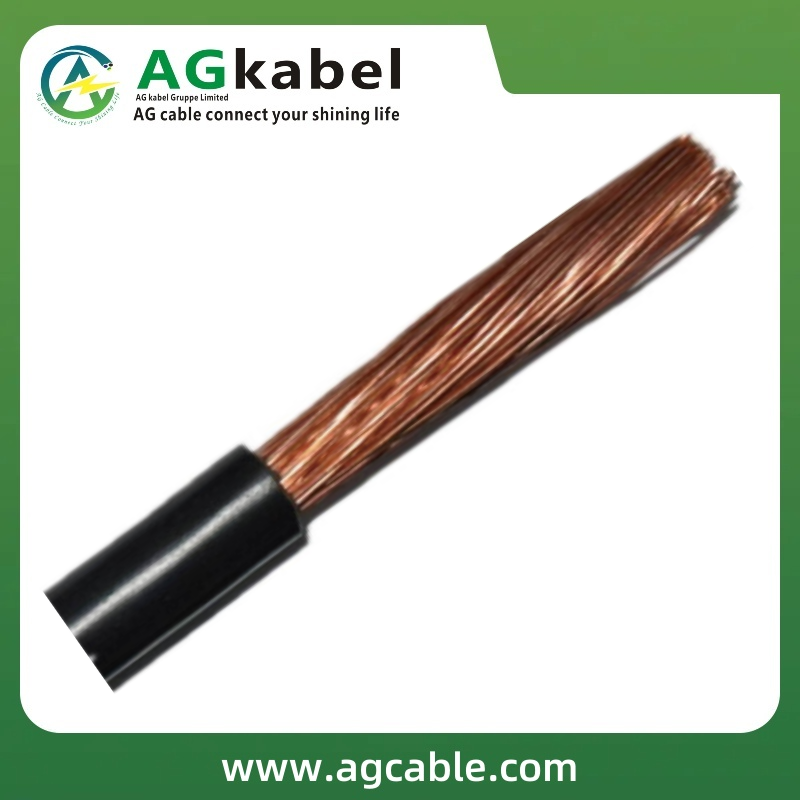
AGKABEL Flexible Cable Appliance Heavy Duty V-90HT – 600/1000V
Heavy-duty flexible cable designed for the internal wiring of appliances with an insulation temperature of up to 90°C. Features Plain Annealed Copper Class 5 conductors and PVC V-90HT insulation. Compliant with AS/NZS 3191:2003. Available from 0.5mm² to 2.5mm². Ideal for use within a chassis or where protected from mechanical damage.
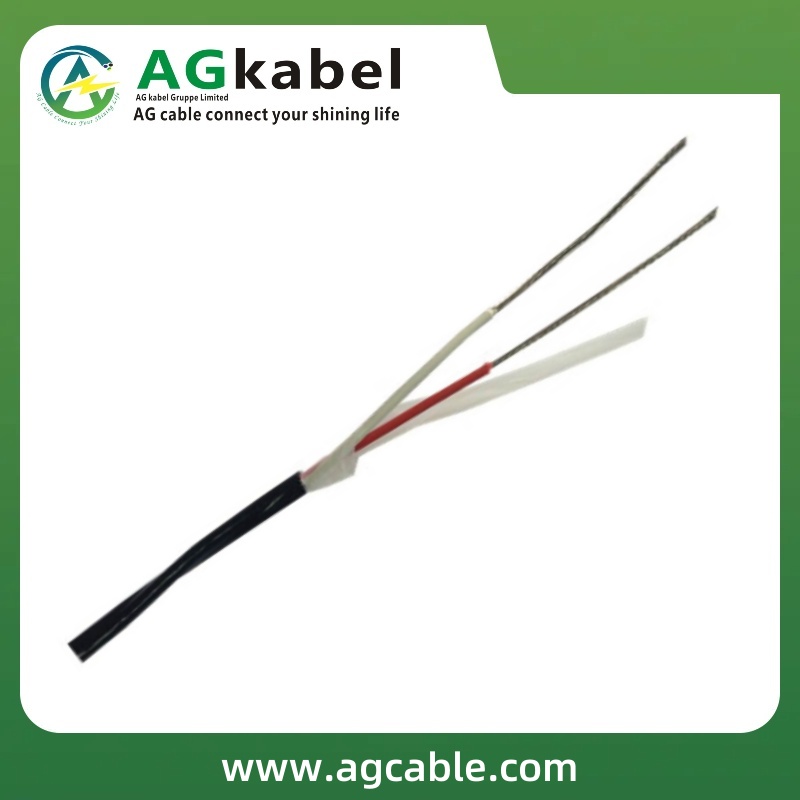
AGKABEL Multicore Teflon Heat Resistant Cable – 600V PTFE
Ultra-high-temperature multicore cable designed for power control cabinets and harsh chemical environments. Features Nickel-plated copper Class 5 conductors, PTFE insulation, and a double PTFE tape binder with PTFE sheath. Compliant with DIN VDE 0482 and IEC 60332-1. Operating temperature range: -65°C to +260°C. Suitable for submersion in polluted liquids and aggressive environments. RoHS Compliant. Available in 2 and 3 Core configurations from 0.75mm² to 3.0mm².
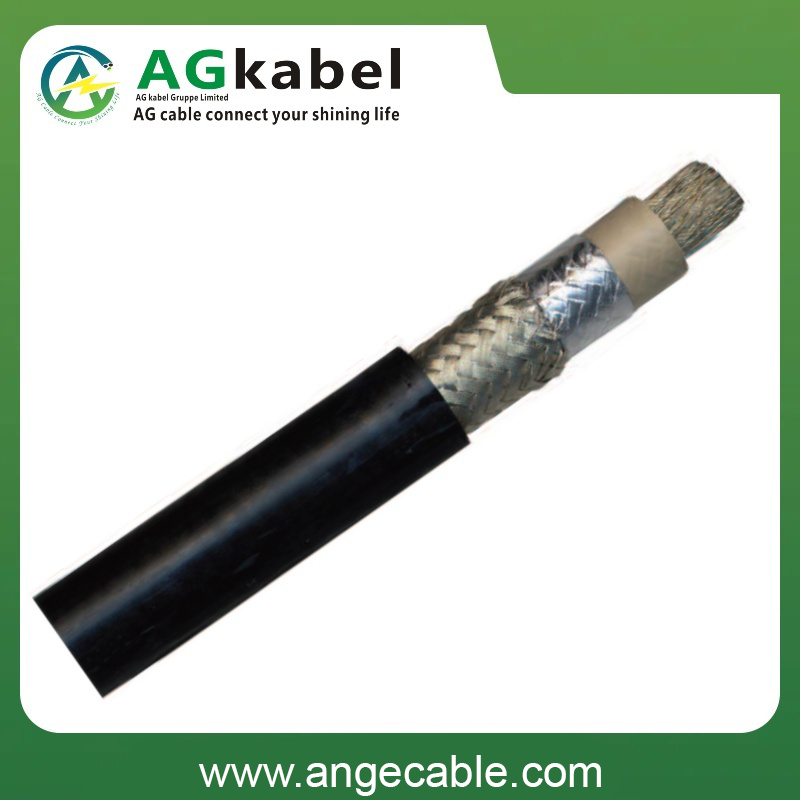
AGKABEL Screened VSD SDI Single Core Flexible Submersible Cable – 1.9/3.3kV R90°C
High-voltage, single-core flexible cable engineered for large AC Variable Speed Drives (VSD) and submersible applications. Features tinned stranded copper conductors, flexible EPR Type 3G13 insulation, and dual screening (TC braid + Aluminium/Mylar tape) for maximum EMV protection. Compliant with AS/NZS 5000.1, IEC 60228, and IEC 60332-1. Temperature range: -40°C to +90°C (Static). Available from 120mm² to 240mm².
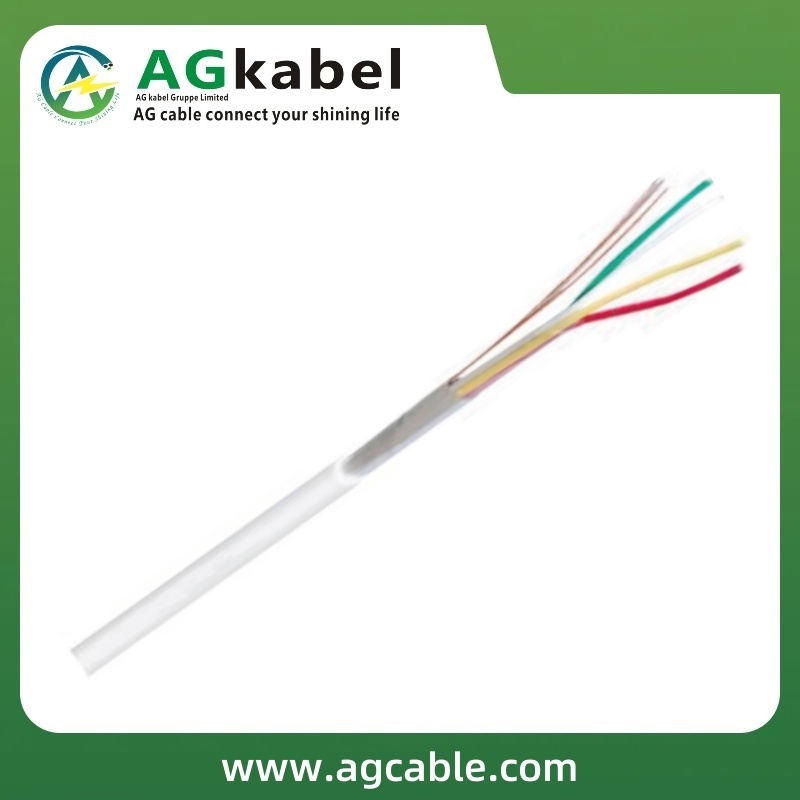
AGKABEL Security / Audio Cables (Figure 8) – 30V
Specialized Figure 8 cable designed for the transmission of sound, broadcast, and audio signals. Features Plain Annealed Copper Class 5 conductors and a V-90HT PVC sheath. Compliant with AS/NZS 5000, AS/NZS 1125, IEC 60228, IEC 60332-1, and AS/NZS 3808. Max operating temperature: 105°C. Available from 0.5mm² to 2.6mm².
Reviews
There are no reviews yet.