
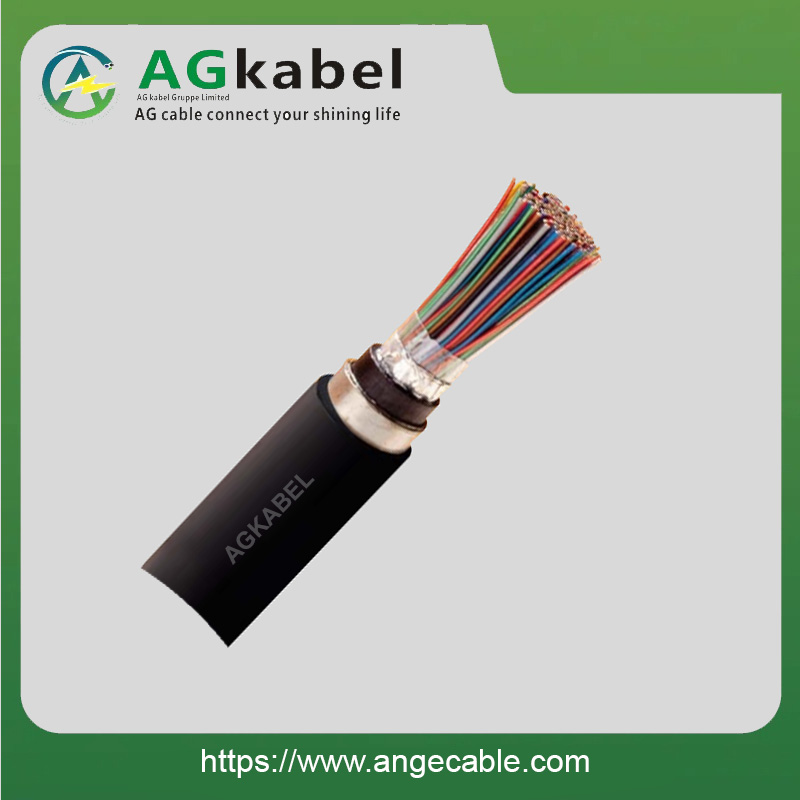
These communication cables are specifically used as connecting cables in local networks and PABX systems for telephone purposes and for the transmission of signals. Because they are suitable for laying in ditches and in all types of grounds, they are exceptionally durable for outdoor infrastructure projects. Furthermore, they are designed for use in areas with high electromagnetic influences, thanks to their low reduction factor. However, it should be noted that the use of these cables for power installations is explicitly not permitted, ensuring they remain dedicated to signal transmission applications.
The cable structure features a bare copper conductor with diameters of 0.4 mm, 0.5 mm, 0.6 mm, or 0.7 mm, which is insulated with PE low density. Four wires are twisted into a quad, and 5 quads are twisted to a basic unit. The units are stranded into a cable with several layers of plastic tapes and a laminated aluminium tape screen, one side coated with copolymer, followed by a laminated copper wire. For mechanical protection, two galvanized steel tapes with a thickness of 0.2mm are applied. Finally, the assembly is protected by a PE low density protective sheath containing 2.5% carbon black.
Technical Data & Construction Overview:
-
Conductor diameter: 0.4 mm / 0.5 mm / 0.6 mm / 0.7 mm
-
Conductor resistance at 20°C-max: 150 Ω/km / 95 Ω/km / 65 Ω/km / 48 Ω/km
-
Insulation resistance – min: 10 GΩ x km
-
Mutual capacitance at 800Hz-nom: 48 nF/km
-
Capacitance unbalances at 800Hz-max: K1: 980 pF/500m; Ke: 1,500 pF/500m; K9-K12: 50% of all values; K9-K12: 300 pF/500m; 20% of all values; 200 pF/500m
-
Test voltage 50Hz, 2 min: Wire-wire 500V / Wire-screen 2000V
-
Operating voltage peak value: Cables with cores 0.4 and 0.5mm: 150V; Cables with cores 0.6 and 0.7mm: 220V
-
Reduction factor, inductive influence by 50Hz: Cables with D 0.4 up to 10mm: 0.6; Cables with D above 10mm up to 16mm: 0.5; Cables with D above 16mm up to 22mm: 0.4; Cables with D above 22mm: 0.3
-
Temperature range: Laying and installing -10°C up to +60°C; Exploitation and storage -40°C up to +60°C
-
Bending radius, min. approx.: 15 x cable diameter
Cable core construction
| Number of pairs | Number of quads | Number of units in the layers | |||||
|---|---|---|---|---|---|---|---|
| 1-st layer | 5×4 | 2-nd layer | 25×4 | 1-st layer | 50×4 | ||
| 20 | 10 | 3 | 7 | ||||
| 30 | 15 | 5 | |||||
| 50 | 25 | 5 | 6 | ||||
| 100 | 50 | 3 | 7 | ||||
| 150 | 75 | 3 | |||||
| 200 | 100 | 4 | |||||
| 300 | 150 | 1 | 5 |
Construction data TPPBPe…
| Number of pairs | Diameter over sheath mm | Outer diameter approx. mm | Copper weight kg/km |
|---|---|---|---|
| 2x2x0.4 | |||
| 20 | 18.7 | 17.5 | 51 |
| 30 | 17.3 | 18.3 | 74 |
| 50 | 20.6 | 21.6 | 124 |
| 70 | 23.3 | 24.4 | 174 |
| 100 | 27.4 | 28.4 | 250 |
| 150 | 33.3 | 32.2 | 374 |
| 200 | 27.9 | 34.9 | 494 |
| 300 | 33.3 | 41.3 | 738 |
| 2x2x0.5 | |||
| 20 | 15.4 | 16.3 | 78 |
| 30 | 13.7 | 18.3 | 118 |
| 50 | 16.9 | 20.7 | 195 |
| 100 | 23.5 | 28.0 | 387 |
| 150 | 22.3 | 30.7 | 397 |
| 200 | 29.1 | 35.7 | 786 |
| 300 | 30.5 | 39.3 | 1166 |
| 2x2x0.6 | |||
| 20 | 15.8 | 20.6 | 101 |
| 30 | 20.1 | 23.8 | 164 |
| 50 | 26.8 | 27.8 | 263 |
| 100 | 22.5 | 35.4 | 531 |
| 150 | 34.5 | 43.2 | 851 |
| 300 | 43.3 | 54.1 | 1650 |
| 2x2x0.7 | |||
| 20 | 15.3 | 22.3 | 150 |
| 30 | 23.0 | 26.2 | 201 |
| 50 | 22.6 | 31.4 | 331 |
| 100 | 30.7 | 39.5 | 727 |
| 150 | 43.4 | 45.0 | 1003 |
| 200 | 42.4 | 53.0 | 1500 |
| 300 | 50.9 | 62.1 | 2245 |
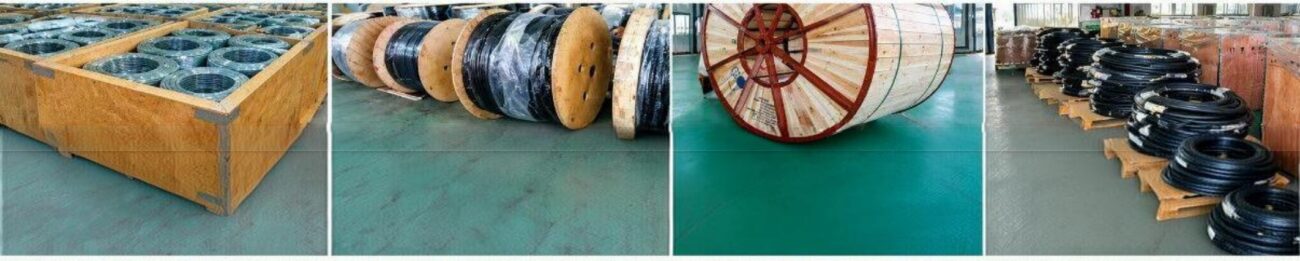
Factory Overview
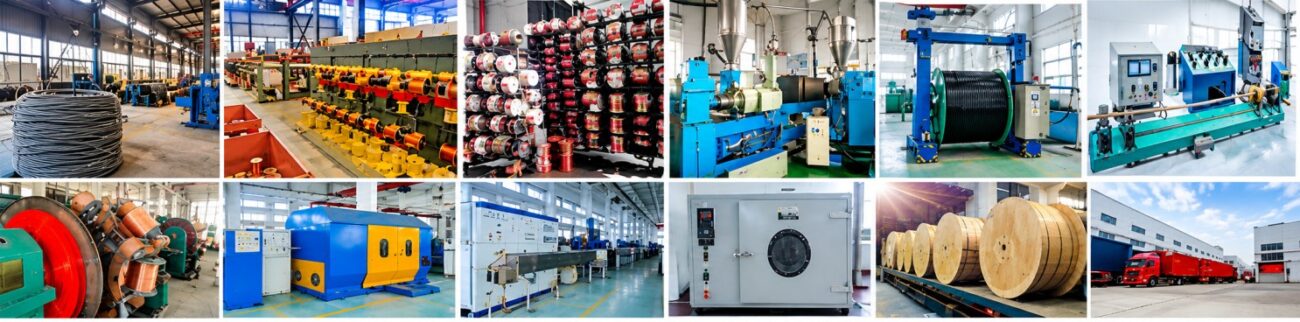
Packaging & Shipping

Frequently asked questions and answer (Q:- A:-)
Q:- What is the primary application of the TPPBPe cable?
A:- It is used as connecting cables in local networks and PABX systems for telephone and signal transmission.
Q:- Where is this cable suitable for installation?
A:- It is suitable for laying in ditches and in all types of grounds.
Q:- What makes this cable suitable for high electromagnetic influence areas?
A:- It is designed with a low reduction factor to ensure reliable signal transmission in such environments.
Q:- Can this cable be used for power installations?
A:- No, the use of these cables for power installations is explicitly not permitted.
Q:- How is the cable protected against mechanical damage?
A:- It is protected by two galvanized steel tapes with a thickness of 0.2mm.
Q:- What is the minimum bending radius for installation?
A:- The minimum bending radius is approximately 15 times the cable diameter.
Q:- What material is used for the outer sheath?
A:- The outer sheath is made of PE low density with 2.5% carbon black.
Q:- What is the temperature range for laying and installing?
A:- The laying and installing temperature range is -10°C up to +60°C.
Q:- What is the nominal mutual capacitance at 800 Hz?
A:- The nominal mutual capacitance is 48 nF/km.
Q:- What is the reduction factor for a cable with a diameter above 22mm?
A:- The reduction factor for inductive influence by 50Hz is 0.3 for cables with a diameter above 22mm.
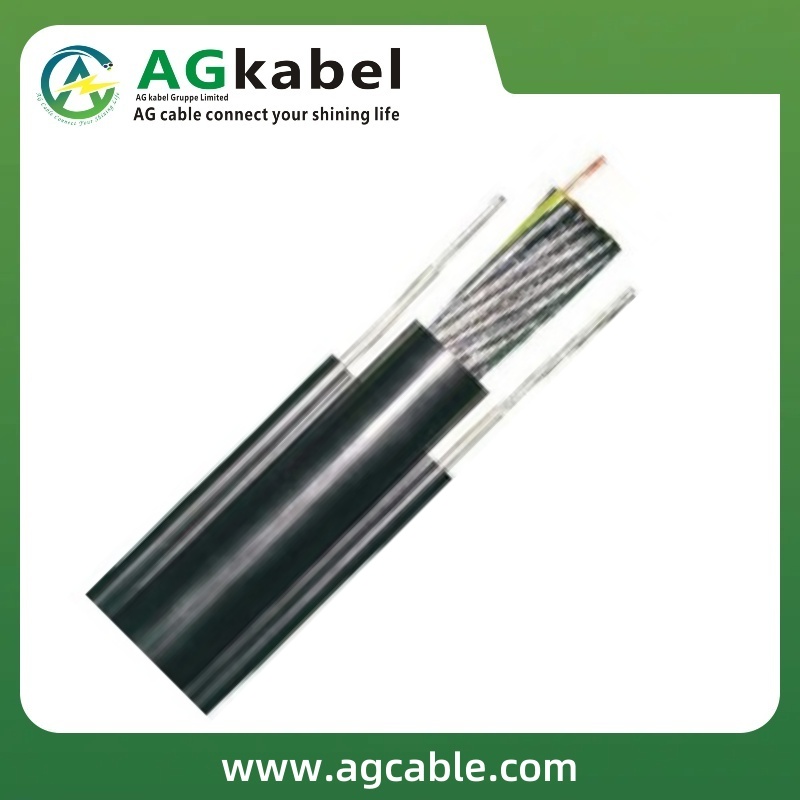
AGKABEL Lift Control Cables LIFT 2TY – with 2 External Steel Wire Suspension Cores
Heavy-duty control and feeder cables designed for lifts, hoists, conveyor systems, and manual control units under extreme conditions. Features 2 external built-in steel wire suspension cores that can be dismounted without damaging the cable insulation. Compliant with DIN VDE 0250. Temperature range: -15°C to +40°C (Flexing) | -40°C to +70°C (Fixed). Nominal voltage: 300/500 V. Max free suspension height: 50 m. Available from 8 to 30 cores, 1.0mm² to 2.5mm².
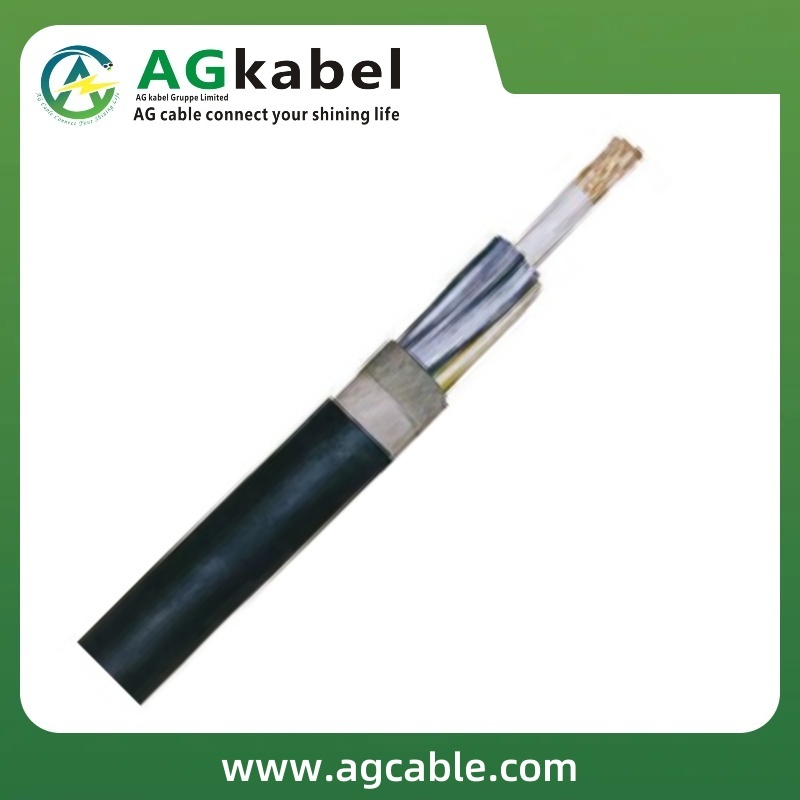
AGKABEL Lift Control Cables with Suspension Strand (KYSTY, KYSTYY, KYSTUY, KYSTFUY, KYSSTUY, YSLYCYTK)
Suspension Strand, engineered for reliability in vertical transportation and continuous material handling. Designed for use as control or feeder cables in lifts and hoists, these cables are applicable under extreme conditions and are ideally suited for installation in conveyor systems and manual control units. The built-in suspension strand supports the weight of the cable during vertical hanging, preventing tension on the copper conductors.
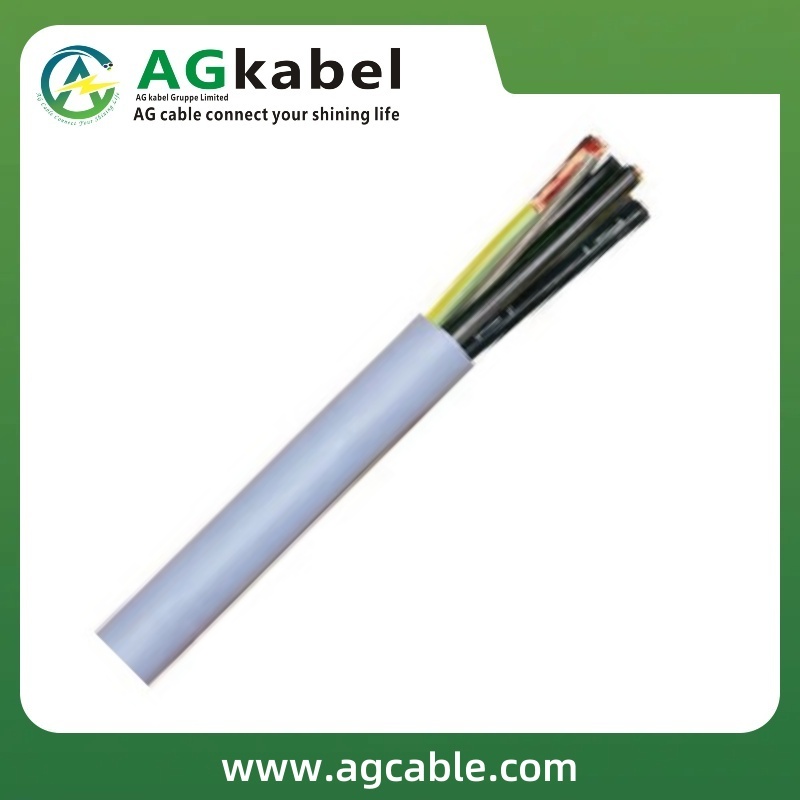
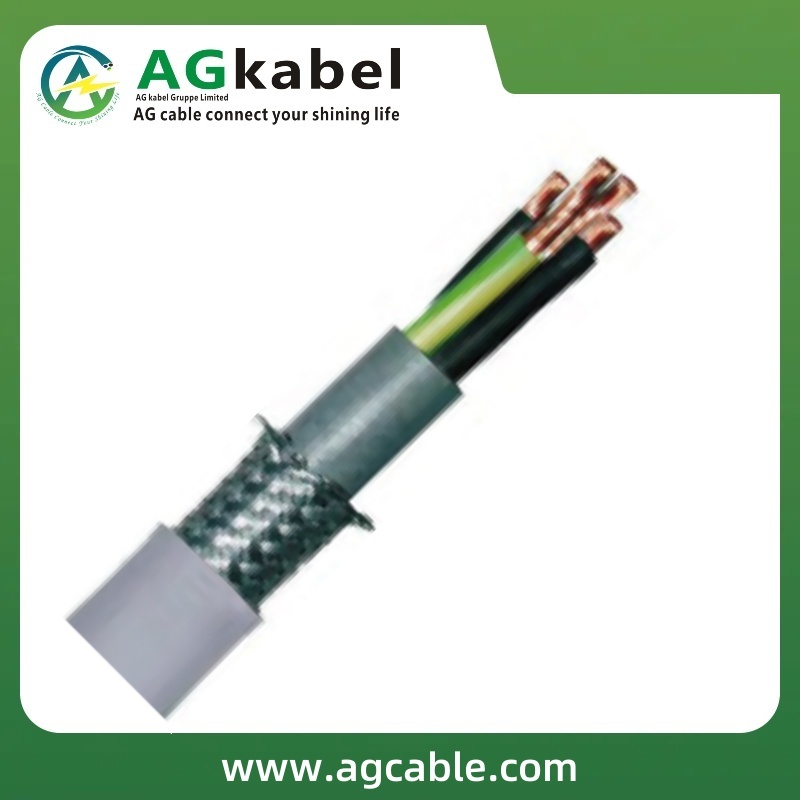
AGKABEL PUR Cables YSL11Y-OZ/JZ – Flexible, Number Coded, Non-Abrasive, Screened
Robust, screened control and power supply cables designed for machine tools and apparatus engineering. Features a durable, non-abrasive PUR outer jacket and overall copper screening for excellent resistance to oil, mechanical stress, and electromagnetic interference (EMI). Suitable for outdoor use under extreme conditions (within the specified temperature range). Temperature range: -5°C to +70°C (Flexing) | -40°C to +80°C (Fixed). Nominal voltage: 300/500 V. Test voltage: 3000 V. Available from 2 to 41 cores, 0.75mm² to 16mm².
Reviews
There are no reviews yet.