Application
2XBH and A2XBH cables provide reliable power distribution with low halogen fire smoke emission and corrosion at fire conditions. Because of these critical safety features, installers use them in electrical installations for a nominal voltage of 0.6/1 kV. Furthermore, they are essential for important objects like power stations (nuclear, thermal), transformer substations, metro systems, and airports. Additionally, they are ideal for public buildings, hospitals, theaters, cinemas, and commercial centers where the safety of people and material values must be guaranteed. The cables can be laid indoors, in air, or in concrete. However, direct laying underground or in water is not allowed.
Cable construction
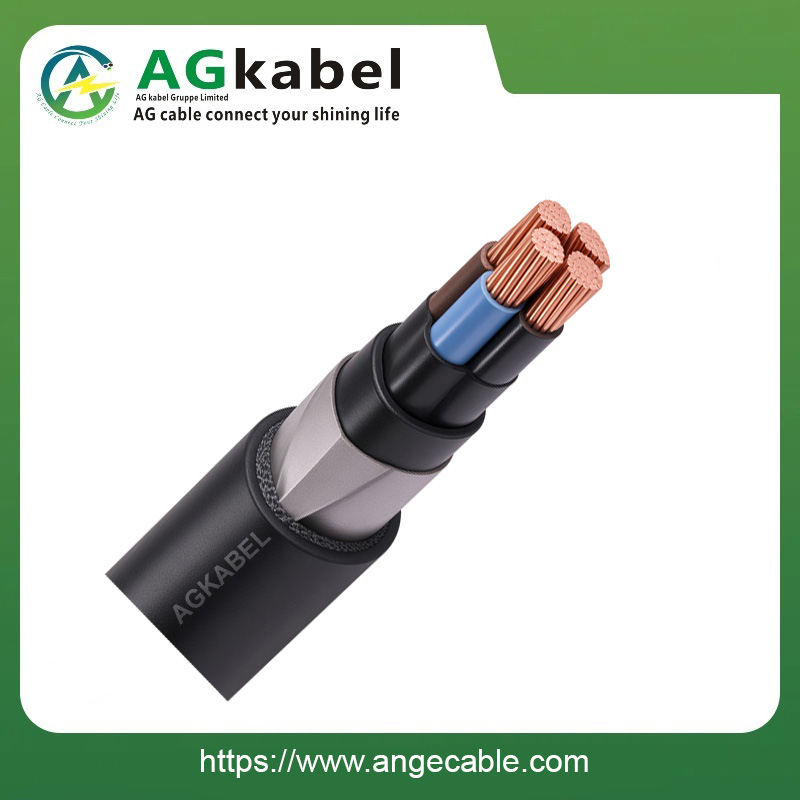
This cable strictly adheres to IEC 60502-1 and VDE 0276-604 (HD 604 S1) standards. It features copper or aluminum solid or stranded wires class 1 or 2 according to IEC 60228. The insulation uses an XLPE compound. Core identification follows VDE 0276-604. A halogen-free compound forms the inner sheath. The armour consists of two steel tapes or two galvanized steel tapes. Finally, a black halogen-free compound, flame retardant type HM4 (LTS 1) sheath protects the entire assembly. Furthermore, this product is both RoHS and CE compliant.
Technical Data
The cable delivers consistent performance under specific conditions. It maintains a conductor resistance according to IEC 60228. The operating temperature reaches 90 °C continuous. During an overload, it can withstand 130 °C for 100% per year max. In a short circuit, it withstands 250 °C for a maximum of 5 seconds. It operates at a nominal voltage of Uo/U 0.6/1 kV, while the highest system voltage is 1.2 kV. Test voltage is AC 50 Hz 4.0 kV. Installers must respect a minimum bending radius of 15 times the cable diameter (15x D cable) for single angle cores, or 12 times (12x D cable) for multi-core cables. The temperature of laying is no less than 0 °C. The temperature of explosion is -30 to 70 °C. Testing follows IEC 60502-1 and VDE 0276-604 / (IEC 332-3/C and B). The corrosion of combustion gases and conductivity has a pH of min. 4.3 and max. 100 µS/cm. The density of smoke gases follows VDE 0472-816 (IEC 61034-1 and 2).
Color coding
Clear color coding ensures safe and accurate wiring. Single core cables are black or yellow/green. Double core cables feature blue and brown, or yellow-green and black. 3-core cables use brown, black, and grey, or yellow/green, blue, and brown. 4-core cables use blue, brown, black, and grey, or yellow/green, brown, black, and grey. 5-core cables use blue, brown, black, grey, and black, or yellow/green, blue, brown, black, and grey. Multiple core cables use black with number marks on cores or black with number marks on cores and a yellow/green core in the outer cover.
Constructive Data Table
Please refer to the following comprehensive specifications for precise sizing, weight, and diameter information.
Construction data 2XBH
| Number of wires and nominal cross section | Type of conductor | Cable diameter approx. | Mass of Cu approx. | Mass of cable approx. |
|---|---|---|---|---|
| N x mm² | mm | kg/km | kg/km | |
| 5×4,0 | re | 19,6 | 187 | 590 |
| 5×6,0 | re | 21,0 | 279 | 715 |
| 5×10 | rm | 24,8 | 470 | 1095 |
| 5×16 | rm | 25,7 | 744 | 1270 |
| 5×25 | rm | 31,9 | 1213 | 1925 |
| 5×35 | rm | 36,1 | 1683 | 2555 |
| 5×50 | rm | 40,1 | 2271 | 3390 |
| 5×70 | rm | 45,3 | 3280 | 4455 |
| 5×95 | sm | 50,5 | 4333 | 5255 |
| 8×1,5 | re | 18,2 | 114 | 485 |
| 10×1,5 | re | 19,9 | 142 | 575 |
| 12×1,5 | re | 21,1 | 171 | 615 |
| 16×1,5 | re | 21,9 | 199 | 675 |
| 19×1,5 | re | 22,1 | 227 | 725 |
| 24×1,5 | re | 24,5 | 284 | 855 |
| 30×1,5 | re | 26,0 | 355 | 980 |
| 37×1,5 | re | 26,1 | 341 | 1005 |
| 7×2,5 | re | 18,0 | 163 | 505 |
| 10×2,5 | re | 21,5 | 232 | 765 |
| 12×2,5 | re | 22,0 | 279 | 780 |
| 16×2,5 | re | 23,9 | 372 | 930 |
| 19×2,5 | re | 25,0 | 441 | 1005 |
| 21×2,5 | re | 26,1 | 488 | 1095 |
| 24×2,5 | re | 28,6 | 557 | 1295 |
| 30×2,5 | re | 30,2 | 697 | 1485 |
| 37×2,5 | re | 32,3 | 859 | 1700 |
| 7×4,0 | re | 22,9 | 299 | 825 |
| 7×6,0 | re | 25,2 | 391 | 1010 |
| 7×10 | re | 26,0 | 559 | 1270 |
| 8×4,0 | re | 19,5 | 447 | 1045 |
| 10×6,0 | re | 27,4 | 559 | 1270 |
Construction data A2XBH
| Number of wires and nominal cross section | Type of conductor | Cable diameter approx. | Mass of Al approx. | Mass of cable approx. |
|---|---|---|---|---|
| N x mm² | mm | kg/km | kg/km | |
| 5×6,0 | re | 17,5 | 35 | 505 |
| 5×10 | re | 19,1 | 56 | 480 |
| 5×16 | rm | 21,1 | 84 | 605 |
| 5×25 | rm | 25,1 | 144 | 815 |
| 5×35 | rm | 27,3 | 199 | 940 |
| 5×50 | rm | 31,0 | 269 | 1180 |
| 5×70 | rm | 35,0 | 390 | 1440 |
| 5×95 | sm | 38,6 | 560 | 1455 |
| 5×120 | sm | 42,7 | 809 | 2080 |
| 3×10+4 | re | 19,2 | 110 | 555 |
| 3×16 | re | 19,8 | 135 | 580 |
| 3×25 | rm | 23,0 | 210 | 790 |
| 3×35 | rm | 25,8 | 290 | 870 |
| 3×50+25 | sm | 30,1 | 343 | 1135 |
| 3×70+35 | sm | 35,6 | 474 | 1445 |
| 3×95+50 | sm | 39,5 | 739 | 1970 |
| 3×120+70 | sm | 43,0 | 844 | 2235 |
| 3×150+70 | sm | 45,6 | 1218 | 2620 |
| 3×185+95 | sm | 54,5 | 1848 | 3180 |
| 3×240 | sm | 60,9 | 2412 | 4100 |
| 3×35+16 | sm | 30,0 | 143 | 900 |
| 3×70+35 | rm | 35,6 | 474 | 1445 |
| 3×95+50 | rm | 39,5 | 739 | 1970 |
| 3×120+70 | rm | 43,0 | 844 | 2235 |
| 3×150+70 | rm | 45,6 | 1218 | 2620 |
| 3×240 | sm | 60,9 | 2412 | 4100 |
| 4×6 | re | 19,6 | 46 | 560 |
| 4×10 | re | 21,5 | 111 | 745 |
| 4×16 | rm | 23,8 | 112 | 880 |
| 4×25 | rm | 29,0 | 282 | 1330 |
| 4×35 | rm | 31,9 | 290 | 1580 |
| 4×50 | sm | 38,2 | 479 | 1910 |
| 4×70 | sm | 42,4 | 554 | 2380 |
| 4×95 | sm | 47,2 | 671 | 2810 |
| 4×120 | sm | 50,2 | 887 | 3325 |
| 4×150 | sm | 54,8 | 1115 | 3630 |
| 4×185 | sm | 60,9 | 1344 | 4280 |
| 4×240 | sm | 60,9 | 2762 | 4940 |
Factory Overview
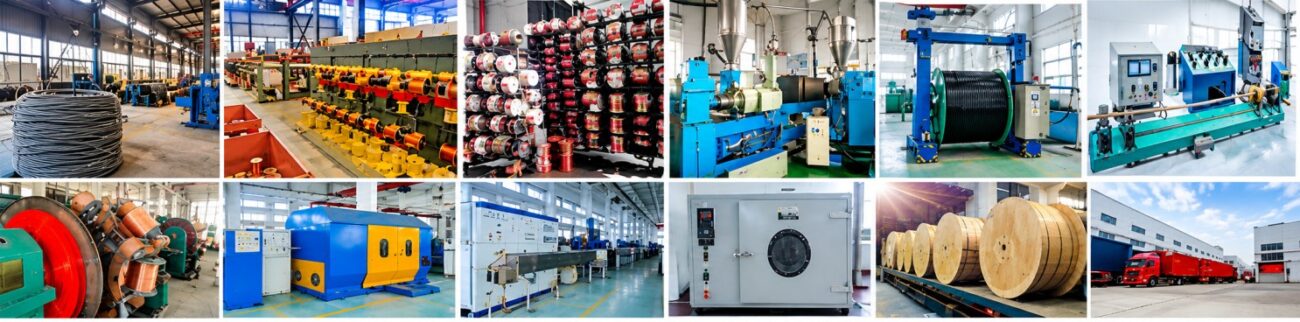
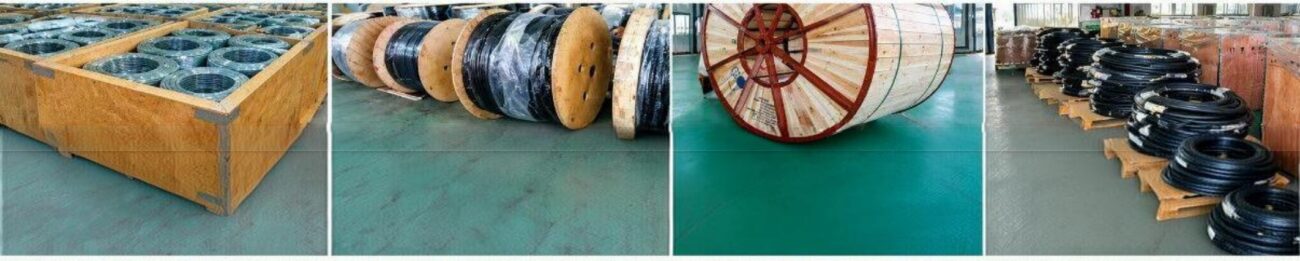
Packaging & Shipping

Frequently asked questions and answer ( Q:- A:- )
Q:- What is the primary application of the 2XBH and A2XBH cables?
A:- They are used in electrical installations for a nominal voltage of 0.6/1 kV, particularly in safety-critical environments like power stations, metro systems, airports, and public buildings.
Q:- What are the key fire safety features of this cable?
A:- It is halogen-free, flame retardant, and emits low smoke and low-corrosion gases during a fire, passing the IEC 332-3/C and B tests.
Q:- What standards does the cable construction follow?
A:- The construction adheres to IEC 60502-1 and VDE 0276-604 (HD 604 S1) standards, and the conductor complies with IEC 60228.
Q:- What type of conductor and insulation does it use?
A:- It uses Cu or Al solid or stranded wires (class 1 or 2) with XLPE insulation.
Q:- What kind of armour protects this cable?
A:- The cable features an armour made of two steel tapes or two galvanized steel tapes.
Q:- Where can this cable be installed?
A:- The cables can be laid indoors, in air, or in concrete. However, direct laying underground or in water is not allowed.
Q:- What is the rated voltage and maximum conductor temperature?
A:- The rated voltage is 0.6/1 kV, and the continuous operating temperature is 90°C.
Q:- What is the short-circuit temperature limit?
A:- It can withstand a short circuit temperature of 250°C for a maximum of 5 seconds.
Q:- What is the test voltage for this cable?
A:- The test voltage is AC 50 Hz 4.0 kV.
Q:- What is the minimum bending radius for installation?
A:- The minimum bending radius is 15 times the cable diameter (15x D cable) for single angle cores, or 12 times (12x D cable) for multi-core cables.
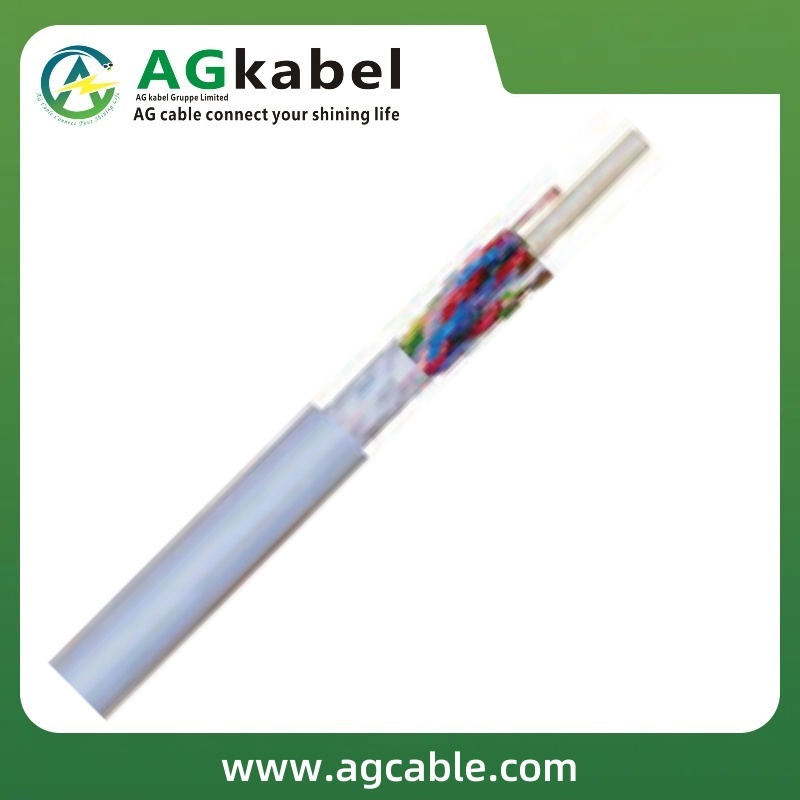
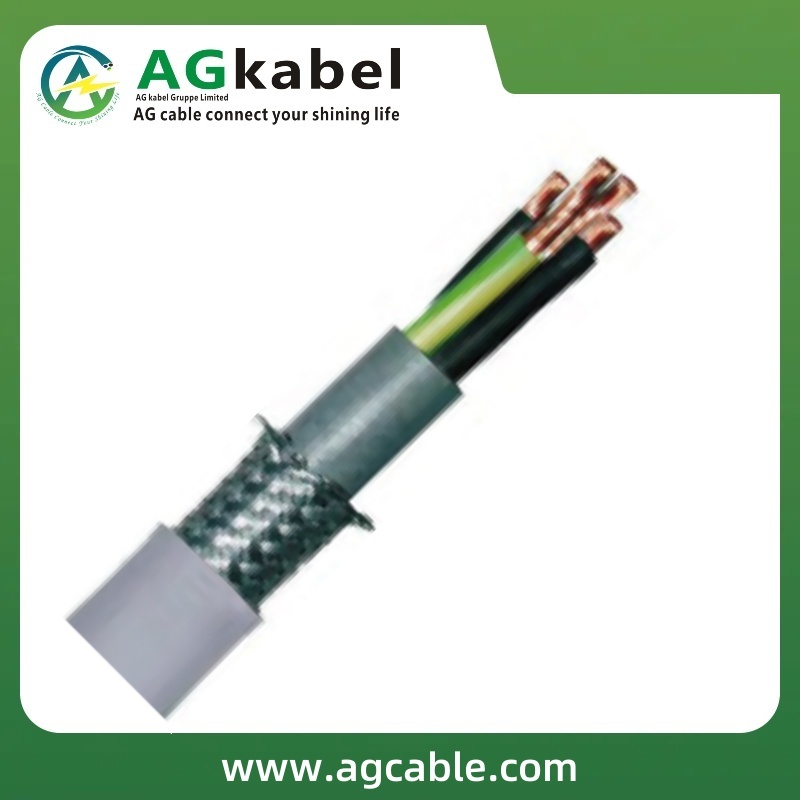
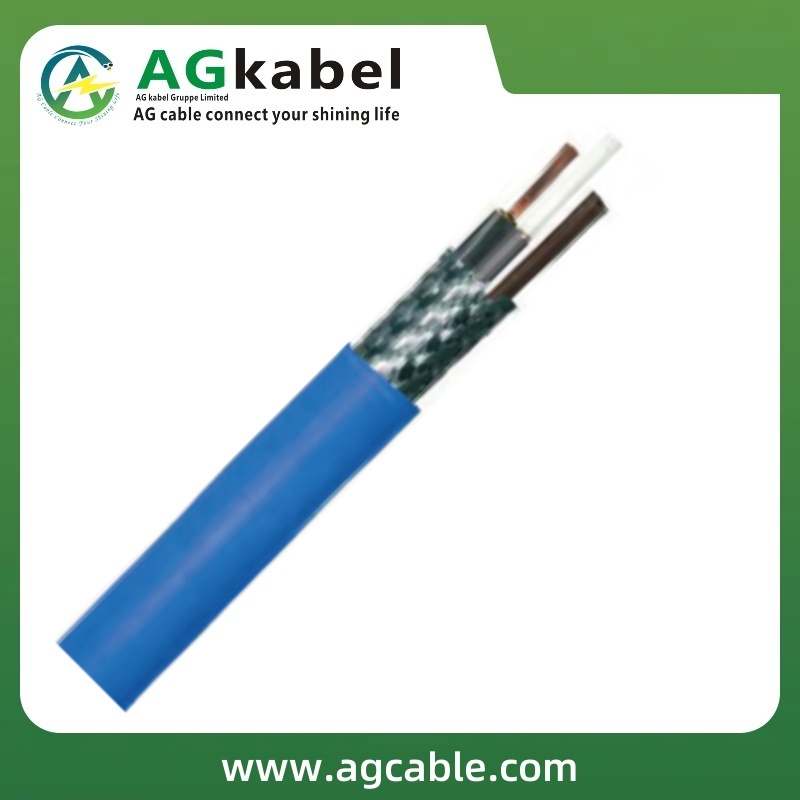
AGKABEL Drag Chain Cables SL-FY-11Y-PUR – Colour Coded to DIN VDE 47100, Ultraflexible
Extreme robust PUR control cables designed for continuous flexing in cable trays, machine industries, robotics, and highly mobile machine parts. Features a high tear, abrasion, and oil-resistant PUR jacket. Compliant with DIN VDE 0281 part 13 and colour-coded to DIN VDE 47100. Temperature range: -5°C to +70°C (Flexing) | -40°C to +70°C (Fixed). Nominal voltage: 300/500 V. Minimum bending radius: approx. 7.5 x cable diameter. Available from 3 to 25 cores, 0.14mm² to 0.34mm².
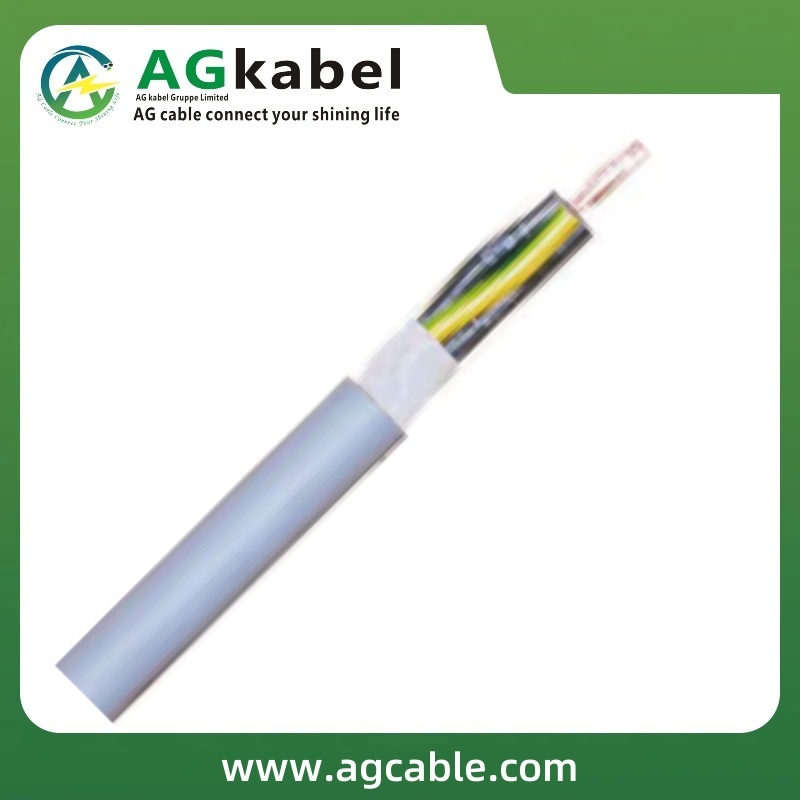
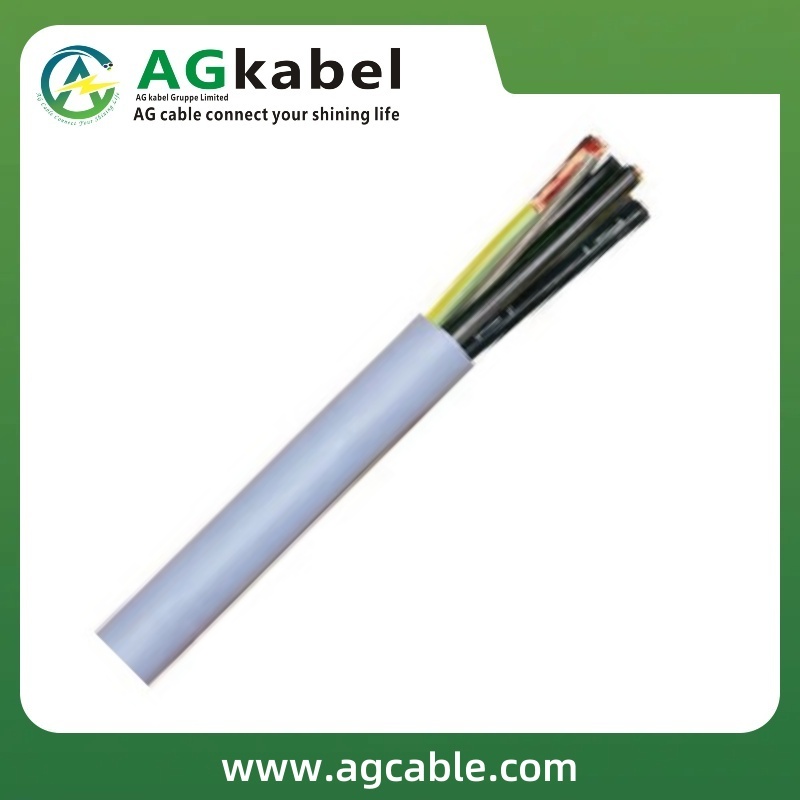
AGKABEL Drag Chain Cables SL-FY-11Y-PUR – Number Coded, Ultraflexible
Extreme robust PUR control cables designed for continuous flexing in cable trays, machine industries, robotics, and highly mobile machine parts. Features a high tear, abrasion, and oil-resistant PUR jacket. Compliant with DIN VDE 0245, 0281. Temperature range: -5°C to +70°C (Flexing) | -40°C to +80°C (Fixed). Nominal voltage: 300/500 V. Minimum bending radius: 7.5 x cable diameter. Available from 2 to 35 cores, 0.5mm² to 50mm².
Reviews
There are no reviews yet.