Application
EXeCVB and EAXeCVB medium voltage single-core cables provide reliable transfer and distribution of electrical power in power supply networks. They operate efficiently with nominal voltages of Uo/U 8.7/15, 12/20, and 20.8/36 kV, and a frequency of 50 Hz, in urban and district electrical networks. Furthermore, installers use them for the electrical supply of transformer substations, small and medium industrial plants, electric power stations, and industrial systems. Because of their robust design, they are suitable for fixed assembly in lines with unlimited difference levels, indoor installations, cable ducts, conduits, and shafts. Additionally, they perform reliably on shelves and grilles, directly underground in ditch, and outdoor under shelters.
Cable construction
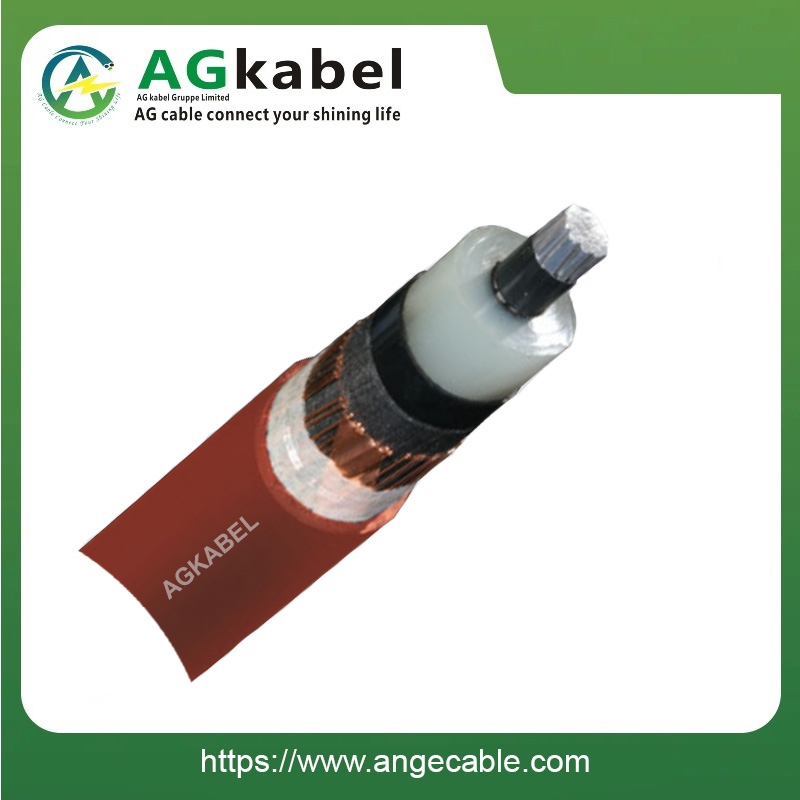
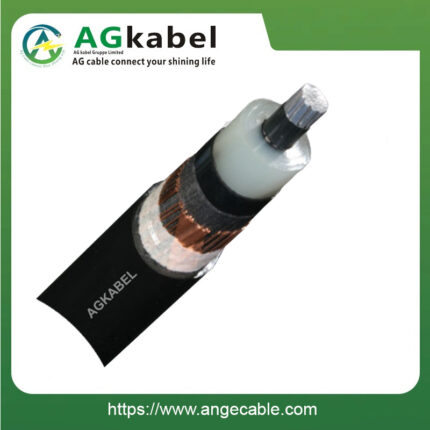
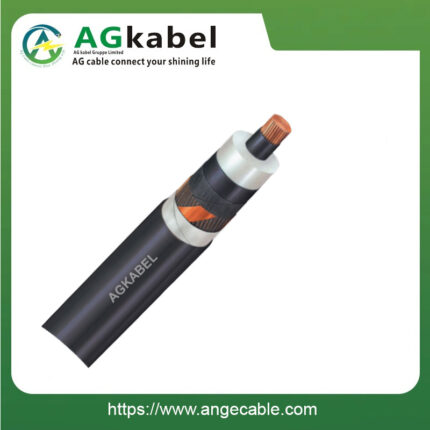
This cable strictly adheres to NBN C 33-323 standards. It features copper and aluminum stranded compacted conductors according to IEC 60228 class 2 (NBN C 33-228). The inner semi-conductive layer, insulation, and outer semi-conductive layer all use XLPE or semi-conductive XLPE compounds. A layer of semi-conductive water absorbing tapes forms the water resisting element. The metal screen consists of Cu wires concentrically laid and one contour of Cu tape with a thickness of 0.1 mm. The water resisting element uses water absorbing insulation tape. The sheath uses a PVC compound type ST2 according to NBN C 33-323. The color is red. Furthermore, this product is RoHS compliant.
Technical Data
The cable delivers consistent performance under specific conditions. It maintains a conductor resistance at 20 °C according to IEC60228 class 2 (NBN C 33-228). The operating temperature reaches 90 °C continuous. During an overload, it can withstand 120 °C for 100% per year max. In a short circuit, it withstands 250 °C for a maximum of 5 seconds. It operates at nominal voltages of 8.7/15, 12/20, and 20.8/36 kV, while the highest system voltage Uo/U is not more than 8.7/15, 12/20, 20.8/36 kV, 17.5 kV, 24 kV, and 41.5 kV. Test voltage is AC (+) – 5 min for 8.7/15 kV (30 kV), 12/20 kV (35 kV), and 20.8/36 kV (48 kV). The level of partial discharge at 2Uo is max. 5 pC. The minimum bending radius is 15 times the cable diameter. The temperature of laying is no less than -15 °C. The temperature of explosion is -30 to 50 °C. Testing follows NBN C 33-323. The force of strain in laying max is Al cores: 30NS core, Cu cores: 50NS core, where N is the number of cores and S is the cross-section of conductors in mm.
Constructive Data Table
Please refer to the following comprehensive specifications for precise sizing, weight, and diameter information.
Construction data EXeCVB, EAXeCVB 8.7/15; 12/20 kV; 20.8/36 kV
| Number of conductors and nominal cross section | Thickness of insulation | Thickness of sheath | Nominal cross section of screen | Cable diameter approx. | EXeCVB Mass of Cu approx. | EXeCVB Mass of cable approx. | EAXeCVB Mass of Al approx. | EAXeCVB Mass of cable approx. | |
|---|---|---|---|---|---|---|---|---|---|
| N x mm² | mm | mm | mm² | mm | kg/km | kg/km | kg/km | kg/km | |
| 8.7/15 kV | |||||||||
| 1×50 m/16 | 4,5 | 2,8 | 16 | 26,8 | 490 | 1046 | 65 | 265 | 888 |
| 1×70 m/16 | 4,5 | 2,6 | 16 | 28,0 | 690 | 1319 | 130 | 265 | 1074 |
| 1×95 m/16 | 4,5 | 2,6 | 16 | 29,0 | 1120 | 1858 | 250 | 265 | 1283 |
| 1×150 m/25 | 4,5 | 2,9 | 25 | 32,5 | 1410 | 2473 | 490 | 265 | 1548 |
| 1×185 m/25 | 4,5 | 2,9 | 25 | 35,9 | 1555 | 2929 | 630 | 265 | 1836 |
| 1×240 m/35 | 4,5 | 3,1 | 35 | 40,0 | 2430 | 3396 | 1060 | 363 | 2792 |
| 1×400 m/35 | 4,5 | 3,3 | 35 | 47,3 | 3855 | 5204 | 2660 | 363 | 4002 |
| 12/20 kV | |||||||||
| 1×50 m/16 | 5,5 | 2,6 | 16 | 31,4 | 690 | 1414 | 130 | 265 | 1119 |
| 1×95 m/25 | 5,5 | 2,7 | 25 | 35,0 | 1120 | 1979 | 260 | 265 | 1384 |
| 1×120 m/25 | 5,5 | 2,9 | 25 | 38,4 | 1410 | 2395 | 490 | 265 | 1636 |
| 1×240 m/35 | 5,5 | 3,1 | 35 | 42,7 | 2430 | 3641 | 665 | 265 | 2118 |
| 1×400 m/35 | 5,5 | 3,3 | 35 | 49,6 | 3890 | 5344 | 1060 | 363 | 2735 |
| 20.8/36 kV | |||||||||
| 1×120 m/25 | 8,8 | 3,0 | 25 | 43,5 | 1410 | 2772 | 330 | 265 | 2022 |
| 1×150 m/25 | 8,8 | 3,2 | 25 | 45,3 | 1530 | 2855 | 405 | 265 | 2111 |
| 1×240 m/35 | 8,8 | 3,4 | 35 | 49,8 | 2455 | 3736 | 665 | 363 | 2521 |
| 1×400 m/35 | 8,8 | 3,6 | 35 | 56,9 | 3835 | 6047 | 1060 | 363 | 3635 |
Note: Other core configuration and special constructions manufactured upon request.
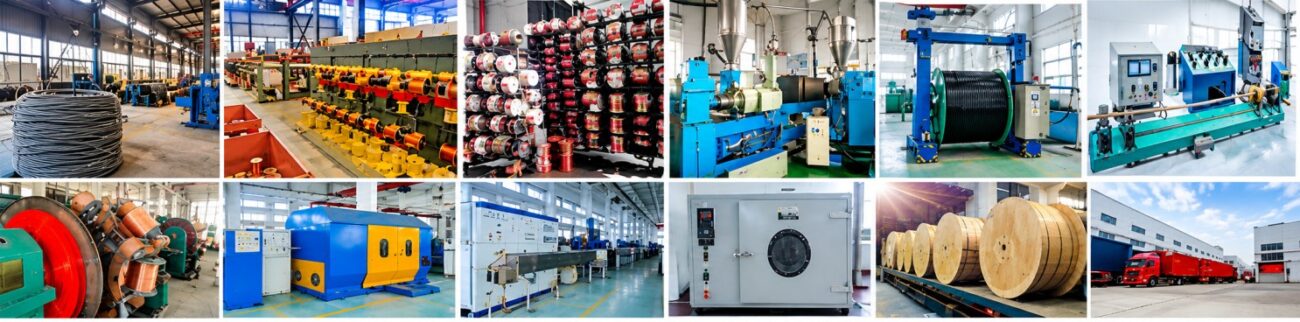
Factory Overview
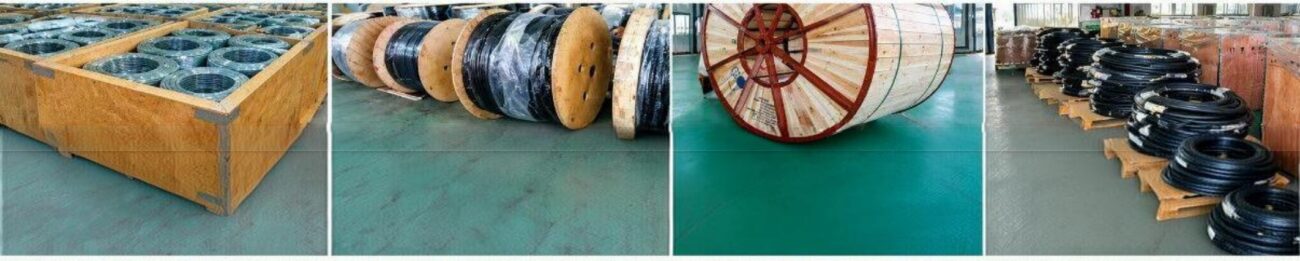
Packaging & Shipping

Frequently asked questions and answer ( Q:- A:- )
Q:- What is the primary application of the EXeCVB and EAXeCVB cables?
A:- They are designed for the transfer and distribution of electrical power in urban and district electrical networks and for the electrical supply of transformer substations, small and medium industrial plants, and power stations.
Q:- What are the nominal voltage levels available for this cable?
A:- The cables are available in three nominal voltage levels: Uo/U 8.7/15 kV, 12/20 kV, and 20.8/36 kV, operating at a frequency of 50 Hz.
Q:- What standards does the cable construction follow?
A:- The construction adheres to NBN C 33-323 standards, and the conductor complies with IEC 60228 class 2 (NBN C 33-228).
Q:- What type of conductor and insulation does it use?
A:- It uses Cu or Al stranded compacted conductors with XLPE insulation.
Q:- What is the function of the water resisting element?
A:- The water resisting element, which is a layer of semi-conductive water absorbing tapes, prevents water ingress along the cable.
Q:- What type of outer sheath protects the cable?
A:- A red PVC compound type ST2 sheath (according to NBN C 33-323) protects the entire cable assembly.
Q:- What are the maximum operating and short-circuit temperatures?
A:- The maximum operating temperature is 90°C continuous, and it can withstand a short circuit temperature of 250°C for a maximum of 5 seconds.
Q:- What is the maximum partial discharge level?
A:- The level of partial discharge at 2Uo is max. 5 pC.
Q:- What is the minimum bending radius for installation?
A:- The minimum bending radius is 15 times the cable diameter (15x D cable).
Q:- What are the temperature limits for laying and explosion?
A:- The temperature of laying is no less than -15°C, and the temperature of explosion is -30 to 50°C.
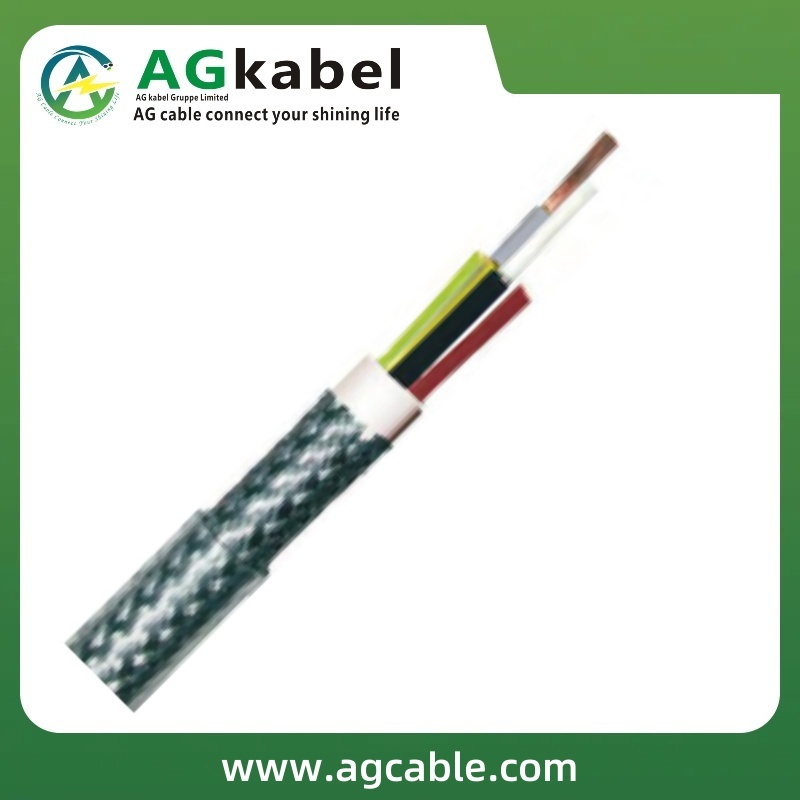
AGKABEL Flexible Control Cables 2YSLCY-J – 0.6/1 kV, EMC, Double Screened
High-performance motor power supply cable designed for frequency converters to ensure electromagnetic compatibility (EMC). Features double screening and a transparent outer sheath. Supply and connecting cable for medium mechanical stress in fixed installations and forced movements in dry, moist, and wet surroundings. Not usable for outdoor applications. Temperature range: -40°C to +80°C (Fixed). Nominal voltage: 0.6/1 kV. Available from 4X1,5 to 4X240.
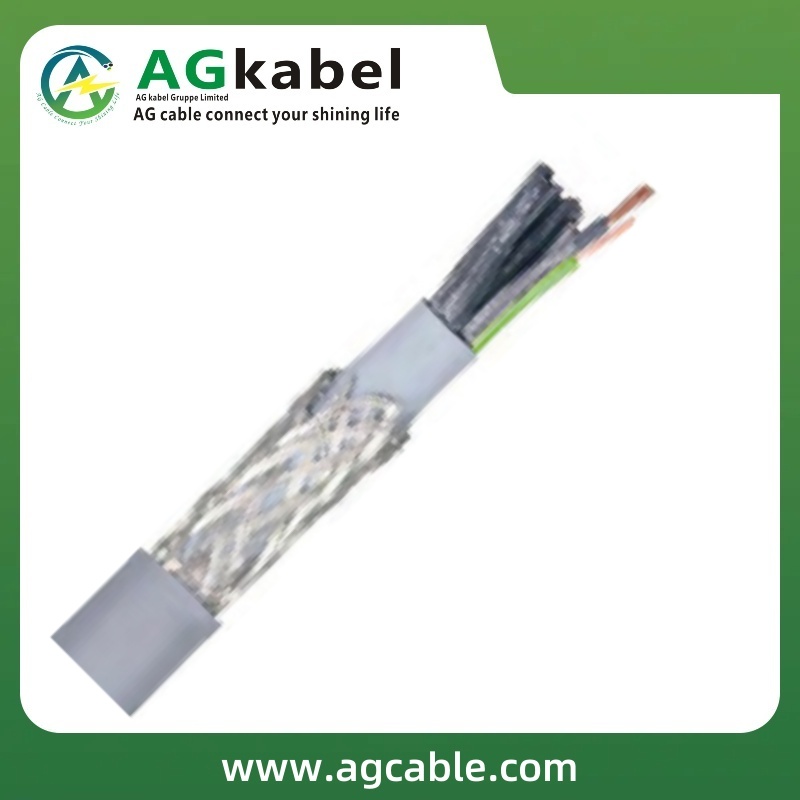
AGKABEL Flexible Control Cables Multi-approvals – Cu-screened
High-flexibility, multi-approved control cables designed for machines, tool machineries, conveyor belts, and production lines. Features a copper screen for EMC protection and is oil-resistant, making it ideal for moist and wet rooms (breweries, bottling plants, car washing stations). Compliant with UL, CSA, VDE/HAR, and SEV standards. Temperature range: -5°C to +70°C (+90°C UL, CSA). Nominal voltage: 300/500 V (600 V UL, CSA). Available from 2 to 12 cores, 0.75mm² to 2.5mm².
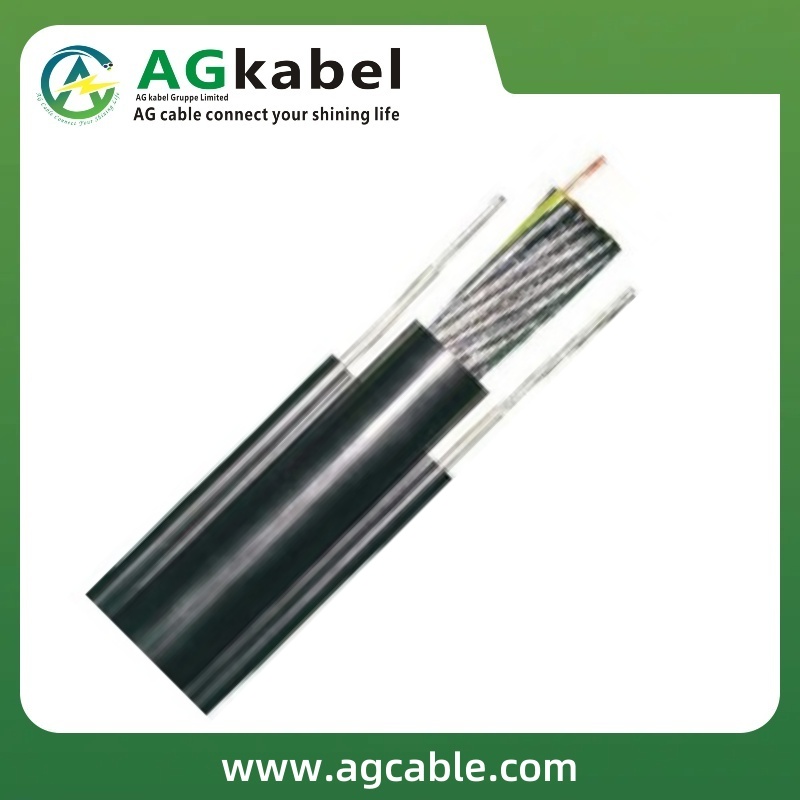
AGKABEL Lift Control Cables LIFT 2TY – with 2 External Steel Wire Suspension Cores
Heavy-duty control and feeder cables designed for lifts, hoists, conveyor systems, and manual control units under extreme conditions. Features 2 external built-in steel wire suspension cores that can be dismounted without damaging the cable insulation. Compliant with DIN VDE 0250. Temperature range: -15°C to +40°C (Flexing) | -40°C to +70°C (Fixed). Nominal voltage: 300/500 V. Max free suspension height: 50 m. Available from 8 to 30 cores, 1.0mm² to 2.5mm².
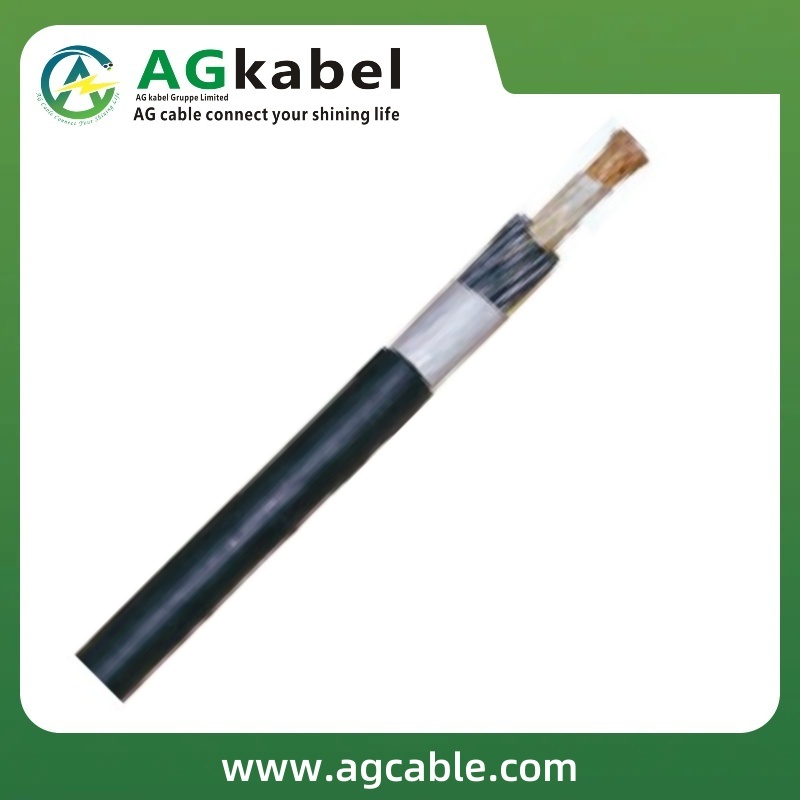
AGKABEL Lift Control Cables STN – Neoprene with Suspension Strand
Robust, weather-resistant control and power cables designed for machines, equipment, and appliances constantly exposed to harsh weather (building machinery, conveyor/hoist systems, dry docks). Features a central strain-bearing support strand, ozone-resistant core insulation, and a chloroprene (neoprene) outer jacket that is hardly flammable and abrasion-resistant. Compliant with DIN VDE 0250 part 807 and DIN VDE 0282. Temperature range: -30°C to +70°C (Flexing) | -40°C to +70°C (Fixed). Nominal voltage: 450/750 V. Available from 3 to 61 cores, 1.0mm² to 16mm².
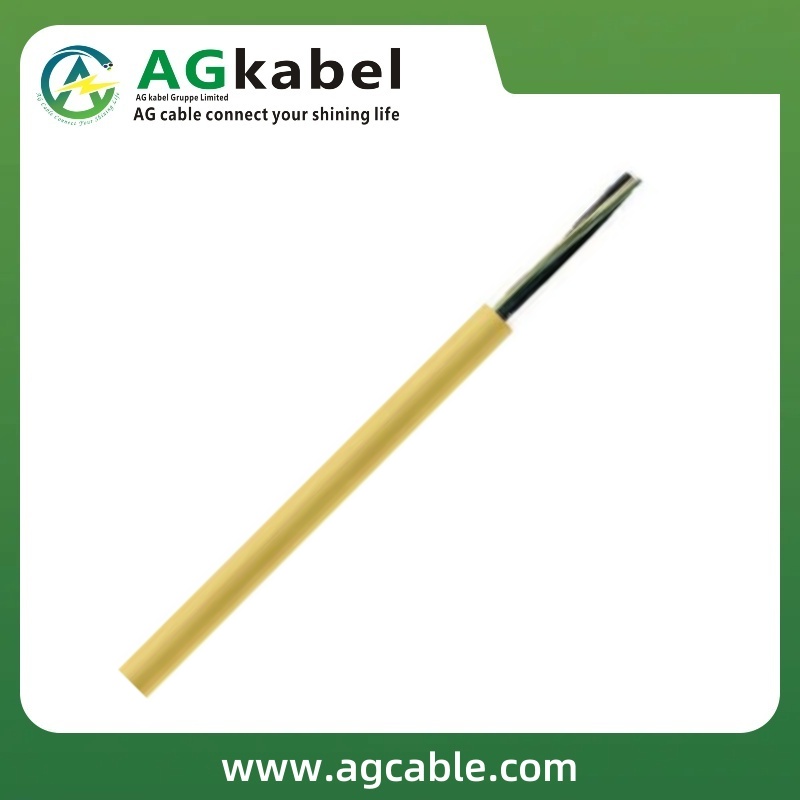
AGKABEL PUR Cables YSLYK – Flexible, Non-Abrasive, Oil & Chemical Resistant
Robust control cables designed for harsh industrial environments, including tool making, machine industries, steel works, oil/coal industries, and building sites. Features a durable PUR jacket that is resistant to oil, abrasion, and chemical agents. Compliant with DIN VDE 0281, 0282. Temperature range: -5°C to +80°C (Flexing) | -40°C to +80°C (Fixed). Nominal voltage: 300/500 V. Available colour-coded or number-coded, from 2 to 25 cores, 0.75mm² to 6mm².
Reviews
There are no reviews yet.