Application
These medium voltage three-core cables provide reliable transfer and distribution of electrical power in power supply networks. They operate efficiently with nominal voltages of Uo/U 6.35/11 kV, 8.7/15 kV, 12.7/22 kV, and 19/33 kV, and a frequency of 50 Hz, in urban and district electrical networks. Furthermore, installers use them for the electrical supply of transformer substations, small and medium industrial plants, electric power stations, and industrial systems. Because of their robust design, they are suitable for use in distribution installations and cable ducts, conduits, and shafts. Additionally, they perform reliably on shelves and grilles, directly underground in ditch, and outdoor under shelters.
Cable construction
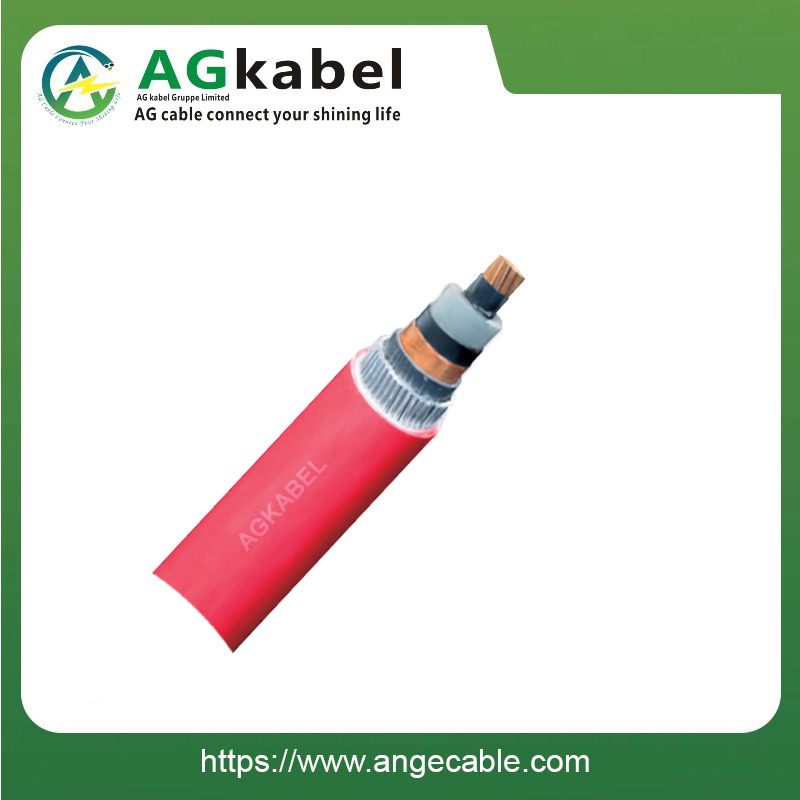
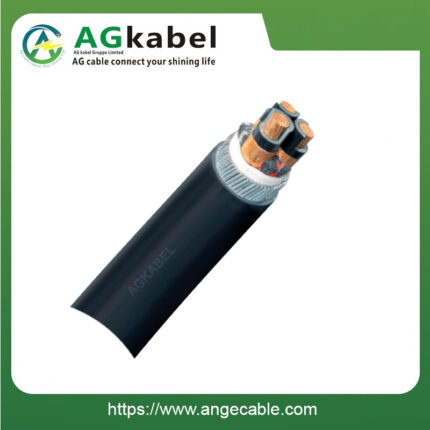
This cable strictly adheres to BS 6622 standards. It features copper or aluminum stranded compacted conductors according to BS 6360 (IEC60228 class 2). The inner semi-conductive layer, insulation, and outer semi-conductive layer all use XLPE or semi-conductive XLPE compounds. The metal screen consists of Cu tapes laid with overlap. A PVC compound type 9 forms the separating layer. The armour consists of Al wires laid concentrically. Finally, a PVC compound type 9 sheath (according to BS 6755-1/2) protects the entire assembly. The color is black or red. Furthermore, this product is RoHS compliant.
Technical Data
The cable delivers consistent performance under specific conditions. It maintains a conductor resistance at 20 °C according to BDS904 (IEC60228) class 2. The operating temperature reaches 90 °C continuous. During an overload, it can withstand 130 °C for 100% per year max. In a short circuit, it withstands 250 °C for a maximum of 5 seconds. It operates at nominal voltages of 6.35/11, 8.7/15, 12.7/22, and 19/33 kV, while the highest system voltage Uo/U is not more than 12 kV, 17.5 kV, 24 kV, and 36 kV. Test voltage is AC (+) – 15 min for 25.5 kV, 35 kV, 51 kV, and 76 kV. The level of partial discharge at 12.5 kV, 17.5 kV, 25.5 kV, and 38 kV is max. 10 pC. The minimum bending radius is 15 times the cable diameter, and 12 times adjacent to joints or terminations. The minimum temperature of laying is no less than 0 °C. The ambient temperature ranges from -30 to 50 °C. The force of strain in laying max is Al cores: 30NS core, Cu cores: 50NS core, where N is the number of cores and S is the cross-section of conductors in mm.
Constructive Data Table
Please refer to the following comprehensive specifications for precise sizing, weight, and diameter information.
Construction data Cu/XLPE/CTS/PVC/AWA/PVC, Al/XLPE/CTS/PVC/AWA/PVC 6.35/11 kV; 8.7/15 kV; 12.7/22 kV; 19/33 kV
| Number of conductors and nominal cross section | Thickness of insulation | Diameter of Al wires in armour | Thickness of sheath | Cable diameter approx. | Cu/XLPE/CTS/PVC/AWA/PVC Mass of Cu approx. | Cu/XLPE/CTS/PVC/AWA/PVC Mass of cable approx. | Al/XLPE/CTS/PVC/AWA/PVC Mass of Al approx. | Al/XLPE/CTS/PVC/AWA/PVC Mass of cable approx. |
|---|---|---|---|---|---|---|---|---|
| N x mm² | mm | mm | mm | mm | kg/km | kg/km | kg/km | kg/km |
| 6.35/11 kV | ||||||||
| 1×50 m | 3,4 | 1,6 | 1,8 | 27,4 | 425 | 1265 | 355 | 970 |
| 1×70 m | 3,4 | 1,6 | 1,9 | 29,0 | 601 | 1500 | 385 | 1200 |
| 1×95 m | 3,4 | 1,6 | 2,0 | 30,9 | 810 | 1780 | 520 | 1440 |
| 1×120 m | 3,4 | 1,6 | 2,0 | 32,5 | 1030 | 2160 | 605 | 1415 |
| 1×185 m | 3,4 | 2,0 | 2,1 | 36,8 | 1620 | 3000 | 895 | 1845 |
| 1×240 m | 3,4 | 2,0 | 2,2 | 39,8 | 2120 | 3600 | 1085 | 2140 |
| 1×300 m | 3,4 | 2,0 | 2,3 | 43,2 | 2510 | 4130 | 1380 | 2455 |
| 1×400 m | 3,4 | 2,5 | 2,4 | 44,6 | 3475 | 5245 | 1570 | 2835 |
| 1×500 m | 3,4 | 2,5 | 2,5 | 49,2 | 4445 | 6585 | 2080 | 3555 |
| 8.7/15 kV | ||||||||
| 1×50 m | 4,5 | 1,6 | 1,9 | 29,8 | 425 | 1325 | 375 | 1110 |
| 1×70 m | 4,5 | 1,6 | 2,0 | 31,4 | 545 | 1520 | 415 | 1130 |
| 1×95 m | 4,5 | 2,0 | 2,1 | 34,1 | 865 | 2100 | 520 | 1590 |
| 1×120 m | 4,5 | 2,0 | 2,1 | 35,7 | 1080 | 2415 | 645 | 1655 |
| 1×185 m | 4,5 | 2,0 | 2,3 | 38,7 | 1700 | 2950 | 915 | 1800 |
| 1×240 m | 4,5 | 2,0 | 2,3 | 41,5 | 1970 | 3360 | 995 | 1815 |
| 1×300 m | 4,5 | 2,0 | 2,3 | 43,8 | 2510 | 3210 | 1165 | 2060 |
| 1×400 m | 4,5 | 2,5 | 2,5 | 47,5 | 4475 | 5630 | 2080 | 3200 |
| 1×500 m | 4,5 | 2,5 | 2,6 | 51,6 | 4445 | 5630 | 2080 | 3555 |
| 12.7/22 kV | ||||||||
| 1×50 m | 5,5 | 1,8 | 2,0 | 32,0 | 425 | 1545 | 340 | 1290 |
| 1×70 m | 5,5 | 2,0 | 2,0 | 34,4 | 615 | 1900 | 550 | 1475 |
| 1×95 m | 5,5 | 2,0 | 2,1 | 36,3 | 865 | 2255 | 645 | 1660 |
| 1×120 m | 5,5 | 2,0 | 2,2 | 37,5 | 875 | 2385 | 810 | 1695 |
| 1×150 m | 5,5 | 2,0 | 2,2 | 39,3 | 1130 | 2905 | 810 | 1980 |
| 1×185 m | 5,5 | 2,0 | 2,2 | 41,0 | 1615 | 3340 | 955 | 2185 |
| 1×240 m | 5,5 | 2,0 | 2,3 | 44,2 | 1930 | 3680 | 1420 | 2505 |
| 1×300 m | 5,5 | 2,5 | 2,4 | 47,2 | 2715 | 4280 | 1470 | 3015 |
| 1×400 m | 5,5 | 2,5 | 2,5 | 50,2 | 3475 | 5680 | 1745 | 3440 |
| 1×500 m | 5,5 | 2,5 | 2,6 | 53,8 | 4445 | 7630 | 2180 | 4140 |
| 19/33 kV | ||||||||
| 1×50 m | 8,0 | 2,0 | 2,2 | 38,2 | 425 | 2060 | 545 | 1765 |
| 1×70 m | 8,0 | 2,0 | 2,2 | 39,8 | 615 | 2350 | 620 | 1925 |
| 1×95 m | 8,0 | 2,0 | 2,2 | 41,5 | 855 | 2330 | 800 | 1830 |
| 1×120 m | 8,0 | 2,0 | 2,3 | 43,2 | 1080 | 3035 | 795 | 2155 |
| 1×150 m | 8,0 | 2,0 | 2,3 | 46,0 | 1420 | 3645 | 1175 | 2415 |
| 1×185 m | 8,0 | 2,0 | 2,3 | 47,0 | 1930 | 3665 | 1025 | 2640 |
| 1×240 m | 8,0 | 2,0 | 2,4 | 50,3 | 2190 | 4755 | 1385 | 2780 |
| 1×300 m | 8,0 | 2,5 | 2,6 | 52,9 | 2790 | 5030 | 1440 | 3900 |
| 1×400 m | 8,0 | 2,5 | 2,6 | 56,8 | 3530 | 6780 | 1985 | 4415 |
| 1×500 m | 8,0 | 2,5 | 2,8 | 60,1 | 4445 | 7715 | 2170 | 4685 |
Note: Other core configuration and special constructions manufactured upon request.
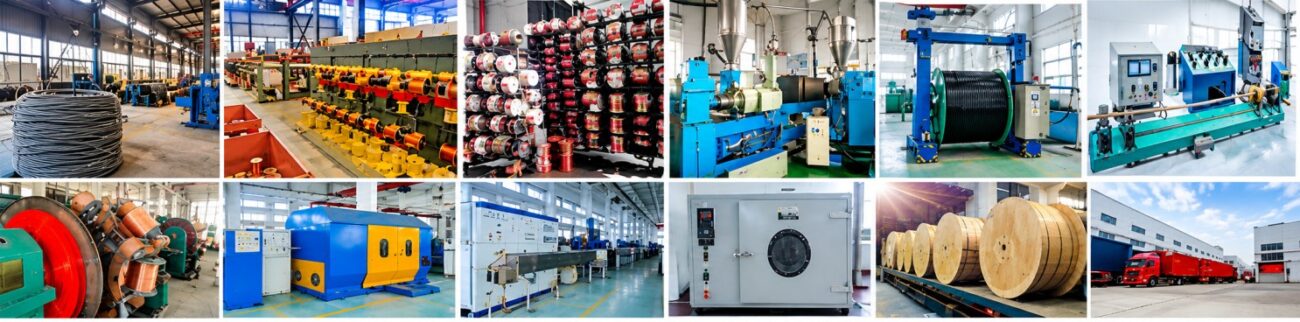
Factory Overview
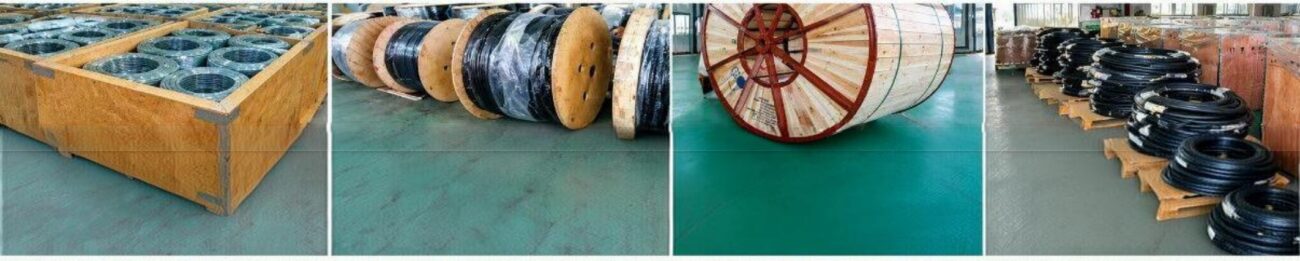
Packaging & Shipping

Frequently asked questions and answer ( Q:- A:- )
Q:- What is the primary application of the Cu/XLPE/CTS/PVC/AWA/PVC cable?
A:- It is designed for the transfer and distribution of electrical power in urban and district electrical networks and for the electrical supply of transformer substations, small and medium industrial plants, and power stations.
Q:- What are the nominal voltage levels available for this cable?
A:- The cables are available in four nominal voltage levels: Uo/U 6.35/11 kV, 8.7/15 kV, 12.7/22 kV, and 19/33 kV, operating at a frequency of 50 Hz.
Q:- What standards does the cable construction follow?
A:- The construction adheres to BS 6622 standards, and the conductor complies with BS 6360 (IEC60228 class 2).
Q:- What type of conductor and insulation does it use?
A:- It uses Cu or Al stranded compacted conductors with XLPE insulation.
Q:- What type of metal screen and armour are used?
A:- The metal screen consists of Cu tapes laid with overlap, and the armour consists of Al wires laid concentrically.
Q:- What is the purpose of the PVC compound type 9 separating layer?
A:- The separating layer provides isolation between the metallic screen and the aluminium wire armour, preventing galvanic corrosion.
Q:- What is the maximum operating and short-circuit temperature?
A:- The maximum operating temperature is 90°C continuous, and it can withstand a short circuit temperature of 250°C for a maximum of 5 seconds.
Q:- What is the maximum partial discharge level?
A:- The level of partial discharge is max. 10 pC at the respective test voltages.
Q:- What is the minimum bending radius for installation?
A:- The minimum bending radius is 15 times the cable diameter (15x D cable), and 12 times adjacent to joints or terminations.
Q:- What are the temperature limits for laying and ambient operation?
A:- The minimum temperature of laying is no less than 0°C, and the ambient temperature ranges from -30 to 50°C.
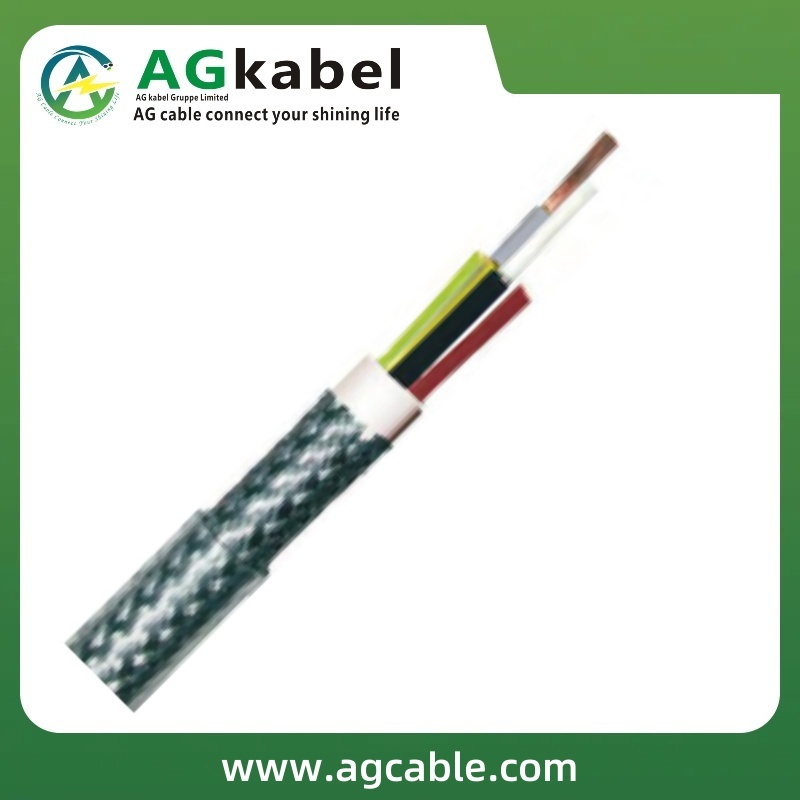
AGKABEL Flexible Control Cables 2YSLCY-J – 0.6/1 kV, EMC, Double Screened
High-performance motor power supply cable designed for frequency converters to ensure electromagnetic compatibility (EMC). Features double screening and a transparent outer sheath. Supply and connecting cable for medium mechanical stress in fixed installations and forced movements in dry, moist, and wet surroundings. Not usable for outdoor applications. Temperature range: -40°C to +80°C (Fixed). Nominal voltage: 0.6/1 kV. Available from 4X1,5 to 4X240.
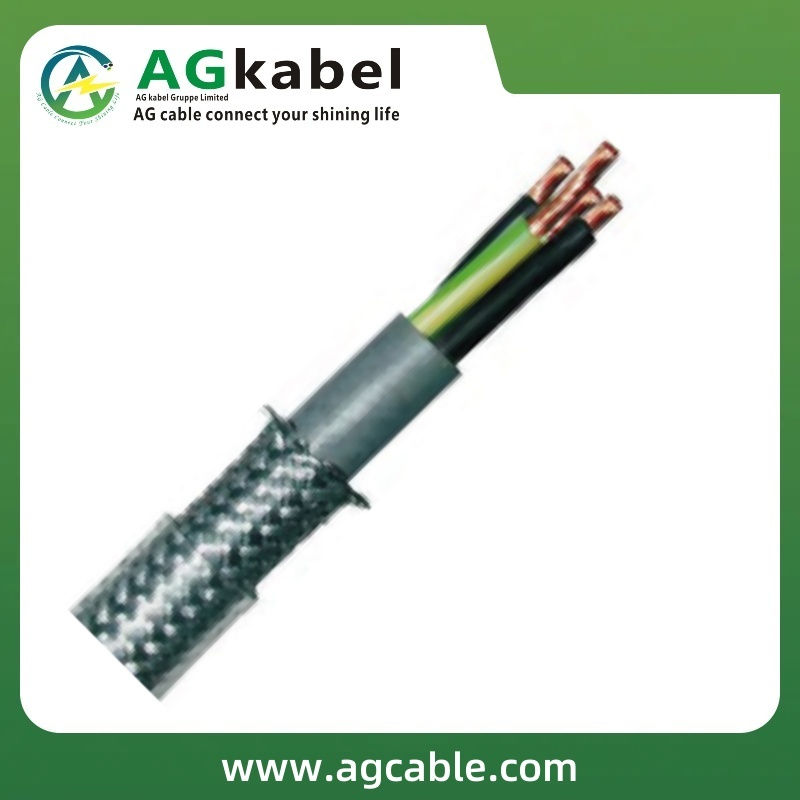
AGKABEL Flexible Control Cables YSLYSY-JZ – Number Coded, Steel Wire Braid
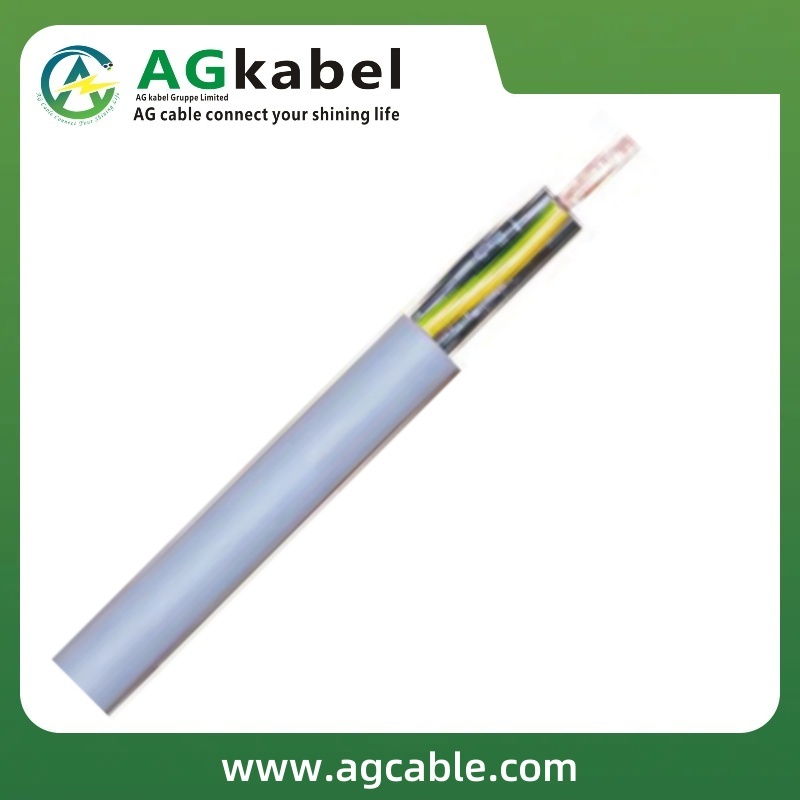
Flexible control and measuring cables designed for tool machinery, plant installations, power stations, and data equipment. Features a galvanized steel wire braid for optimal mechanical protection and corrosion resistance, finished with a transparent outer sheath. Compliant with DIN VDE 0245, 0281, 0293, 0295. Temperature range: -5°C to +80°C (Flexing) | -40°C to +80°C (Fixed). Nominal voltage: 300/500V. Available from 2 to 61 cores, 0.75mm² to 6.0mm².
AGKABEL Lift Control Cables STN – Neoprene with Suspension Strand
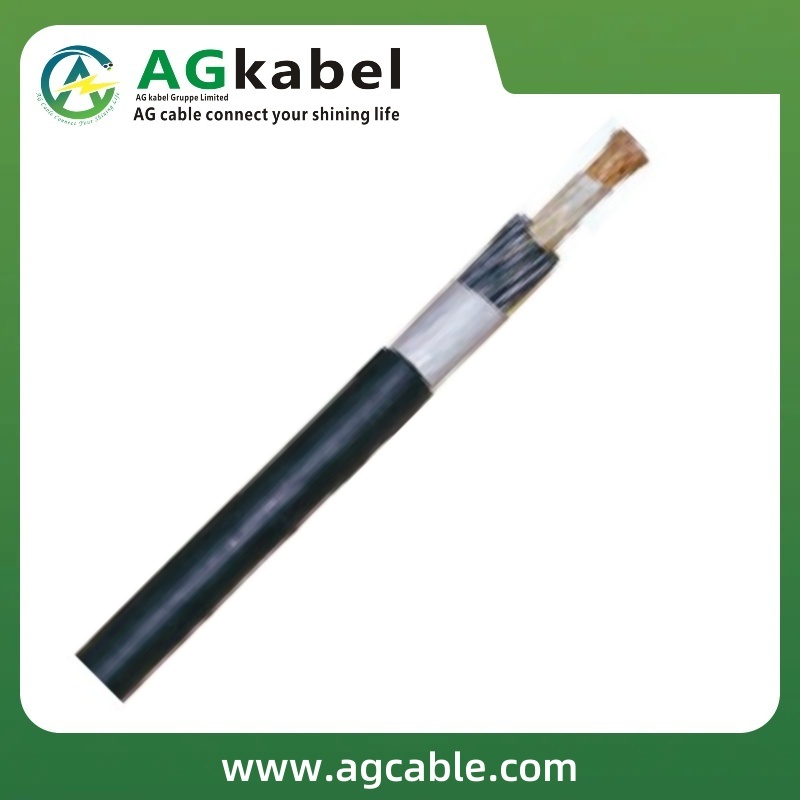
Robust, weather-resistant control and power cables designed for machines, equipment, and appliances constantly exposed to harsh weather (building machinery, conveyor/hoist systems, dry docks). Features a central strain-bearing support strand, ozone-resistant core insulation, and a chloroprene (neoprene) outer jacket that is hardly flammable and abrasion-resistant. Compliant with DIN VDE 0250 part 807 and DIN VDE 0282. Temperature range: -30°C to +70°C (Flexing) | -40°C to +70°C (Fixed). Nominal voltage: 450/750 V. Available from 3 to 61 cores, 1.0mm² to 16mm².
AGKABEL PUR Cables YSLYK – Flexible, Non-Abrasive, Oil & Chemical Resistant
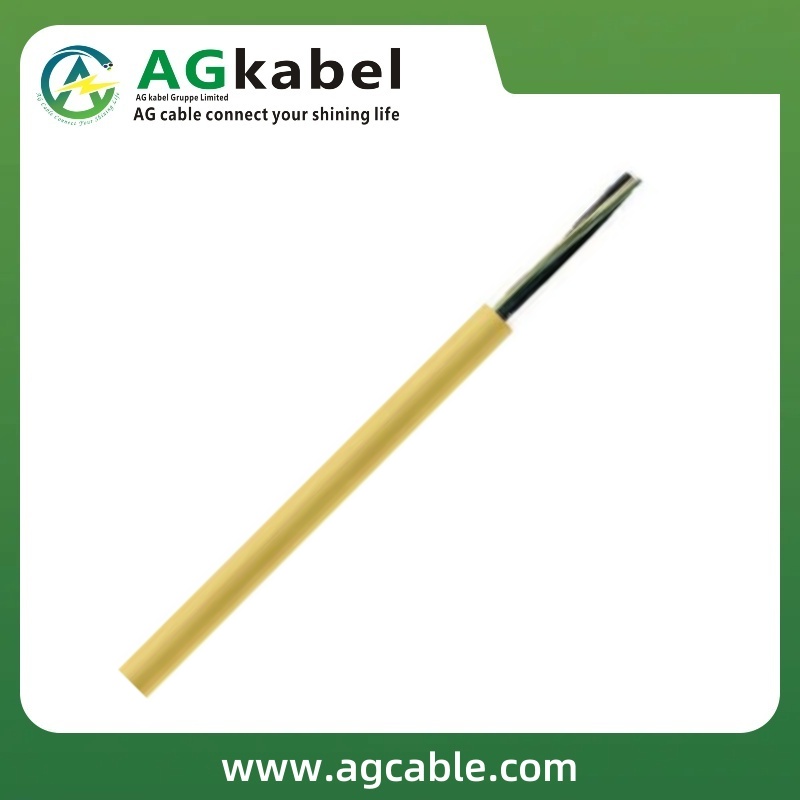
Robust control cables designed for harsh industrial environments, including tool making, machine industries, steel works, oil/coal industries, and building sites. Features a durable PUR jacket that is resistant to oil, abrasion, and chemical agents. Compliant with DIN VDE 0281, 0282. Temperature range: -5°C to +80°C (Flexing) | -40°C to +80°C (Fixed). Nominal voltage: 300/500 V. Available colour-coded or number-coded, from 2 to 25 cores, 0.75mm² to 6mm².
Reviews
There are no reviews yet.