❓ Frequently Asked Questions (FAQ)
1. What are the primary applications for these cables?
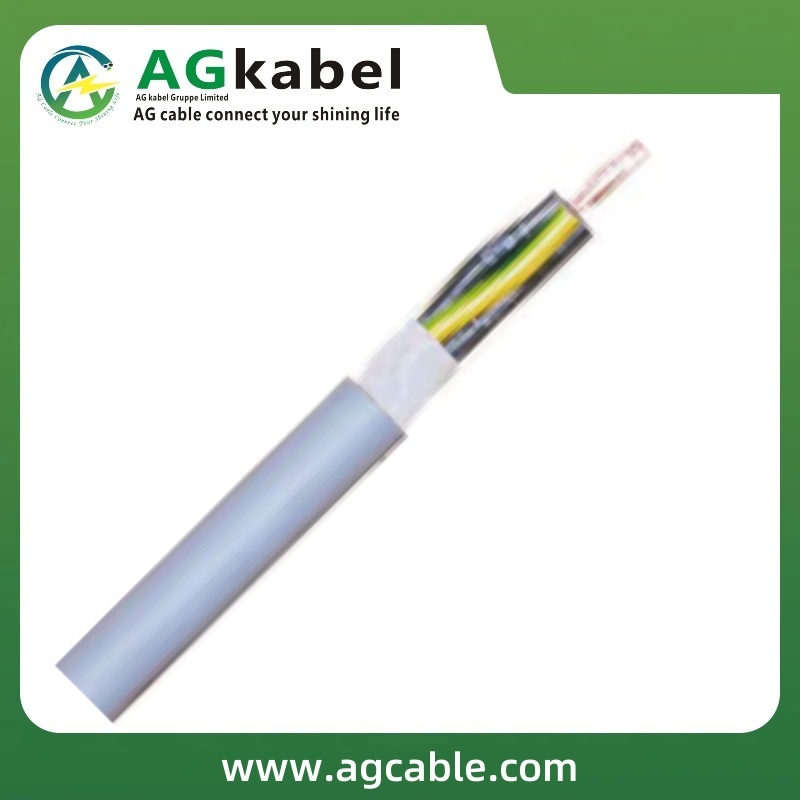
They are designed for high mechanical stress, especially for applications with frequent winding and unwinding with simultaneous tensile and torsional stress. They are used in building machinery, conveyors, shifts, cranes, mining, and railway motors.
2. What is the temperature range of these cables?
-
Flexing: -40°C to +90°C
-
Fixed installation: -50°C to +90°C
3. What are the key environmental resistances of these cables?
They are resistant to ozone, radiation, oils, acids, fats, petrol, chemicals, and solvents. They are suitable for outdoor installation in dry, damp, and wet zones.
4. What is the voltage rating of these cables?
The nominal voltage is 0.6/1 kV and the test voltage is 2500 V.
5. What standard do these cables comply with?
They comply with DIN VDE 0250 part 814.
6. What sizes and core configurations are available?
Available from 4 to 56 cores, with conductor sizes ranging from 1.5mm² to 240mm², including specialized hybrid configurations like 3×35+3×16/3.
7. What is the difference between the (RTS) and (SMK) variants?
These designations typically refer to specific construction or application requirements (e.g., RTS for specific tensile strength or SMK for specific stranding). For precise details on these variants, please consult our technical team.


Reviews
There are no reviews yet.